Oct 16, 2026
Hand Tools by Application: HVAC, Plumbing, Assembly, Lubrication | NINGBO TORCHMARK
Which hand tools suit which job: HVAC and refrigeration work, plumbing and drain maintenance, sheet metal assembly, machinery lubrication and cable termination. Model-level guidance for distributors b
Buy by the job, not by the catalogue page
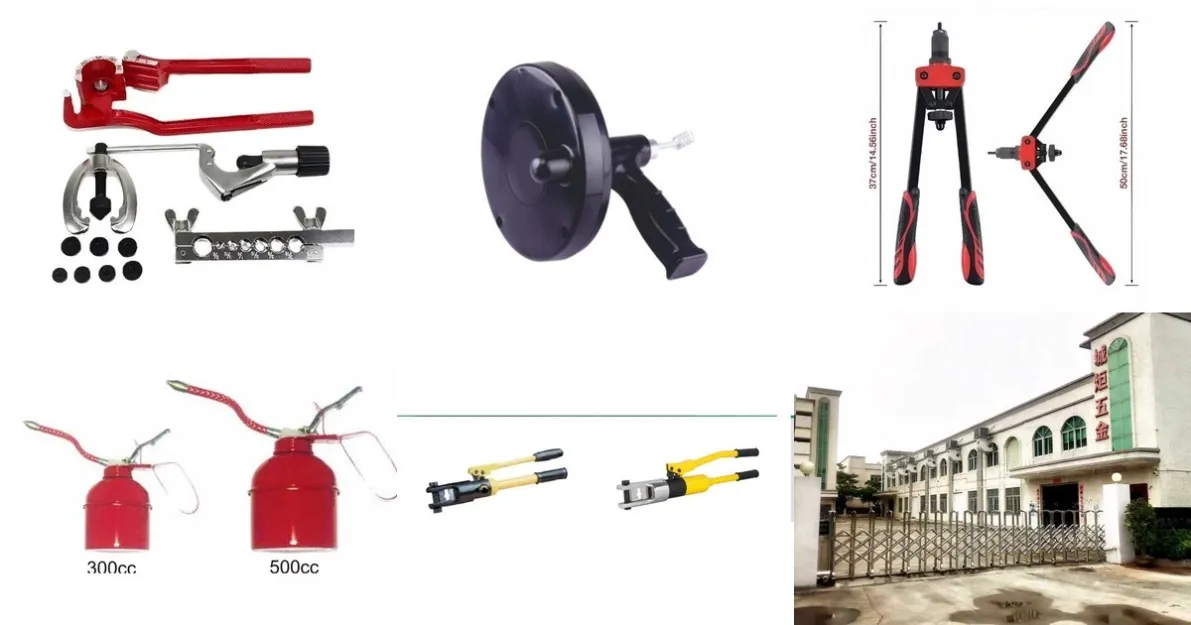
Most hand tool catalogues are organised the way a factory builds them: flaring tools here, augers there, oil cans at the back. Distributors do not buy that way. They buy against a job — a contractor needs to flare a copper line, a maintenance team needs to clear a blocked drain, an assembly cell needs to set rivet nuts in sheet metal. This page groups the same product range the way buyers actually search for it, with the model-level detail that decides a purchase.
Use it as an index. Every group links to the specification page for the models involved, and each of those pages carries carton data, packing quantity and gross weight so you can cost freight before you enquire.
1. HVAC and refrigeration installation
This is the most specification-sensitive group we supply, because a flare that seats badly leaks and a leak costs a call-back. The tools split into three jobs: cutting the copper tube square, bending it without kinking, and forming the flare itself.
What the work demands
- A square cut first. A burred or angled cut ruins the flare regardless of the tool used afterwards. Tube cutters and reamers belong in the same kit as the flaring tool.
- The right flare angle for the market. 45° is the common standard; eccentric and 45° cone designs differ in how they centre the tube, which matters most on thin-wall and soft copper.
- Metric versus inch tube. A size mismatch is the single most common cause of a poor flare, and it is a packaging risk as much as a tool risk — both systems must be clearly labelled on the carton.
The range that covers it
The core is the HVAC copper pipe tool range. For heavy commercial work, large-size bodies take tube the compact tools cannot, which is where the CT-103A / CT-103M large size flaring tools sit. Most installation work is better served by the mid-size 45° bodies — the CT-190A / CT-190M, the CT-191A / CT-191M and the CT-203A / CT-203M.
Where tube access is tight, an eccentric body is the practical choice — the CT-806A 45° eccentric flaring tool handles single sizes, and the FT-806AM/F eccentric flaring tool kit bundles the sizes a service van actually carries. Distributors that stock the kit as well as the single tools usually find the kit is what sells first, because a contractor replacing one lost flaring bar would rather have the whole set on the van.
For the selection logic itself, the copper tube flaring tool buying guide covers angle, eccentric versus cone design and the tube-size question in detail, and the leak-free flare procedure is worth including with the tool as printed instructions.
2. Plumbing and drain maintenance
Drain tools are a volume category with a clear split: hand tools for domestic maintenance and light commercial work, and drill-powered or drum tools for longer runs and heavier blockages. Getting the split right in your range matters more than depth in either half, because a hand-turn auger in the wrong hands breaks and a drum machine is impossible to sell to a domestic maintenance buyer.
What the work demands
- Pipe diameter range stated honestly. A tool marketed for 1½–2″ that is pushed into 4″ waste line will kink. State the working range on the carton and in the listing.
- Drum capacity versus cable stiffness. These trade off. Stiffer cable clears roots, more flexible cable follows a trap without locking.
- How the power is applied. Hand-turn, manual drill-driven and powered drum augers are three different buying decisions even where the cable is similar.
The range that covers it
The JQ-004 hand-turn drain auger is the entry point for domestic maintenance, and the JQ-003 manual drill-powered drain auger takes the same task further by using an ordinary drill — which is a strong selling point to buyers who already own the drill. For longer runs the manual drum auger is the step up.
The most common question we get from distributors is which of the two to lead with. The drum auger versus drain snake guide answers it directly, and the manual versus drill-powered auger comparison handles the second half of the decision.
Plastic pipe work belongs to the same buyer, not a different one. The PVC / PPR pipe tool range serves the same plumbing wholesaler as the augers, which is worth noting when you plan a mixed container.
3. Sheet metal and assembly work
Rivet nut tools are a small range with a high specification risk. The failure mode is not the tool breaking, it is the tool being sold into a material it cannot set — stainless into thick plate, for example — and the buyer concluding the tool is poor.
What the work demands
- The thread-size span must match the buyer's material list. M3–M12 covers most assembly work; a buyer running only M4 and M5 is over-served by a long-stroke tool and under-served by a light one if they add M10 later.
- Stroke force, not just thread size. Setting force is what folds the rivet nut into the sheet, and it is the number that decides whether a tool suits thin or thick material.
- Tool kit versus bare tool. On the aftermarket, the kit is usually the better seller because it arrives complete.
The range that covers it
The 110P 13-inch rivet nut gun (M3–M12) is the workhorse for general assembly, and the hand rivet nut tool range covers the lighter end. Where a buyer wants one SKU that covers a workshop, the LR / HR-09 rivet nut tool kit exists for exactly that reason.
On the sourcing side, the rivet nut gun buying guide explains how to match stroke force to material, the rivet nut size chart guide is the reference sheet to send with a quotation, and the distributor guide for M3–M12 tools covers range planning.
4. Machinery, automotive and workshop lubrication
Oil cans look like the simplest category we supply and they are the one most often mis-bought, because the head term is dominated by packaging-can makers. The buying decision here is about how the oil is delivered, not how much is held.
What the work demands
- Pump type drives the application. A high-pressure pump reaches a bearing or a machine nipple; a low-pressure pump with a flexible spout reaches a chain or a hinge.
- Body style is a market preference, not a quality signal. American and European styles sell in different regions on the same install base.
- Retail-ready or bulk. Blister-packed cans sell off a pegboard; loose cans sell into trade counters and OEM kits.
The range that covers it
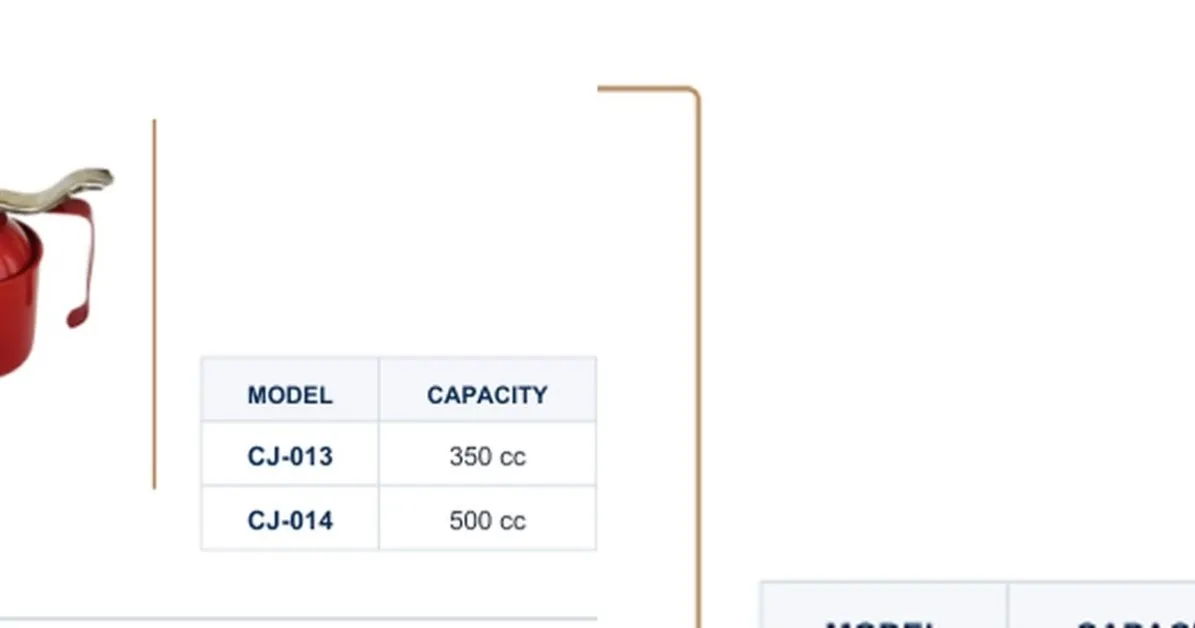
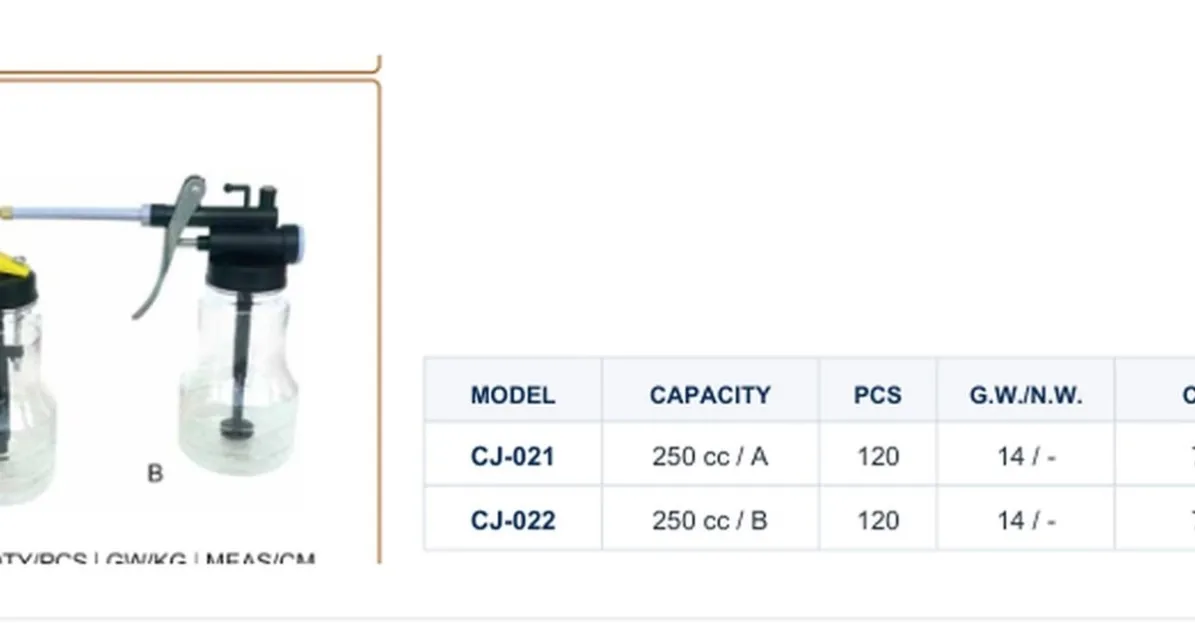
The oil can collection is the index. For pressure work, the high-pressure oil cans CJ-018 to CJ-024 cover 250–500 cc with rigid or flexible spouts. For a full style breakdown across the whole series, the metal pump oil cans CJ-003 / CJ-004, the standard handle oil cans CJ-005 to CJ-007 and the CJ-001 / CJ-002 American style plastic pump cans show how the range subdivides.
If your market sells off a pegboard, start with the blister-packed oil cans CJ-025 to CJ-027 in 250, 300 and 500 cc, and read the private-label packaging guide before you commit to card artwork, because barcode placement and inner-box split are decided at that stage, not afterwards. The American versus European style guide covers which body to stock for which market, and the carton and shipping data guide gives the freight numbers.
5. Electrical, solar and cable termination
Crimping is the group where a search for the machine will lead you to the wrong buyer. Industrial hydraulic crimping machines and hand crimping tools serve different customers, and the hand tool is what a distributor's electrical trade counter actually stocks.
What the work demands
- Lug and cable size, stated as a range. A crimper that covers 10–120 mm² is a different product from one covering 16–300 mm².
- Self-adjusting versus interchangeable dies. Self-adjusting pliers suit repetitive small-terminal work; interchangeable dies are required where the lug range is wide.
- Hydraulic or mechanical. Above a certain lug size, hand force stops being practical.
The range that covers it
The hydraulic crimping tool range covers the heavier end, and the WXC8-6-4Pro mini self-adjusting crimping pliers covers repetitive terminal work. The hydraulic crimping tool sizing guide explains how to read a lug range against a cable schedule, and the self-adjusting ferrule crimping pliers specification note covers the pliers side.
How the five groups fit one container
The reason a distributor consolidates rather than buys category by category is that packing and documentation are handled once. A mixed order across all five groups is quoted as one order, packed to one schedule and shipped against one set of documents. In practice the container fills along predictable lines:
Group | Typical order profile | Packing characteristic |
|---|---|---|
HVAC flaring and tube tools | Narrow but deep — a few bodies, many sizes | Compact cartons, high value per cubic metre |
Drain cleaners and augers | Wide, volume-led | Long cartons, freight-sensitive |
Riveting and fastening | Single-SKU heavy repeat | Dense, tool-case packed |
Oil cans and lubrication | Wide, seasonal | Bulky, blister cards add cube |
Crimping and hydraulic | Narrow, specification-led | Heavy, steel cases |
Read the freight-sensitive groups first when you plan a mixed order, because augers and blister-packed cans set the cube while flaring tools and crimpers set the value.
Where to start
If you are building a first range, the practical sequence is to pick two adjacent groups rather than five unrelated ones — HVAC and plumbing share a buyer, and oil cans sit naturally with either. Then request samples of the two or three models that carry the range, confirm the packing data for the container you have in mind, and add the remaining categories when the first one is moving.
The full product range lists every published model, and the sourcing FAQ covers catalogues, factory visits, importing, certificates and payment terms. For the enquiry itself, the RFQ specification checklist lists what to include.