Oil Cans & Lubrication Tools
CJ-005 to CJ-007 Standard-Handle Oil Cans
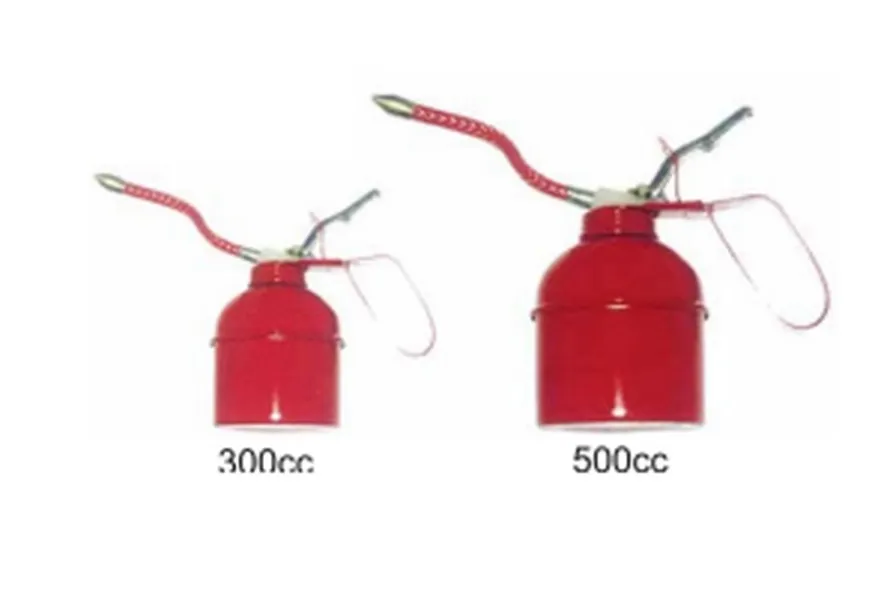
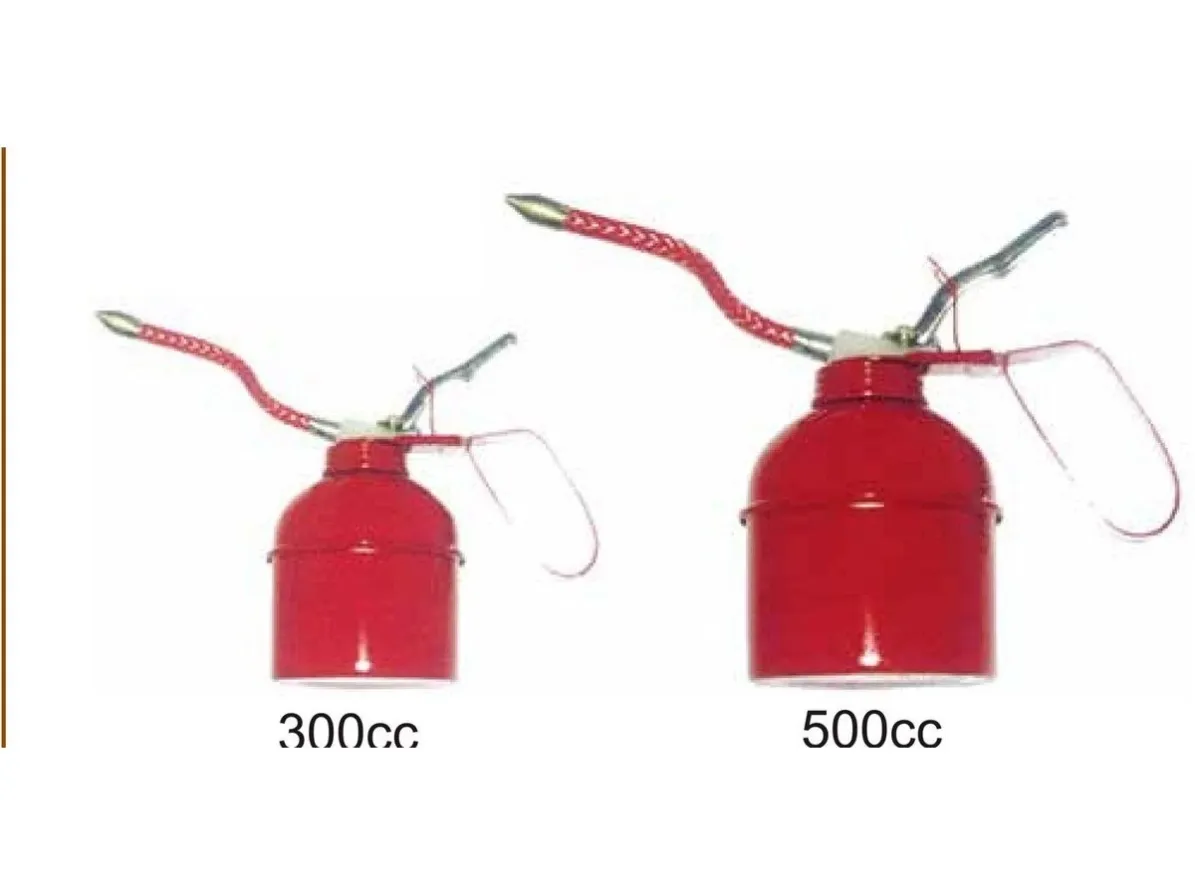
CJ-005, CJ-006 and CJ-007 are the European-style standard-handle oil cans in 250, 350 and 500 cc. All are packed at 60 pieces per carton.
CJ-005, CJ-006 and CJ-007 standard-handle oil cans
This European-style standard-handle range offers three catalog capacities for distributors building a manual lubrication-tool assortment.
Model | Capacity | Pieces/carton | Carton cm |
|---|---|---|---|
CJ-005 | 250 cc | 60 | 42 × 36.5 × 42.5 |
CJ-006 | 350 cc | 60 | 45 × 45 × 47 |
CJ-007 | 500 cc | 60 | 50 × 46.5 × 53.5 |
Source: Torchmark Oil Can Catalog, PDF page 2. Confirm final packing before shipment. Pump material, seal compatibility, spout length and delivery per stroke are not specified in this table; request confirmation for the supplied version.
Choose a sample around the intended job
Send the lubricant details and a photograph or dimensions of the lubrication access point. Check that the filled sample can be held and operated in the available space, including when wearing the intended work gloves. Select capacity together with handling and refill requirements, rather than treating a larger reservoir as automatically better.
Mixed-order quotation
Minimum order: 500 pieces. Mixed orders are accepted subject to the agreed model allocation. Samples are charged; sample freight is refunded after an order is placed. Typical lead time is 15–45 days, subject to the confirmed order. Send model quantities, destination and packaging requirements for a quotation.
" data-slate-id="AuzsYzjR2_" class="slate-html-embed max-w-full overflow-x-auto" style="position:relative
Three sizes, one handle: how CJ-005, 006 and 007 split the work
A standard-handle oil can is the format most buyers already know: a rigid body, a thumb pump at the top and a straight spout. What changes across the CJ-005, CJ-006 and CJ-007 is capacity — 250 cc, 350 cc and 500 cc — and that single number decides which job each can is good at. Selling all three is not a range-building exercise; it is how you avoid the customer who buys the 500 cc, finds it heavy for precise work, and orders nothing else.
250 cc: the precise-work can
This is the size that gets held for long periods and moved between many small points — instrument work, small bearings, hinge points, sewing and knitting machinery. A full 250 cc can stays light enough to control with one hand, and the smaller body makes the spout easier to aim into a confined space. For a distributor selling into repair shops and light assembly, this is usually the first SKU that reorders.
350 cc: the general-purpose middle
The 350 cc covers the work that is too long for the small can and not heavy enough to justify the large one: routine machine maintenance, workshop benches, vehicle service points. It is the size that sells least dramatically and reorders most steadily, because it is the one the user reaches for without thinking.
500 cc: fewer refills, more weight
On longer jobs and on sites where refilling means walking back to a store, the 500 cc earns its place: the can stays in use longer between fills. The trade-off is straightforward — a full 500 cc can is noticeably heavier in the hand, and heavier again at arm's length. State that in the catalogue copy rather than letting the customer discover it on the second day.
Specification and packing reference
Model | Capacity | Pieces per carton | Carton dimensions (cm) |
|---|---|---|---|
CJ-005 | 250 cc | 60 | 42 × 36.5 × 42.5 |
CJ-006 | 350 cc | 60 | 45 × 45 × 47 |
CJ-007 | 500 cc | 60 | 50 × 46.5 × 53.5 |
Source: Torchmark oil can catalogue. Carton quantity and dimensions are the listed values and are confirmed per order.
Why equal piece counts do not mean equal freight
All three models ship 60 pieces to a carton, which makes the piece count look interchangeable on a quotation. The cartons are not: the CJ-007 carton is roughly 30 percent larger in volume than the CJ-005. That difference decides how many cartons fit a pallet and therefore what the freight works out at per piece. Compare quotations on the assembled carton, not on the unit price alone, or the cheapest-looking model turns out to be the most expensive to land.
Where a standard-handle can is the wrong specification
Three situations belong in writing, because they generate the returns that end a line. It is not the right tool where the customer needs a continuous feed at height — that is the feed-oil-can format, not a larger handheld can. It is not suitable for solvents or aggressive fluids, because the pump seal is the part that fails first. And it is not a substitute for a pressure-fed system on a production line where oil must arrive at several points from one reservoir.
What to check on the sample
Pump stroke and stream shape
Press from full to nearly empty and watch the stream. A pump that delivers well only when the can is full will spend most of its working life underperforming, because the second half of the can is where the job actually gets done.
Spout length against the real job
Ask the customer to measure from where the can will rest to where the oil must land. Spout length is fixed per model, so this is a decision that cannot be fixed later by the end user.
Body seam and base
Check the base seam for weeping after a week of standing filled. A seam that weeps slowly is the most common field complaint on this category, and it is far cheaper to catch on a sample than on a container.
Mixed-order terms, MOQ and lead time
MOQ is 500 pieces for the order, not per variant, so the three capacities can be combined with the quantity per variant stated in the quotation. Samples are charged, and sample freight is refunded once an order is placed. Typical lead time is 15–45 days from the confirmed order.
A first order that does not leave stock sitting
Lead with two capacities rather than three: the 250 cc for precise work and the 350 cc for general use. Add the 500 cc after the first reorder teaches you which customers actually need the extra volume. That sequence costs you a little shelf coverage and saves a lot of dead stock.
Questions buyers ask about standard-handle oil cans
Which capacity sells best for general maintenance?
The 350 cc is the steady reorder: it covers routine machine and vehicle work without the weight of the large can. Start there and add 250 cc for precise work and 500 cc for long jobs.
Do all three models pack the same number per carton?
Yes, 60 pieces per carton for each. The carton dimensions differ, from 42 × 36.5 × 42.5 cm for the CJ-005 to 50 × 46.5 × 53.5 cm for the CJ-007, which changes pallet fill and landed cost.
Can the three models be mixed in one order?
Yes. MOQ is 500 pieces for the order rather than per variant, and the quantity per variant is stated in the quotation so there is no ambiguity at shipment.
What fluids can these cans handle?
Lubricating oils and light machine oils. They are not rated for solvents or aggressive fluids, and we do not recommend them for those applications.
Is the handle interchangeable between sizes?
Each model is built around its own body, so the pump and handle are matched to that capacity. Spare parts are stocked as a separate line if a customer needs to service a can rather than replace it.
What are the trial-order terms?
MOQ 500 pieces for the order, mixed variants allowed, samples charged with freight refunded once an order is placed, and lead time typically 15–45 days.
Request a quotation for CJ-005 to CJ-007
Send the capacities, quantity per variant and destination port, and we will quote the cans, cartons, MOQ, lead time and sample cost together so the whole programme can be priced before you commit.
WhatsApp: +86 15867457689 (Amy) · Email: amy@longrunhardware.com for formal RFQs · alisa@longrunhardware.com for specification questions · for samples and documentation. Replies within 12 hours, Monday to Saturday.
Related: the full oil can range · CJ-003 / CJ-004 metal-pump cans · CJ-018 to CJ-024 high-pressure cans · CJ-001 / CJ-002 American pumps · 300 cc versus 500 cc for wholesale buyers · American versus European oil can styles · oil can carton and shipping data · pump oil can buying guide · OEM packaging and private label · oil can spare parts · oil cans on longrunhardware.com.