Oil Cans & Lubrication Tools
CJ-003 / CJ-004 Metal-Pump Oil Cans
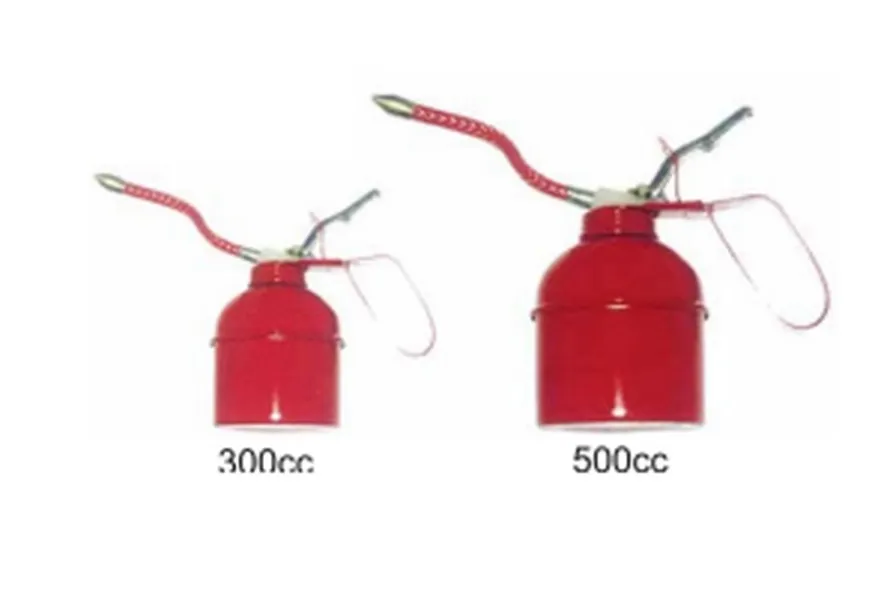
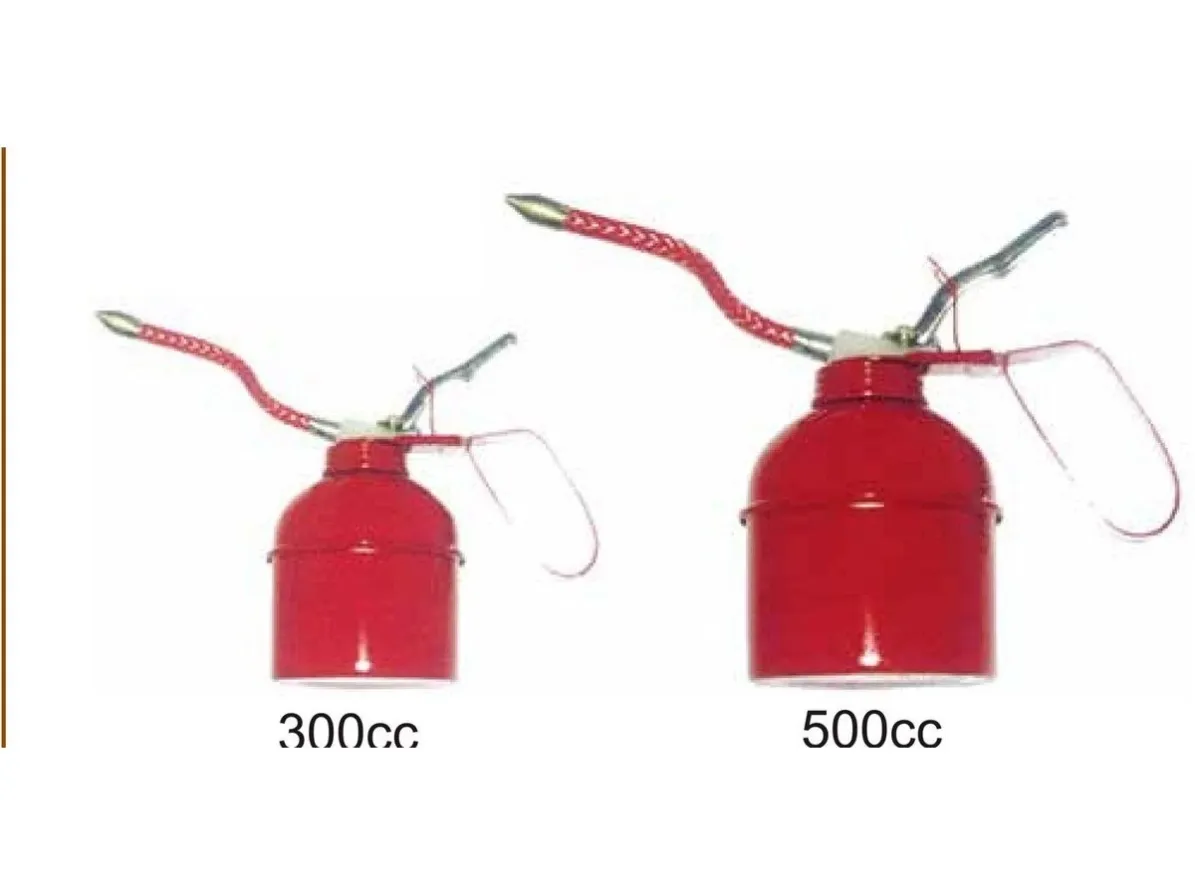
CJ-003 is 300 cc and CJ-004 is 500 cc, both metal-pump oil cans. Specify model and pump type together; CJ-001/CJ-002 use a plastic pump.
Specify both the model and pump type when sourcing manual oil cans. CJ-003 is the 300 cc metal-pump version; CJ-004 is the 500 cc metal-pump version in the Torchmark catalog. These are distinct from the CJ-001/CJ-002 plastic-pump models.
Catalog specifications
Model | Capacity | Pump | Listed carton quantity | Carton dimensions |
|---|---|---|---|---|
CJ-003 | 300 cc | Metal | 60 pieces | 48 × 38 × 44 cm |
CJ-004 | 500 cc | Metal | 60 pieces | 48 × 43 × 49 cm |
Source: Torchmark Oil Can Catalog, PDF page 2, printed page 01. Confirm final packing before shipment. Ask for gross and net weights with units in the quotation; the source table does not state the weight unit.
Confirm suitability before approving samples
Send the lubricant type, viscosity and operating conditions. Request confirmation of fluid compatibility, spout configuration, seal materials and operating instructions for the supplied version. Pump material alone is not evidence of a particular pressure rating, delivery volume, leak performance or service life.
Trial-order terms
Minimum order quantity: 500 pieces. Mixed orders are accepted; confirm model allocation and any partial-carton packing in the quotation. Samples are charged, with sample freight refunded after an order is placed. Typical lead time is 15–45 days, subject to the confirmed order.
Request a quotation
Send quantities for CJ-003 and CJ-004, destination, packaging needs and delivery target. Include your sample requirements and ask for final carton count, dimensions and shipping weight.
" data-slate-id="YtdJdgW_cX" class="slate-html-embed max-w-full overflow-x-auto" style="position:relative
Metal pump against plastic pump: what actually differs
The choice between a metal-bodied pump and a plastic one is not a price decision, it is a decision about how the can will be used. A metal pump holds its shape under repeated thumb pressure, keeps a consistent stroke as the can empties, and survives being dropped on a concrete floor. A plastic pump is lighter in the hand and cheaper to land, but it deforms over thousands of strokes, and a deformed pump delivers a thinner, less controllable stream. For a distributor the useful rule is simple: metal pump for daily industrial use, plastic pump for occasional domestic use.
Where the metal pump earns its price
On a production line or in a service bay, the oil can is pressed hundreds of times a week. What fails first on a plastic pump is not the body but the seal seat: it wears oval, the stroke starts to spit, and the user blames the oil. A metal pump keeps the seat round far longer, which is why the CJ-003 and CJ-004 are what we quote for maintenance departments, machine shops and assembly cells rather than for the home shelf.
Why 300 cc and 500 cc is the useful split
Capacity is a decision about refill frequency against hand weight. A 300 cc can is comfortable to hold for long periods and suits precise work where the user moves between many small points. A 500 cc can reduces refills on longer jobs but gains weight when full, which matters on overhead or repeated use. Selling both as a pair lets the customer choose per job rather than per price, and it is the reason the two models are quoted together more often than either is sold alone.
The base is part of the specification, not an accessory
A rigid spout and a stable base are what make one-hand operation possible: the can rests on the machine while the free hand guides the work. That is why the spout and base are the two things buyers should check on the sample rather than on the photograph — a can that will not stand steadily is a can that gets put down after a week.
Specification and packing reference
Model | Capacity | Pump | Pieces per carton | Carton dimensions |
|---|---|---|---|---|
CJ-003 | 300 cc | Metal | 60 | 48 × 38 × 44 cm |
CJ-004 | 500 cc | Metal | 60 | 48 × 43 × 49 cm |
Source: Torchmark oil can catalogue. Carton quantity and dimensions are the listed values and are confirmed per order.
What the carton figures mean for your freight
Both models ship 60 pieces to a carton, but the CJ-004 carton is larger in every dimension because the taller body needs the height. That difference is what turns into a pallet-fill difference: the 500 cc carton holds the same piece count in more volume, so the landed cost per piece is higher than the unit price comparison suggests. Price the two models on the assembled carton, not per kilo, and the margin picture changes.
Where a metal-pump can is the wrong choice
Say this in the catalogue and most of the returns disappear. A metal can is not the right specification for a retail DIY promotion, where the lower landed cost of a plastic pump is what makes the shelf price work. It is also not the right choice where the fluid is aggressive enough to attack the pump seal, because no oil can in this range is rated for solvents. And it is not a substitute for a pressure-fed system: if the customer needs a continuous feed at height, the feed-oil-can format is the correct product, not a larger handheld can.
What to confirm on the sample
Stroke consistency as the can empties
Press the pump from full to nearly empty and watch whether the stream thins noticeably. A pump that only performs on a full can is a source of complaints in the field, because the second half of the can is where most of the working life is spent.
Spout reach against the actual job
Ask the customer to measure the distance from the can's resting position to the point where oil must land. Spout length is fixed per model, so a spout that is too short cannot be solved later by the user without a funnel and a second pair of hands.
Seal behaviour after standing
Fill a sample, leave it a week, and check for weeping at the pump stem. A slow weep is the most common field complaint on this category and the easiest thing to catch before a shipment rather than after.
Trial order, MOQ and lead time
MOQ is 500 pieces for the order, not per variant, so CJ-003 and CJ-004 can be mixed with the quantity per variant stated in the quotation. Samples are charged, and sample freight is refunded once an order is placed. Typical lead time is 15–45 days from the confirmed order, which is long enough that the timing of the PO decides whether the stock arrives before the maintenance season rather than during it.
Why pairing the two capacities protects the range
A customer who buys only the 500 cc learns that it is heavy on overhead work and orders nothing further. A customer who is offered the pair at quotation stage usually takes both, because the smaller can is cheap to add and covers the jobs the larger one does badly. That is a stocking decision, not a discount decision.
Questions buyers ask about metal-pump oil cans
Is a metal pump more durable than a plastic one?
Yes, over repeated industrial use: it keeps its shape and its seal seat stays round, so the stroke stays consistent. Plastic pumps are lighter and cheaper but deform after thousands of strokes. Match the pump to the intensity of use, not to the unit price.
Which capacity should we stock first, 300 cc or 500 cc?
Start with 300 cc if your customers do precise work with many small points, and with 500 cc if they work longer jobs and refill infrequently. Most ranges end up carrying both, because the two cover different jobs rather than different budgets.
Can the two models be mixed in one order?
Yes. MOQ is 500 pieces for the order rather than per variant, and the quantity per variant is stated in the quotation so there is no ambiguity at shipment.
Are the carton dimensions the same for both models?
No. The CJ-003 ships 60 pieces in a 48 × 38 × 44 cm carton and the CJ-004 ships 60 pieces in 48 × 43 × 49 cm. The larger carton changes pallet fill, and therefore the landed cost per piece.
What oil can this pump handle?
It is designed for lubricating oils and light machine oils. It is not rated for solvents or aggressive fluids, and we do not recommend it for those — the seal is the part that fails first.
What is the trial order and lead time?
MOQ 500 pieces for the order with mixed variants allowed, samples charged with freight refunded on order, and lead time typically 15–45 days from the confirmed order.
Request a quotation for CJ-003 or CJ-004
Send the capacities, the quantity per variant and your destination port, and we will quote the cans, the cartons, MOQ, lead time and sample cost together so the whole programme can be priced before you commit.
WhatsApp: +86 15867457689 (Amy) · Email: amy@longrunhardware.com for formal RFQs · alisa@longrunhardware.com for specification questions · for samples and documentation. Replies within 12 hours, Monday to Saturday.
Related: the full oil can range · CJ-005 to CJ-007 standard-handle cans · CJ-018 to CJ-024 high-pressure cans · CJ-001 / CJ-002 American pumps · oil can spare parts · 300 cc versus 500 cc for wholesale buyers · American versus European oil can styles · oil can carton and shipping data · pump oil can buying guide · oil can collection · oil cans on longrunhardware.com.