Buying Guides
Flaring Tool RFQ Checklist for Buyers
Write a flaring tool RFQ that gets comparable quotes: tube sizes, fitting standard, kit contents, sample acceptance and packaging.
A purchase specification that makes quotations comparable
A request for “a flaring tool for HVAC” leaves important choices unresolved. Two suppliers can quote different hole sets, accessories and packaging against that same request. Use the checklist below to define what you need before comparing price.
- Specify the connection before the tool State the intended tubing material, outside diameter, wall thickness and fitting specification. Include the required flare type and angle from the fitting or equipment documentation. A tool described as 45-degree does not by itself establish compatibility with every refrigeration, brake or gas connection. Ask the supplier to confirm the intended application for the selected model.
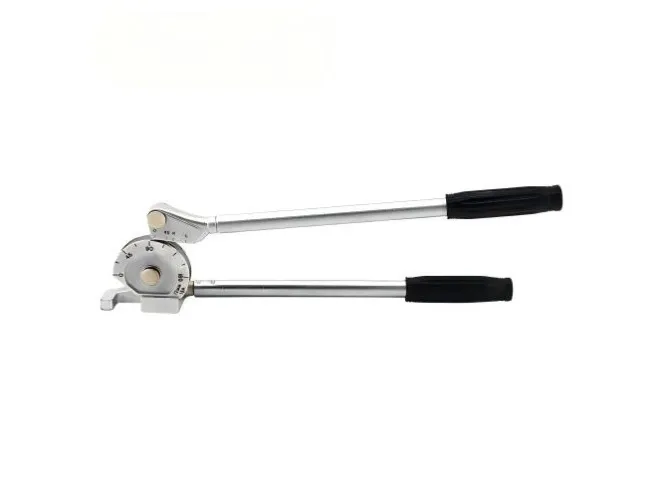
- List actual sizes, not only a range Write every required diameter and its measurement system. Do not assume that an inch hole can replace a nearby metric hole. As a catalogue example, CT-203A lists 5/8, 3/4, 7/8, 1 and 1-1/8 inch; CT-203M lists 16, 19, 22 and 28 mm. A request including 25 mm therefore needs another confirmed configuration rather than an assumed CT-203M substitution. See the model details: CT-203A / CT-203M model detailsCompare selection criteria: copper tube flaring tool buying guide
- Define the supplied configuration Ask for a written list of the bar, yoke, adapters, cutters, reamers, case and instructions included in the price. Treat optional accessories as separate quotation lines. A catalogue photograph is useful for identification but does not replace a confirmed packing list.
- Agree sample acceptance before ordering Provide representative tubing and the intended fitting requirements. Agree who evaluates the sample and what counts as acceptance: correct size coverage, repeatable clamping, visible flare condition and fit against the specified connection requirements. Record the sample model and configuration. Any installation or pressure-related acceptance should follow the applicable equipment instructions and be assessed by qualified personnel; this checklist supplies no test pressure or certification.
- Make the quotation usable for purchasing Request unit price, quoted currency, trade term and named location, included accessories, sample charges, packing dimensions, gross weight and lead time. Confirm logo and artwork approval separately. Compare total scope before choosing the lowest unit price.
Copy this RFQ checklist
Company and destination country:
Application and fitting specification:
Tube material, outside diameters and wall thickness:
Required flare type/angle:
Model and inch/metric configuration:
Quantity by model:
Included accessories and case:
Sample evaluation and acceptance requirements:
Logo, barcode, instructions and packaging:
Required delivery date and quoted shipping basis:
Torchmark ordering conditions
Our minimum order quantity is 500 pieces. Mixed orders are possible; allocation by model is confirmed in the quotation. Samples are charged, with sample freight refunded after an order is placed. Typical lead time is 15–45 days, subject to the confirmed order and packaging. Send the completed checklist to Amy: amy@longrunhardware.com or WhatsApp https://wa.me/8615867457689Our Longrun website also lists the CT-203 configuration: https://www.longrunhardware.com/tube_flaring_tool_kits-24/74.html
About the author
Alisa Xu — Product Manager, Ningbo Torchmark Hardware Co., Ltd.
Phone: 0086-13429254575
LinkedIn: https://www.linkedin.com/in/alisasourcing/Why an RFQ checklist changes the price you get
The checklist above lists what to define. What it does not explain is why the effort is worth it. A vague enquiry produces a safe quotation: the supplier prices the most likely configuration and leaves the uncertainty as risk margin. A defined enquiry produces a comparable quotation, and comparable quotations are the only way to know whether a price is competitive.
Flaring tools show this clearly. “A 45-degree flaring tool for HVAC” could mean CT-190A, CT-203A or CT-103A depending on the tube diameters involved — three different size lists, two different packing quantities. A supplier quoting blind will pick one and the difference will surface after the order, when it is expensive to fix.
The specification block to paste into your enquiry
Field | What to write | Why it changes the quote |
|---|---|---|
Tube outside diameters | Every size, with measurement system (e.g. 16, 19, 22, 28 mm) | Selects the model configuration |
Flare angle and standard | 45°, plus fitting standard or application | Angle alone does not define compatibility |
Tube material and wall thickness | Soft / hard drawn copper, wall thickness | Affects clamp behaviour and split risk |
Model suffix | Full code including A (inch) or M (metric) | A and M are separate configurations |
Kit contents | Clamping sizes, bar, yoke, case, accessories | Largest single driver of unit price |
Packing quantity | 10 or 20 per case as listed, or your requirement | Changes freight and handling |
Packaging format | Colour box, blister, bulk carton | Moves unit cost and lead time |
Branding | Logo position, barcode, instruction language | Must be specified before production |
Acceptance criterion | Sample test method and pass condition | The only basis for rejecting a batch |
Model detail is on the CT-203A / CT-203M, CT-190A / CT-190M and CT-103A / CT-103M pages. If you are unsure which configuration fits, our inch vs metric size guide sets out exactly which sizes each model lists.
Deciding what goes in the kit
Contents drive price more than the tool does
On this category the base tool is rarely the largest cost line. Clamping size count, bar and yoke construction, case type and included accessories move the price further than buyers expect. Define contents before comparing, or you will be comparing different products.
Matching contents to the buyer
A contractor wants the sizes they use and a case that survives a van. A wholesale range wants the size list that covers the most enquiries. A private-label programme wants retail packaging and a barcode. These are three different kits built on one tool.
Accessories and repeat business
Replacement components and related items are listed on the flaring tool accessories page. Including them in the first order turns a one-off tool sale into a repeat line.
Four RFQ mistakes that cost money
Quoting a size range instead of sizes
CT-203M lists 16, 19, 22 and 28 mm. It does not cover 25 mm. A request written as “16–28 mm” invites an assumption that cannot be met.
Omitting the model suffix
Catalogue illustrations are labelled CT-203 and CT-190. The orderable configurations carry an A or M suffix. Without it, the wrong clamping set ships.
Leaving packaging until after sample approval
Printed components have their own lead time and run after tool production, not in parallel. This is the most common cause of an otherwise on-time shipment arriving late.
No acceptance criterion
Without a stated test method there is no basis for rejecting a batch, and disputes resolve in the supplier's favour by default.
From enquiry to shipment
Step 1 — specification
Send the block above with the tube sizes and quantities. We confirm the configuration and whether every requested size is listed.
Step 2 — sample
Arrange a sample on the exact tube sizes and material you sell against. The sequence is set out in our sample approval checklist.
Step 3 — quotation and packing
Price, MOQ, lead time, carton data and sample cost come back in one reply, so packaging and freight are visible before you commit.
Step 4 — production and inspection
Production runs against the approved sample and the agreed acceptance criterion. Inspection follows the method written into the order.
Packaging, branding and freight
Formats
Bulk cartons suit trade supply; colour boxes and blister packs suit retail and e-commerce. Format choice changes both unit cost and carton dimensions, so decide it at RFQ stage.
Freight planning
CT-203 and CT-103 pack 10 per case at 31.5 × 17 × 14.5 cm; CT-190 packs 20 per case at 27 × 20 × 27 cm. Work landed cost per tool from those figures rather than per carton.
Frequently asked questions
How much detail do you actually need?
Every tube outside diameter with its measurement system, the fitting standard, the model suffix, kit contents, packaging and an acceptance criterion. That is enough to quote without assumptions.
Can you help choose the configuration?
Yes. Send the tube sizes you must flare and we will confirm which listed configuration covers them — including where a size such as 25 mm needs CT-103M rather than CT-203M.
What is the usual packing quantity?
10 pieces per case for CT-203 and CT-103 configurations, 20 for CT-190. Confirm at quotation, because bespoke programmes can differ.
Do you accept mixed models in one order?
Yes. Mixed containers are the usual way to test which size configuration a market prefers before committing to one line.
How is a sample approved?
Test on the exact tube size and material, flare, and check the flare face and seating. Our sample approval checklist gives the sequence.
Do you support private label?
Yes — logo, barcode, instruction language and packaging format, specified before production. Send artwork with the RFQ.
Where to go next
Request a quote
Send the tube sizes, model preference, kit contents, packaging, quantity and destination port. We will confirm coverage and return price, MOQ, lead time and sample cost in one reply.
Where this fits in a first import order
This RFQ checklist covers the third decision in our six-decision import sequence for first orders — fixing a specification block that makes competing quotations comparable. That sequence also covers the sample approval and QC evidence gates that follow it, and the documents that travel with the container.Small trial orders for flaring configurations
If you are adding flare tools to your range, a small trial order covering the tube sizes and cone types you actually stock is enough to check fit and demand. The applicable minimum is confirmed for each item in the quotation.
Send the tube diameters, the 45° SAE or 37° JIC cone you need, and your first-order quantity, and we will confirm the matching configuration, packing and terms per order.