Crimping & Hydraulic Tools
Hydraulic Crimping Tools & Cable Lug Crimpers
Hydraulic crimping tools for cable lugs 4-400 mm2: YQK/YQY hand crimpers, split remote heads and ratchet terminal crimpers. OEM and private-label enquiries welcome.
Hydraulic Crimping Tools & Cable Lug Crimpers
Hand, split and electric hydraulic crimpers for cable lugs, tube terminals and battery cables — plus the ratchet and copper-tube crimpers an electrical wholesaler needs to complete the range.
A hydraulic crimping tool exists to solve one problem: joining a copper or aluminium conductor to a lug or terminal so the connection carries full current without heating up, loosening or failing a pull-off test. A hand plier cannot generate that force on large cable — a 240 mm² lug needs 10 tonnes or more, evenly applied. Hydraulic crimpers deliver it in one or two strokes, which is why the electrical trade specifies them for everything above small control wiring.
We manufacture this range in Ningbo, China and supply distributors, electrical wholesalers and private-label brands worldwide. The collection below covers the four groups a crimping range is normally built from: hand-held hydraulic crimpers (4–400 mm²), split remote hydraulic crimping heads for confined or high-volume work, ratchet terminal crimping pliers for smaller insulated and bare terminals, and copper-tube crimping tools for BS/DIN standard tube terminals.
What counts as a professional hydraulic crimping tool
Buyers who specify crimpers for the electrical trade judge them on five things, and price comes after all five:
- The right range for the cable you crimp most. A tool that stops at 120 mm² is useless to a contractor running 240 mm² feeder cable; one that only starts at 50 mm² wastes money on control-panel work. The range must bracket your real work — with margin above your largest lug.
- Force that matches the largest terminal. Crimping force scales roughly with conductor cross-section. A 240 mm² tube terminal needs around 10 T; a 400 mm² needs 20 T. An under-powered tool leaves a loose crimp that passes a visual check and fails under load.
- Correct, complete die sets. The hexagon die must match the lug's crimp profile and the conductor size. A crimper delivered without the die range you need is only half a tool.
- A head that reaches the joint. A rotating or 180° opening head matters in a panel or busbar box where there is no room to swing a fixed tool. Split (remote) heads exist for exactly this.
- Build that survives site conditions. Hardened dies, a steel body and a pump that holds pressure without weeping — this is what separates a tool that crimps 20,000 joints from one that leaks after 200.
Each group below is built to these criteria, and each is available with the die range, head type and stroke your market already sells.
The four crimping groups in this collection
1. Hand-held hydraulic crimping tools — YQK / YQY series (4–400 mm²)
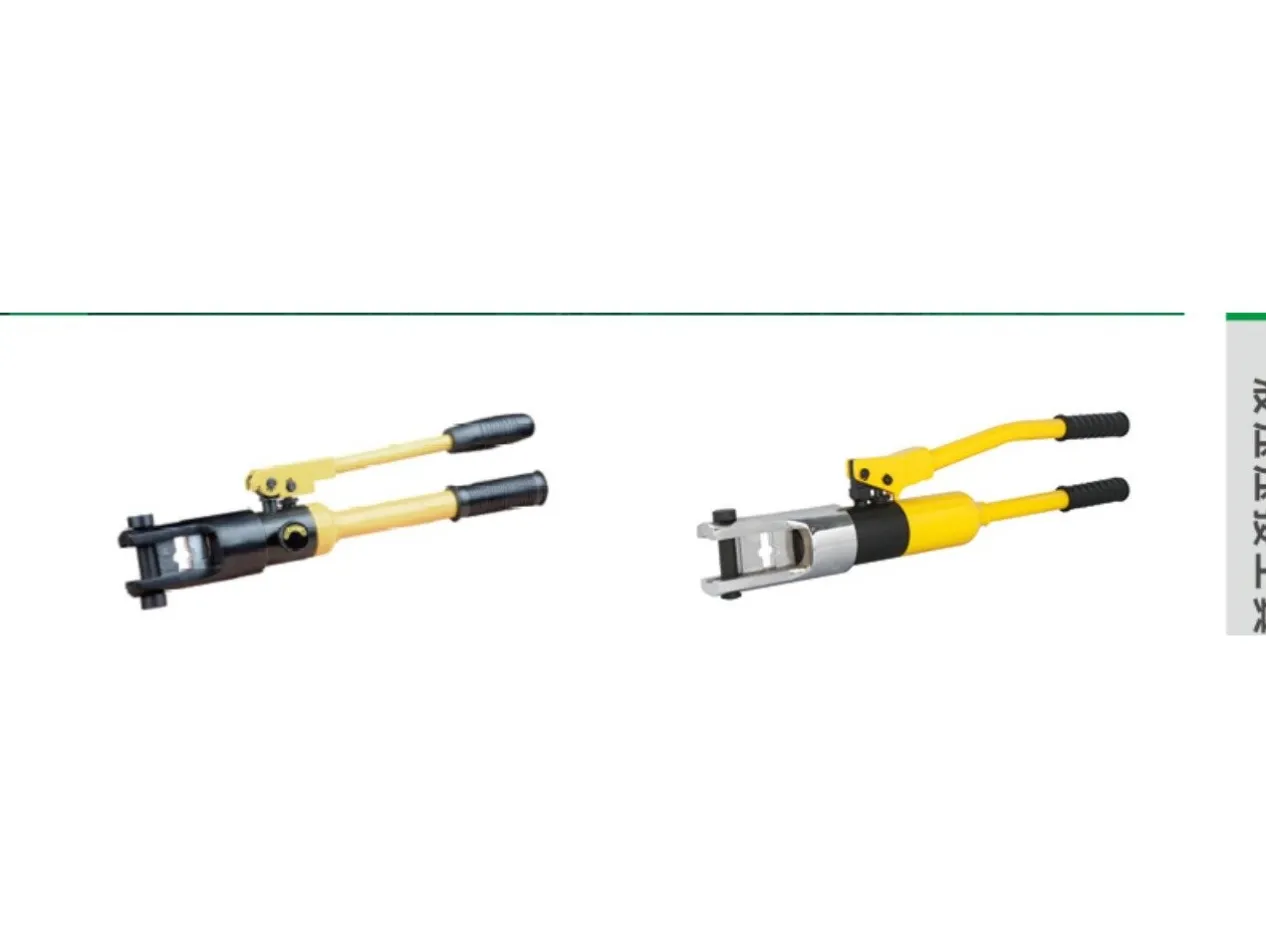
The workhorse of an electrical toolkit: a self-contained hand pump integrated with the crimping head, operated by two levers. One or two strokes complete a joint, and a built-in pressure release resets the head. Available from a compact 4–70 mm² body up to a 16–400 mm² frame, with hexagon dies covering 16 to 400 mm². These are the tools specified for feeder cable, battery and earth cables, switchgear terminations and general lug work.
2. Split hydraulic crimping heads — WXY series (remote, 16–1000 mm²)
Where the joint is in a busbar chamber, a cable trough or any place a fixed tool cannot swing, a split hydraulic crimping head separates the crimping head from the pump so the head can be positioned first. The 180° opening head drops onto the lug, and the separate pump builds pressure through a hose. Available up to 1000 mm² for utility and heavy-industrial work, with both hand and motor-driven pumps.
Split hydraulic crimping heads (WXY-510F / 1000TF / 630TF)Copper-tube terminal crimpers (HX-50B → HX-240B)
3. Ratchet terminal crimping pliers — WX series (1.25–38 mm²)
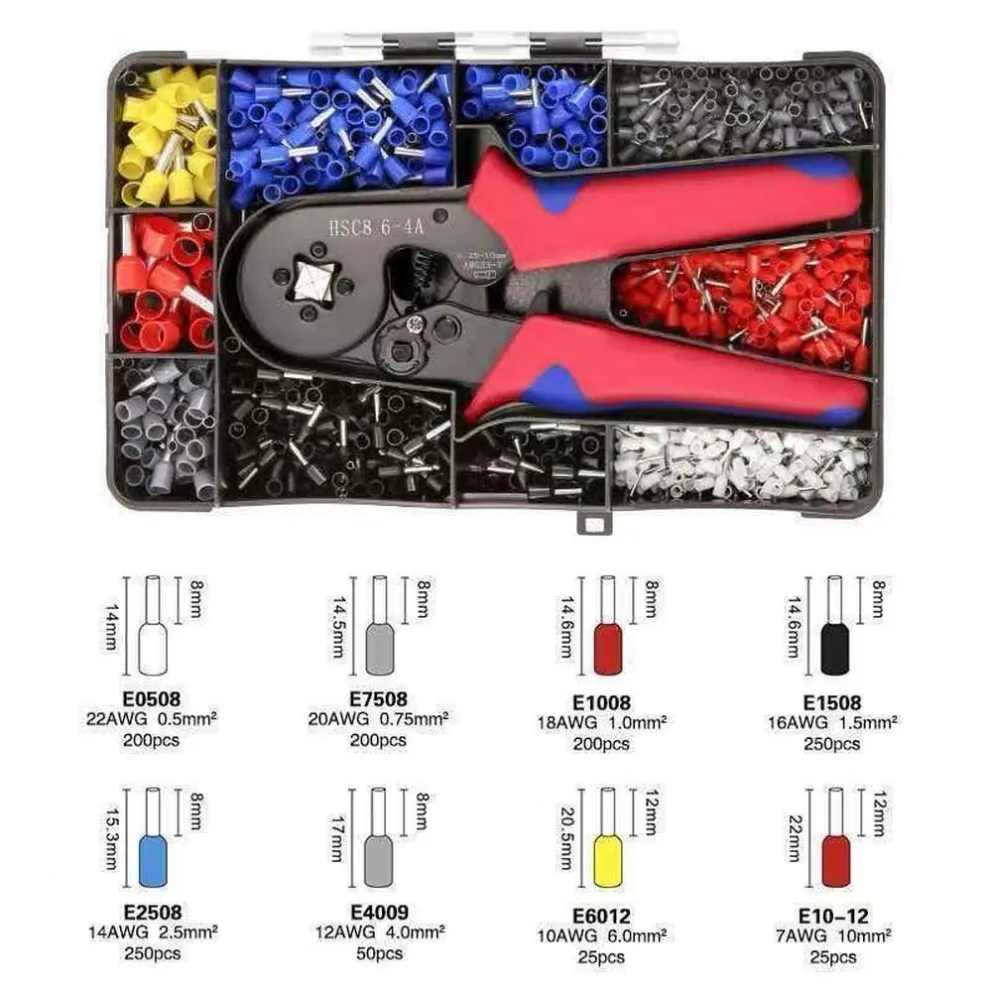
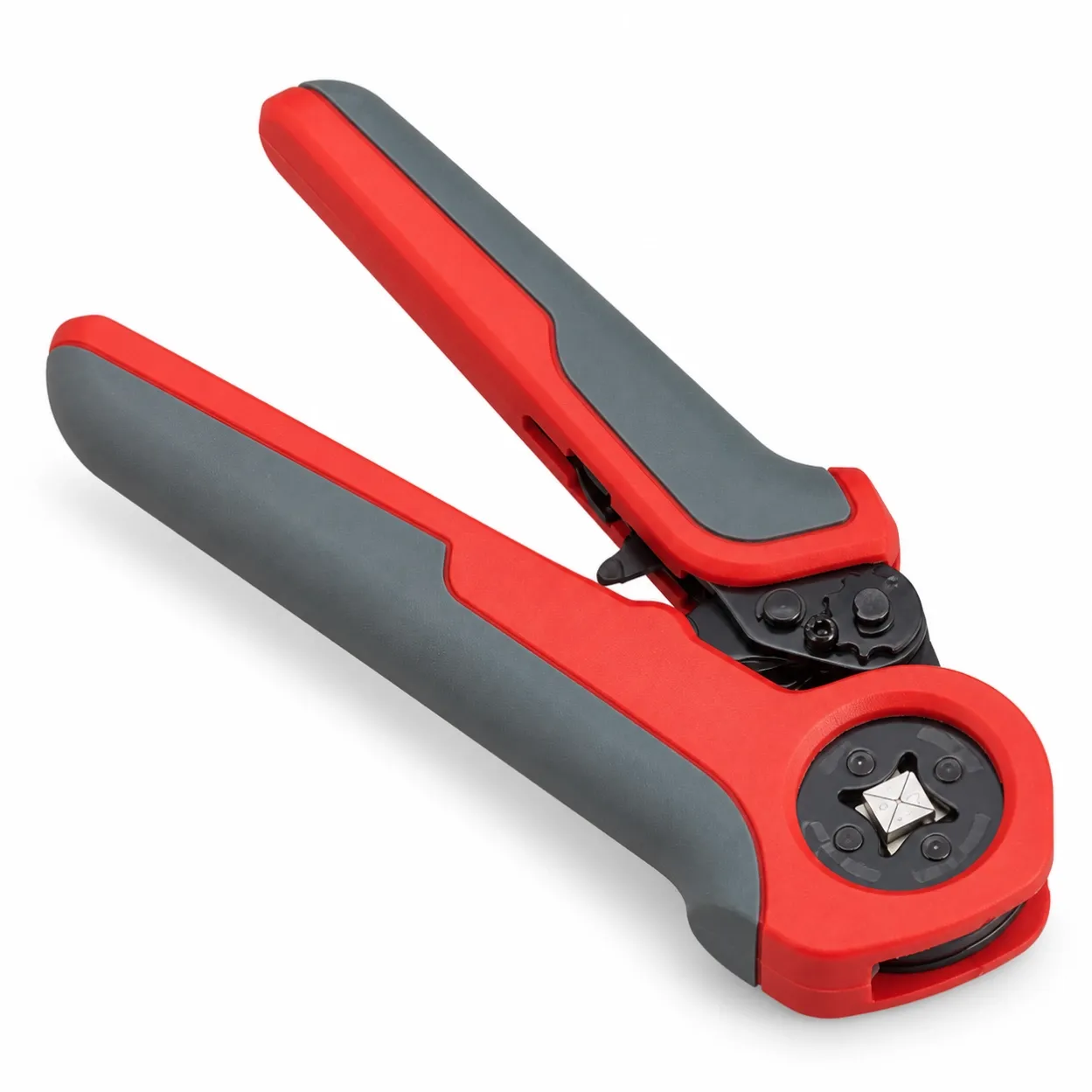
For smaller terminals the ratchet crimper is the correct, faster tool: a ratchet mechanism locks the handles until a full crimp is made, so every joint is identical and the operator cannot under-crimp. Our range covers insulated and bare terminals, ferrules and wire caps from 1.25 mm² up to 38 mm², in the Asian (and Western versions), with a choice of die profiles for the terminal standard your market uses.
4. Copper-tube (HX) and related hydraulic tools
Copper-tube terminal crimping tools use a long, low-friction ratchet or hydraulic action with a multi-jaw crimping head to compress BS and DIN standard tube terminals — the heavy lugs used in switchgear, transformers and industrial power distribution. To the 240 mm² HX tools we add the rest of the hydraulic family a wholesaler often orders alongside crimpers: hydraulic knockout punches (WXK-8/8D/15) for cutting clean 16–60 mm holes in sheet steel and copper busbar, hydraulic pipe benders (WXW-22A/25S/2J/3F) and hydraulic cable cutters.
Hydraulic knockout punches (WXK-8 / 8D / 15)Hydraulic pipe benders (WXW-2J / 3F)
Specification
Model families | YQK / YQY (hand hydraulic) · WXY (split hydraulic) · EP / EZ (electric hydraulic) · WX (ratchet) · HX (copper-tube) · WXK (knockout punch) · WXW (pipe bender) |
|---|---|
Types | Hand hydraulic · split remote head · electric hydraulic · ratchet mechanical · copper-tube terminal |
Crimping range | 1.25 mm² → 1000 mm² (model dependent; hexagon dies 16–400 mm²) |
Output force | Hand hydraulic 8 T – 20 T · electric hydraulic 11 T – 12 T (60 kN class for EZ range) |
Stroke | 15 mm – 42 mm (model dependent) |
Die profiles | Hexagon crimping dies for copper / aluminium lugs; insulated / bare terminal dies for ratchet pliers |
Body / handle | Steel body with hardened steel dies; moulded plastic or rubber-grip handles |
Application | Cable lugs & tube terminals, battery & earth cables, switchgear and busbar terminations, panel & control wiring, solar/DC cable |
Branding | OEM & private label — custom colour, logo, laser marking, blow-mould case and packaging available |
MOQ | Small-batch customisation supported; confirm the minimum per model with our export team |
Samples | Paid samples available; specification and die range confirmed before bulk production |
Brand | TORCHMARK (Ningbo Torchmark Hardware Co., Ltd.) |
Crimping range, output force, stroke and die set are configurable per model. Always confirm tonnage against your largest terminal and verify the die profile against the lug standard you use — our export team checks the build with you before quoting.
Selected models & crimping data
A representative slice of the range (the full specification and die table for every model is in the printable catalogue):
Model | Type | Crimping range | Output | Stroke | Weight |
|---|---|---|---|---|---|
YQK-70A | Hand hydraulic | 4–70 mm² | 8 T | 17 mm | 3.5 kg |
YQK-120A | Hand hydraulic | 16–120 mm² | 10 T | 17 mm | 3.6 kg |
YQK-240A | Hand hydraulic | 16–240 mm² | 10 T | 15.5 mm | 6.3 kg |
YQK-300A | Hand hydraulic | 10–300 mm² | 11 T | 18 mm | 6.4 kg |
YQY-240B | Hand hydraulic | 16–240 mm² | 12 T | 19 mm | 9.3 kg |
YQY-300 | Hand hydraulic | 10–300 mm² | 12 T | 17 mm | 9.5 kg |
YQY-300B | Hand hydraulic | 10–300 mm² | 12 T | 18 mm | 9.5 kg |
YQY-400A | Hand hydraulic | 16–400 mm² | 20 T | 20 mm | 8.4 kg |
EP-430 | Electric hydraulic | 50–400 mm² | 11 T | 32 mm | 11 kg |
EP-510 | Electric hydraulic | 50–400 mm² | 12 T | 38 mm | 11.9 kg |
EZ-300G | Electric hydraulic | 16–300 mm² | 60 kN | 17 mm | — |
WXY-400A | Hand hydraulic | 16–400 mm² | 11 T | 20 mm | 8.4 kg |
WXY-300BF | Split hydraulic | 16–300 mm² | 10 T | 25.5 mm | — |
WXY-1000TF | Split hydraulic | 50–1000 mm² | 20 T | — | — |
WXY-630TF | Split hydraulic | 50–630 mm² | — | — | — |
HX-50B | Copper-tube (ratchet) | 6–50 mm² (10–1 AWG) | — | — | 1.3 kg |
HX-120B | Copper-tube (ratchet) | 10–120 mm² (7–4/0 AWG) | — | — | 4 kg |
HX-150B | Copper-tube (ratchet) | 25–150 mm² | — | — | 4 kg |
HX-240B | Copper-tube (ratchet) | 70–240 mm² (2/0 AWG) | — | — | 5.6 kg |
WXK-8 | Hydraulic knockout punch | Punch dies 16–60 mm | 9 T | 16 mm | 10.3 kg |
WXK-15 | Hydraulic knockout punch | Punch dies 16–60 mm | 15 T | — | — |
WXW-22A | Hydraulic pipe bender | Ø6–Ø22 mm | — | — | 5.1 kg |
WXW-2J | Hydraulic pipe bender | Ø21.3–Ø60 mm | 13 T | 250 mm | — |
WXW-3F | Hydraulic pipe bender | Ø21.3–Ø88.5 mm | 20 T | 320 mm | — |
Hexagon die sets for the YQK/YQY/WXY crimpers are supplied in 16 / 25 / 35 / 50 / 70 / 95 / 120 / 150 / 185 / 240 / 300 mm² (and 400 mm² on the 20 T models). Confirm the die list against your terminal standard with your RFQ.
Built for distributor and private-label buying
- One family, many SKUs. Mix hand hydraulic, split, electric, ratchet and copper-tube crimpers in a single order so your crimping line is complete from one supplier.
- Die sets included or specified. We confirm the exact die range against your terminal standard before production, so the tool arrives ready to crimp.
- Brand-ready. Custom body colour, logo, laser marking on the tool, blow-mould case printing and packaging; OEM and ODM specification development supported.
- Mixed orders. Combine crimping tools with our hydraulic knockout punches, pipe benders, oil cans and hand tools to build a full assortment from one factory.
From our workshop
Photos from our Ningbo, China workshop and facility. We are a manufacturer, not a trading middleman — so specification, die range, colour and packaging are confirmed with the people who make the tools.
Buying crimping tools for resale or private label? Send your largest and smallest cable size, terminal standard, plus hand / split / electric preference. We return a focused quotation with the correct model, die set and lead time.Request a quote
Frequently asked questions
What size hydraulic crimping tool do I need for 240 mm² cable?
A 16–240 mm² hand hydraulic crimper with around 10 T output (for example our YQK-240A or YQY-240B) crimps a 240 mm² copper tube terminal in a single stroke. Always keep at least one size of margin above your largest routine lug so the tool is not running at its limit.
Hand hydraulic, split or electric — which should I stock?
Hand hydraulic crimpers cover most contractor work up to 300–400 mm² and are the volume sellers. Split (remote-head) crimpers suit confined joints in busbar chambers and high-volume bench work. Electric hydraulic crimpers reduce operator effort for large cross-sections and repetitive production. Many distributors stock hand hydraulic as the core and add one split and one electric model.
When is a ratchet crimper better than a hydraulic one?
Below roughly 10–16 mm² for insulated or bare terminals, a ratchet crimper is faster and gives a more consistent result than a hydraulic tool. The ratchet locks until a full crimp is completed, so the operator cannot under-crimp. Use hydraulic crimpers for large lugs and tube terminals, and ratchet pliers for control wiring and small terminals.
Do the tools come with dies?
Yes — the crimpers are supplied with hexagon die sets matched to the model's range, and we confirm the die list against your terminal standard before production. Custom die profiles are available for non-standard terminals.
Can the same tool crimp copper and aluminium lugs?
Yes, provided the die profile matches the lug type. Copper and aluminium lugs use different crimp profiles, so we supply the appropriate dies with the tool. Tell us the lug standard you use and we match the die set.
Do you supply hydraulic knockout punches and pipe benders too?
Yes. The hydraulic family includes knockout punches (WXK-8/8D/15) for 16–60 mm holes in sheet steel and copper busbar, hydraulic pipe benders (WXW series) and hydraulic cable cutters, so a wholesaler can order the whole hydraulic line from one place.
Can you do OEM / private label and custom packaging?
Yes — custom body colour, logo, laser marking, blow-mould case and packaging are available, and we confirm samples against your specification before production. ODM specification development is also supported.
What is the MOQ?
Small-batch customisation is supported; the minimum differs by model and finish. Tell us the models and quantity and we confirm the MOQ and lead time.
Can I get samples first?
Paid samples are available, including a test crimp on your own lug if you send a sample. Sample cost and delivery are confirmed per model and destination.
Related reading
Not sure which type fits your work? Read our hydraulic crimping tool sizing guide — how to match a crimper to your cable size in mm² and AWG, and when a ratchet crimper is the better buy.
For the rest of the TORCHMARK range, see the pump oil can collection, the professional manual drum auger and the eccentric 45° flaring tool kit (FT-806AM-F).
Explore the full TORCHMARK tool range Flaring, drain cleaning, riveting, lubrication and crimping — product pages and B2B buying guides in one place.Browse all products → Talk to our export team
Send the model numbers, quantities, packaging requirement and destination port, and we will quote price, MOQ, lead time and sample cost in one reply.
Tonnage is the number buyers compare first and the number that decides a purchase least. The specification that matters is the cable size and lug barrel the tool has to close, so start there.
Cable range sets the die set
A tool is only useful within the cable range its dies cover. Ask for the die list with the quotation rather than the tonnage alone, because a 16 to 300 mm² tool and a 10 to 120 mm² tool are different products for different markets.
Lug barrel type and wall thickness
Copper and aluminium lugs compress differently, and a thin-wall barrel needs less force than a heavy one. Confirm both with the customer before quoting a single head.
Where the tonnage number actually helps
Tonnage becomes the deciding figure when the same dies are used across a range and the operator needs margin on the largest size. Treat it as headroom, not as a quality claim.
The four groups and which buyer takes which
The range is organised by working method rather than by tonnage, which is how a distributor should build the shelf.
Hand-held hydraulic crimpers
The YQK and YQY series cover the general installation trade. They are the first group most distributors stock because one tool serves several cable sizes with a die change.
Split hydraulic heads
The WXY series is a remote head, used where access is restricted or where the head must go to the joint rather than the cable to the bench. This group sells to switchgear and panel builders.
Ratchet terminal crimping pliers
The WX series covers 1.25 to 3 mm² terminations by hand, without hydraulics. It is the volume item in the group because every panel has small terminations.
Copper-tube and related hydraulic tools
The HX group and related tools serve a different job from cable lugs, so keep them on a separate shelf position rather than mixing them into the crimping range.
Specification and crimping data reference
The figures below are the published values for the collection. Die sets, cable ranges and tonnage should be read together, because a tonnage without a die list does not describe a usable tool.
Group | Series | Working method | Typical buyer |
Hand-held hydraulic crimper | YQK / YQY | Integral hydraulic head, hand pump | Electrical installation trade |
Split hydraulic head | WXY | Remote head on hose | Switchgear and panel builders |
Ratchet terminal pliers | WX | Mechanical ratchet, 1.25 to 3 mm² | Panel and control work |
Copper-tube hydraulic tools | HX | Hydraulic compression | Pipe and tube fabrication |
Model level data, including the full crimping table, is published on the product pages within this hydraulic crimping tools collection, and the sizing logic is set out in the hydraulic crimping tool sizing guide.
Where a hydraulic crimper is the wrong choice
Hydraulic tools are heavier and more expensive than the job often needs. Three situations suit a different tool.
Small terminations in volume
Below roughly 3 mm², a ratchet plier is faster and lighter. Putting a hydraulic tool on a bench full of small terminations slows the work down.
Work at height or in a confined space
A hand-held hydraulic crimper needs two hands and a clear swing. Where access is restricted, a split head with a hose is the correct specification rather than a smaller hand tool.
Occasional single joints
Where a customer makes a handful of joints a year, a mechanical tool is the honest recommendation. Selling hydraulics into that use produces a tool that sits in a van.
What to confirm on the sample
A crimping tool is judged on the joint it produces, so the check is a pull test or a section, not an inspection.
Crimp the smallest and largest die
The ends of the die range show whether the tool develops enough force. Make one joint at each end of the range and inspect the barrel for a complete, even compression.
Check the die retention
Dies that work loose mid-crimp ruin the joint. Fit and remove each die on the sample and confirm the retention is positive.
Confirm the pressure relief
A hydraulic tool should release at its set pressure rather than at the operator's discretion. Confirm the relief behaviour on the sample.
Weigh it in the hand
Weight decides whether a tool gets carried. Weigh the sample against the figure you intend to publish.
Ordering, die sets and private label
Confirm the die set with the order rather than after it, because a tool shipped without the required die is unusable in the destination market. Mixed orders across the four groups are available subject to confirmed allocation. Send the cable range, the lug type, the die list you need, the destination and any branding requirement, and we will quote against it. Insulated and related hand tool ranges are grouped on the crimping tools page, and the self-adjusting ferrule option is covered in the ferrule crimping pliers guide.
Questions buyers ask about hydraulic crimping tools
What cable range should we stock first?
Start with the range that covers the majority of installation work in your market, then add the larger head. Confirm the die list before ordering, because the cable range follows the dies.
Does higher tonnage mean a better crimp?
No. A correct crimp depends on the die matching the lug, and extra tonnage without the right die produces a deformed barrel rather than a better joint.
When is a split head better than a hand-held tool?
When access is restricted or the work is at height. A split head puts the crimp where the joint is instead of bringing the cable to the tool.
Are dies included with the tool?
Die sets vary by model and order, so confirm the list with the quotation. A tool shipped without the required die cannot be used in the destination market.
Can the four groups be mixed in one order?
Yes, subject to confirmed allocation. Mixing a hand-held crimper with ratchet pliers is common because the same distributor sells both to electrical contractors.
Can we brand the tool and the case?
Yes, private label artwork, barcodes and carton marking can be applied. Mention it at the enquiry stage because it affects lead time rather than the tool.
Request a quotation for the crimping range
Send the cable range, lug type, die list and destination and we will return a matched specification with packing data. Email amy@longrunhardware.com, alisa@longrunhardware.com, or message us on WhatsApp at +86 158 6745 7689. Product Manager Alisa Xu handles the crimping range, and cable crimping is covered separately in the cable crimping tools guide.