Oct 18, 2026
Cable Crimping Tools: Matching the Crimper to the Conductor | Torchmark
Which crimping tool fits which cable: hydraulic for lugs above 16 mm², ratchet for terminals, self-adjusting for ferrules. Sizing by mm² and AWG, with handling weights.
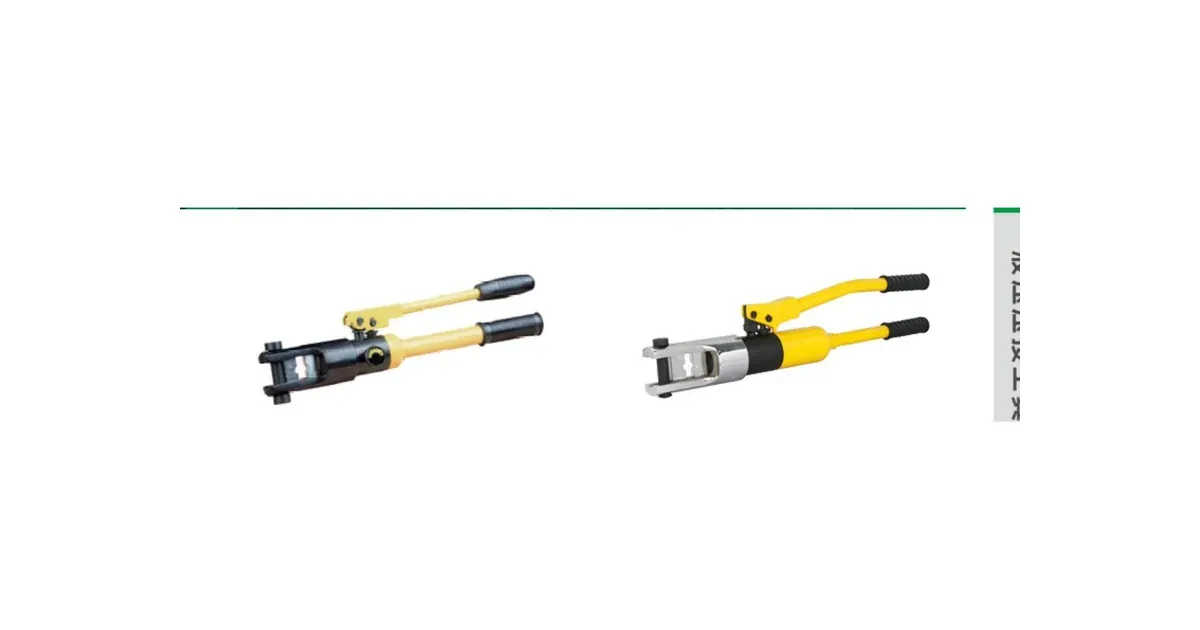
A crimp is the one electrical joint that looks finished whether it is good or bad. It passes a visual check, it holds when you tug it, and then it heats up under load six months later. That is why specifying a crimper is not a price decision — it is a decision about conductor size, terminal system and how many joints the operator makes a day. This page maps our crimping range onto those three variables.
Start from the conductor, not the tool
Conductor | Terminal type | Tool family | Approx. tool weight | Torchmark |
|---|---|---|---|---|
0.25–10 mm² (AWG 23–7) | Wire ferrules | Self-adjusting ferrule crimper | 0.36 kg | |
1.25–38 mm² | Insulated / non-insulated terminals | Ratchet terminal crimper (WX series) | 1.3–5.6 kg | |
16–240 mm² | Cable lugs and splices | Hand-held hydraulic (YQK / YQY) | 6.3–9.5 kg | |
50–400 mm² | Large lugs | Hand-held hydraulic | 11.0–11.9 kg | |
50–1000 mm² | Industrial termination | Split hydraulic head on a pump (WXY) | Head only |
Source: Torchmark Crimping & Hydraulic catalogue. Hydraulic output on hand-held tools runs 8 T to 20 T; crimp width 15–42 mm depending on model.
The weight line that decides the format
Read the weight column carefully. Above roughly 300 mm² the hand-held hydraulic tools approach 9–12 kg, and at that point a crew realistically moves to a split head on a pump. Selling a 12 kg hand tool for daily 400 mm² work is how a range gets returned — not because the tool failed, but because nobody wants to hold it up all day.
Hydraulic, ratchet or self-adjusting?
Hydraulic gives a consistent hexagonal crimp and is the correct answer for cable lugs above about 16 mm² where pull-out strength is specified. The YQK and YQY hand-held series covers 4–400 mm², and the WXY split heads extend to 1000 mm².
Ratchet crimpers give a controlled, repeatable cycle on insulated and non-insulated terminals and are lighter and faster for control wiring — the right buy for panel builders and maintenance crews working below 38 mm².
Self-adjusting ferrule crimpers remove the sizing decision entirely for small conductors. The WXC8 6-4Pro covers 0.25–10 mm² (AWG 23–7) at 175 mm and 0.36 kg — a pocket tool that produces a square crimp profile, and the one electricians actually keep on them.
Our hydraulic crimping tool sizing guide goes deeper on mm² to AWG conversion and on when a ratchet crimper is the better buy.
Same job, adjacent tools
Terminating cable usually means cutting and punching on the same visit. The hydraulic programme covers punch dies from 16 mm to 60 mm, hole punches from Ø6 mm to Ø22 mm, and cutting heads covering Ø21.3–60 mm and Ø21.3–88.5 mm. Quoting the heads alongside the crimper is the simplest way to raise order value without discounting.
What to check before approving a sample
- Cut a crimp and section it — the conductor must be fully compressed with no voids.
- Confirm the die marking matches the size stamped on the terminal.
- On hydraulic tools, check the ram returns fully and the relief valve releases cleanly.
- On ratchet tools, verify the ratchet cannot release before the cycle completes.
- Weigh the tool against the duty cycle.
Note that catalog capacity does not establish compatibility with every terminal system — confirm the terminal, conductor and die combination before approval.
Continue reading
Plan your crimping range with us
Send the conductor sizes you terminate (mm² or AWG), the terminal type, quantities and packaging. We will come back with the matching model, die set, MOQ, lead time and sample cost in one quotation.