Oct 18, 2026
Machinery Lubrication Tools: Choosing the Right Oil Can for the Job | Torchmark
How to choose lubrication tools for maintenance work: pump type, spout form, capacity and pressure, matched to the access point on the machine. Model-level guidance for distributors.
Lubrication looks like the simplest job on a maintenance list, and it is the one most often done badly — the oil goes on the outside of the bearing instead of inside it, because the spout could not reach, the oil was too thick for the pump, or the can dripped all the way across the workshop floor. For a distributor, an oil can range is a high-volume, high-repeat line, but only if the range is built around where the oil has to go rather than around capacity alone.
Match the can to the lubrication point
Lubrication point | What goes wrong | Can specification | Torchmark models |
|---|---|---|---|
Open bearing, easy access | Over-oiling, drips | Standard pump can, 250–500 cc, rigid spout | |
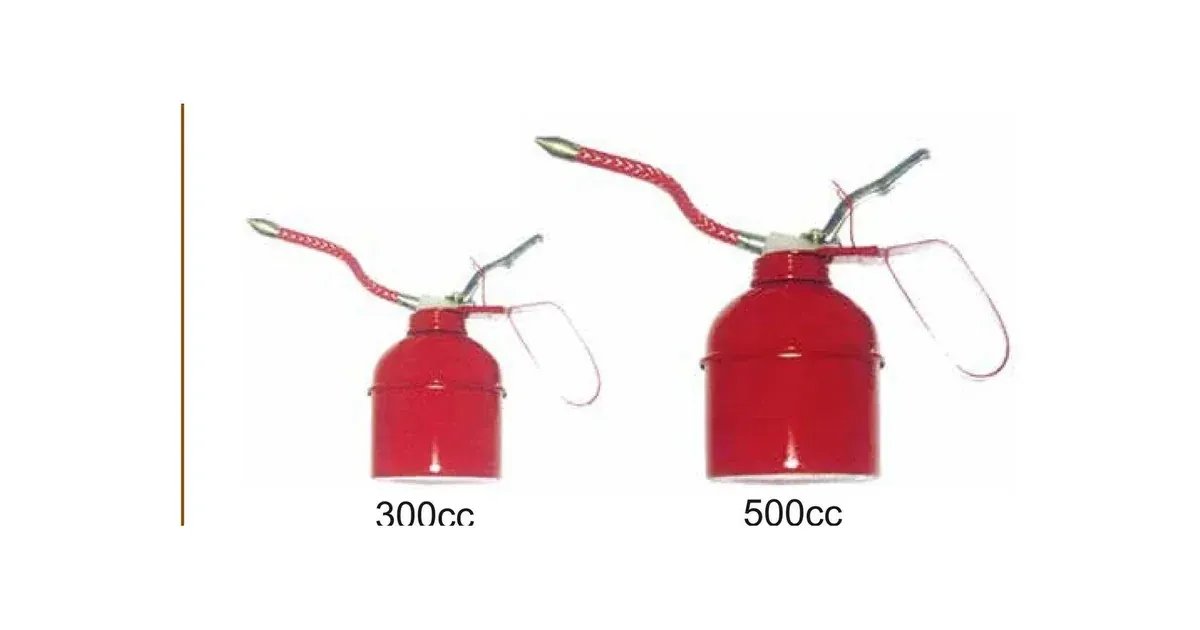
Recessed or obstructed nipple | Spout cannot reach; oil misses | Flexible spout | |
High-viscosity oil, long runs | Standard pump will not deliver | High-pressure can | |
Pocket or machine-side hook | Bench can is too big to carry | Small body, 4–8 oz | |
Retail / hardware shelf | Plain bulk does not sell itself | Blister-packed retail card |
Source: Torchmark Oil Can catalogue, models CJ-001 to CJ-045.
Four decisions, in this order
1. Pump material. A plastic pump is lighter, corrosion-free with water-based fluids and the lower-cost option. A metal pump tolerates higher operating effort and is the safer recommendation where the user presses the pump hundreds of times a day.
2. Body style. The American family (plunger mounted on the body) is stable on a bench and simple to refill. The European family (taller body, side lever) stores in a tighter drawer and can be worked one-handed. Our American versus European oil can comparison separates the two decisions that the country label usually bundles together.
3. Spout form. Fixed rigid spout for a known fitting; flexible spout where the point moves or sits behind an obstruction; long reach for recessed bearings.
4. Capacity. Two capacities far enough apart to justify separate price points — 250 cc and 500 cc works, 300 cc and 350 cc does not. The 300 cc versus 500 cc comparison covers how to position them.
High-pressure cans: when the standard pump gives up
Thick oil through a long spout needs pressure, not effort. The CJ-018 to CJ-024 group covers 250–500 cc with rigid or flexible spout and plastic cap or metal container options. In a distributor range these are a line extension rather than the volume item — but they are the ones maintenance buyers remember, because they solve the job nothing else could.
Spare parts: the repeat line in this category
Pump assemblies, seals and spouts are what wear out. A workshop that owns twenty cans will replace pump heads long before it replaces cans. Opening oil can spare parts and pump assemblies alongside the can range is the cheapest way to add a repeat-purchase line to a lubrication assortment.
Retail versus bulk
If your channel sells to end users rather than to workshops, the packing matters more than the can. CJ-025 to CJ-027 ship in double-blister retail packaging at 250, 300 and 500 cc. Carton planning is covered in the carton and shipping data guide, and private-label artwork in the OEM packaging guide.
Questions distributors ask
Which style sells in my market? Ask what your customers call it, then confirm pump material and spout length anyway — both labels are used loosely across suppliers.
Can we brand them? Yes. Card artwork, label language, barcode placement and carton marking are all specified at quotation stage.
What is the MOQ? Quoted per SKU and finish; small-batch private-label runs are supported. Tell us the model mix and quantity and we confirm MOQ and lead time together.
Continue reading
Plan your lubrication range with us
Tell us the pump material, spout form and capacities your market buys, plus retail or bulk packing. We will quote the cans, the spare parts, MOQ, lead time and sample cost in one reply.