Buying Guides
Copper Tube Cutter & Pipe Bender Guide
How to choose a copper tube cutter, bender and reamer: match tool to tube size, avoid kinks and work-hardened copper. A distributor's buying guide.
Copper Tube Cutter & Pipe Bender Buying Guide
Most copper-line failures start at the tool, not the fitter. Here is how to match a tube cutter, a tube bender and a deburring reamer to the copper and ACR tube you actually run — and how to set up a cut → deburr → flare → bend workflow that seals the first time.
By Alisa Xu, Product Manager · LinkedIn · Reviewed against TORCHMARK production specification · 12 October 2026
Ask any refrigeration engineer which tool causes the most callbacks and the answer is rarely the manifold or the vacuum pump. It is the tube cutter that flattened a coil line, the bender that kinked it, or the cut edge that was never deburred and shredded the flare. Copper line work is unforgiving: a small tool error becomes a slow leak that only shows up months later, when the system is already charged and the ceiling is already closed.
This guide is written for the people who buy these tools by the container — HVAC and refrigeration distributors, plumbers' merchants and private-label brands — and for the fitters who use them every day. It covers what to look for, the size you need for the tube you run, and the workflow that keeps the joint leak-free.
The four-step copper workflow (and why each step needs its own tool)
A copper line is made in four steps, and each one has a tool that exists because the previous step's shortcut causes the next step's failure:
- Cut — a wheel-type tube cutter scores and shears the tube with a hardened wheel so the cut is square and the bore stays round. A hacksaw work-hardens the edge and leaves a burr.
- Deburr — a 45° eccentric reamer removes the internal burr so the edge that meets the flare cone is smooth. Skipping this is the most common cause of a weeping flare.
- Flare or press — a flaring tool forms the cone (see our eccentric flaring tool kit) or a press tool forms the joint.
- Bend — a tube bender with the correct former forms the coil line to route it, without collapsing the wall.
A distributor who supplies only the cutter leaves the fitter to improvise the other three steps. Supplying the whole set — cutter, reamer, bender — is what makes a copper aisle worth buying from one factory.
Step 1 — Choosing a copper tube cutter
Tube cutters are chosen on capacity and wheel quality, in that order.
Match the capacity to the tube you run
Tube / pipe you cut | Typical size | Cutter to use |
|---|---|---|
Soft copper coil / ACR line | 6–22 mm (¼"–⅞") | Standard or mini tube cutter |
Plumbing copper tube | 15–35 mm (½"–1⅜") | Standard tube cutter |
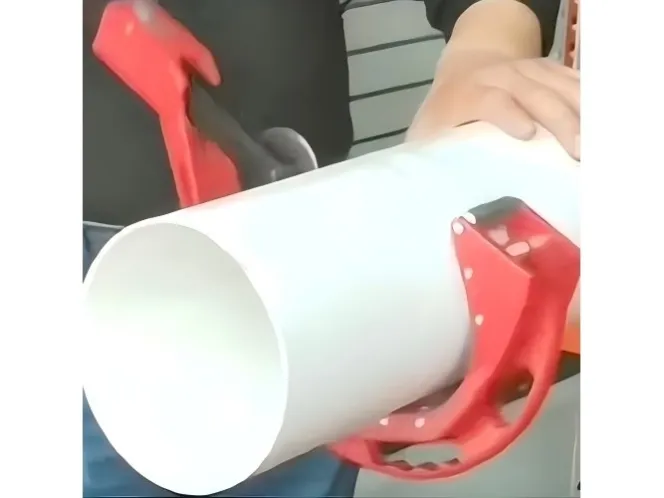
Large copper / plastic / drainage pipe | 100–168 mm (4"–6⅝") | Heavy-duty 168 mm tube cutter |
The heavy-duty 168 mm cutter takes over where standard cutters stop — 100–168 mm copper, aluminium and plastic pipe, with a replaceable hardened wheel.
Two rules matter more than the price. First, buy the cutter for the largest tube you cut most, not the smallest — an undersized cutter flattens the wall and work-hardens the copper, which then cracks when it is bent. Second, use a replaceable wheel: a dull wheel stops cutting and starts tearing, and the tear is a burr you then have to ream out. Every cutter in our range uses a replaceable hardened wheel for exactly this reason.
Step 2 — Choosing a tube bender (and stopping kinks)
Bending is where copper lines are lost. Copper work-hardens as it deforms, so a bend that is not supported collapses the wall — the classic "kinked coil line" that chokes refrigerant flow and has to be cut out and re-made.
What actually prevents a kink
- A former matched to the tube OD. The bend radius is set by the former, not by the fitter's wrist. The wrong radius collapses the tube.
- Support through the whole arc. A two-stage former with roller wheels — like the CT-365 — holds the tube through the full bend so the inside face stays round. This is the single design feature that separates a bender that kinks from one that does not.
- Bending cold, slowly, once. Re-bending a work-hardened tube cracks it. Get the radius right the first time.
Which bender for which job
Bender type | Range | Best for |
|---|---|---|
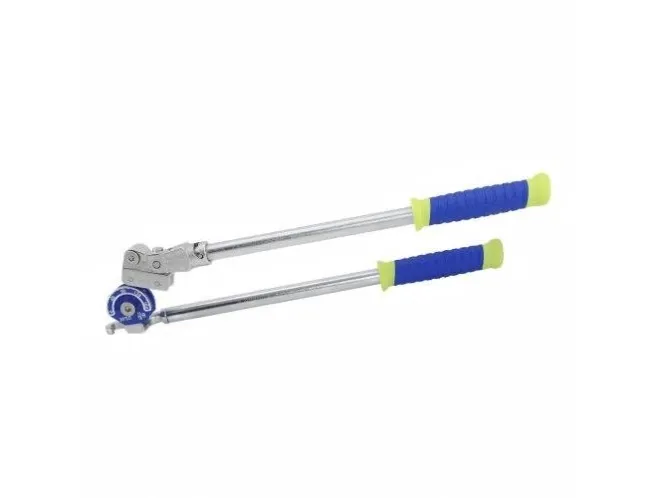
Lever-type (e.g. TB364) | 12 mm / ½ in, up to 180° | Single coil-line size, refrigeration service work |
Heavy-duty two-stage (e.g. CT-365) | 5–22 mm, up to 180° | Workshop range, hard copper and stainless |
The CT-365 two-stage, roller-wheel design supports the tube through the bend — the difference between a clean 180° bend and a collapsed wall.
Step 3 — Why the deburring reamer is not optional
After the cut, the inside of the tube end has a burr. That burr does three bad things: it scratches the flare cone so the cone cannot seal, it restricts flow at the joint, and it can leave debris in the system. A 45° eccentric tube reamer — HSS M2 blade, aligned to the bore — cuts the internal edge in a single pass so the edge that meets the flare or press fitting is clean and round.
The cheapest tool in the kit decides the most expensive repair. A reamer costs a fraction of a cutter; a weeping flare on a charged system costs a callout, a recovery, a re-charge and a reputation. This is why we bundle the TR-EER45 reamer (6–54 mm) as the natural add-on to every cutter and bender order.
Metric and imperial tube sizes — reading the label correctly
One reason fitters buy the wrong bender is that copper tube is sold in two size systems that do not convert cleanly. Refrigeration and ACR tube is usually quoted by outside diameter in inches (¼", ⅜", ½", ⅝", ⅞", 1⅛"), while plumbing copper is quoted by nominal metric size (15 mm, 18 mm, 22 mm, 28 mm, 35 mm). A "½ inch" bender and a "15 mm" bender are close but not identical, and forcing one onto the other distorts the wall.
Refrigeration / ACR (inch OD) | Plumbing copper (metric) | Note |
|---|---|---|
¼" (6.35 mm) | — | Liquid lines, small split systems |
⅜" (9.52 mm) | — | Most common split-system liquid line |
½" (12.7 mm) | 12 mm / 15 mm | Close but not interchangeable — match the former to the OD |
⅝" (15.88 mm) | 15 mm / 18 mm | Common suction line |
⅞" (22.2 mm) | 22 mm | Larger suction lines |
The practical rule: a bender is defined by the tube outside diameter it forms, so always match the former to the tube OD printed on the coil, not to the nominal size on the fitting. If you buy for a market that runs both systems, stock the inch sizes and the metric sizes rather than assuming one covers the other.
Matching the tool set to your market
If you are a distributor building a copper aisle, buy the range around the tube sizes your market installs — not the models with the biggest marketing stickers. A refrigeration-heavy market needs 12 mm lever benders, mini cutters and reamers; a drainage-heavy market needs the heavy-duty 168 mm cutter and larger benders. Stocking both ends of the range, with spares (wheels, formers, blades) from the same factory, is what turns a single sale into a repeat customer.
Market / job | Core cutter | Core bender | Add-on |
|---|---|---|---|
Refrigeration service | Mini / standard tube cutter | TB364 lever (12 mm) | TR-EER45 reamer |
HVAC install | Standard cutter | CT-365 (5–22 mm) | Reamer + flaring kit |
Plumbing / drainage | Heavy-duty 168 mm | Large bender / former set | Reamer |
Maintenance that keeps the cut square
- Replace the wheel, don't force the cut. A dull wheel tears the tube. Wheels are consumables — stock them.
- Keep the formers clean and matched. A former with a burr marks the tube; the wrong radius kinks it.
- Oil the cutter spindle occasionally. A stiff spindle makes the fitter over-tighten, which ovalises the tube.
- Store benders with the former removed. Stored under load, a bender's frame can take a set that throws the bend radius out.
The cutting and bending steps above sit inside a longer chain of joints; the tube flaring tools complete guide maps where forming, swaging and verification fit around them.
Frequently asked questions
What is the best tool to cut copper tube?
A wheel-type tube cutter matched to the diameter. It scores and shears the tube with a hardened wheel so the cut is square and the bore stays round. For large pipe use a heavy-duty 168 mm cutter; for soft copper coils use standard and mini sizes. A saw work-hardens the edge and leaves a burr.
How do I stop copper tube kinking when I bend it?
Use a bender with a former matched to the tube OD and support the tube through the whole arc. A two-stage bender with roller wheels supports the wall so it does not collapse. Never bend copper cold without a former of the right radius — that is the usual cause of a kinked, work-hardened line.
Do I need to deburr copper tube after cutting?
Yes. The cut leaves an internal burr that scratches the flare cone and restricts flow. A 45° eccentric reamer removes it in one pass so the edge that meets the flare or press fitting seals cleanly.
What size tube bender do I need for HVAC work?
For coil lines a 12 mm / ½ in lever bender covers most sizes. For a workshop doing a range up to 22 mm, a heavy-duty two-stage bender forms 5–22 mm and handles hard copper and stainless steel.
Can one cutter handle copper, aluminium and plastic pipe?
A heavy-duty cutter with a hardened wheel cuts copper, aluminium and plastic pipe within its diameter range. Match the cutter capacity to the largest pipe you cut most, and keep the wheel sharp so the cut stays square.
Building a copper tool aisle for resale or private label? Tell us the tube diameters and material you sell most. We return a focused quotation on cutters, benders, reamers and flaring tools — with OEM colour, logo and packaging.Request a quote
Related reading
See the full range in our copper tube cutters & pipe benders product page. If your work is plastic pipe, read the PVC/PPR pipe tool buying guide. For leak-free flares, start with the leak-free HVAC flare guide.
- TB365 tube bender set, 1/4 to 7/8 in — bending radius 13.8 to 80.8 mm across four sizes
- TB364 lever-type tube bender, 12 mm and 1/2 in — 180-degree lever bender for single-size van stock
- 168 mm large tubing cutter — the large-diameter end of the cutter range
- 63 mm ratchet PVC pipe cutter — plastic pipe side of the same jobBuying the cutting and bending set as a range rather than as single tools
A cutting and bending range sells differently from a single tool. Buyers build it around the tube sizes their market runs, then fill the gaps, and the order that follows is usually two or three lines rather than one.
Start from the tube sizes, not from the tool names
List the outside diameters your customers actually install, then match a cutter capacity and a bender capacity to that list. Working the other way round produces a range with a gap in the middle.
Decide whether the reamer is a separate line
A folding reamer built into the cutter is convenient but wears. A separate reamer sells as a consumable and gives your customers a reason to come back, see the HVAC copper pipe tools range.
Keep the flare step in view
Cutting and bending precede flaring, so the range should not stop at the bend. The flaring configurations are listed on the CT-190A / CT-190M page and the CT-203A / CT-203M page.
Packing, minimum order and what to put in the RFQ
These are the commercial lines that decide whether a first order runs smoothly. Confirming them in the enquiry rather than after the quotation saves a full round of email.
Line to confirm | Why it matters | What to send |
Tube size list | Cutter and bender capacity follow the list, not the model name | Outside diameters in mm or inch |
Cutter capacity | A cutter below the largest size will not close on it | Maximum diameter to be cut |
Bender capacity and form | Lever and manual sets suit different jobs | Sizes and bend radius required |
Packing format | Case quantity sets the landed cost per piece | Case quantity and packaging type |
Branding | Artwork adds lead time rather than changing the tool | Artwork file or "standard packing" |
Send the size list, quantity per line, destination and packaging requirement and we will quote against it. For a worked RFQ structure see the flaring tool RFQ checklist, which uses the same logic for any copper tool.
Where this guide's advice does not apply
Copper behaves differently from the plastic and steel tube that a general hand tool range also covers. Applying this workflow across materials is where most specification errors start.
Plastic and PPR tube
PVC and PPR are cut with a different blade geometry and are not bent with a copper bender. Those tools are grouped separately on the PVC and PPR pipe tools page and explained in the PVC and PPR tool buying guide.
Steel and brake line
Steel tube needs more force to cut and a different flare form. If your market includes automotive brake line, the double flare configuration is the one to specify, not the 45 degree single flare covered here.
Thin-wall tube
Soft thin-wall copper deforms under a clamp that would hold a heavier wall. Confirm wall thickness along with the outside diameter on the enquiry.
Questions buyers ask about copper cutters and benders
Should the cutter and bender come from the same range?
Not necessarily, but the capacities should be matched. A cutter that stops at 22 mm next to a bender that runs to 28 mm leaves a gap, so match them to the same size list.
What capacity cutter should we stock first?
Start from the largest tube your market installs and work back. A larger capacity cutter handles small tube, while the reverse is not true, see the 168 mm tubing cutter.
Do we need both a lever and a manual bender?
Lever benders suit repeated work at a bench and manual sets suit site work. Most distributors stock both once volume justifies it, see the TB364 lever-type bender and the TB365 manual tube bender set.
Is the reamer worth stocking separately?
Yes if your customers cut frequently, because the reamer is the part that wears. It also gives you a repeat order line on a low-value item.
Can we mix metric and inch tools in one order?
Yes. Confirm the size list for each line separately, because the metric and inch lists are separate configurations rather than variants of one tool.
Can we add our own branding to the range?
Yes, private label artwork, barcodes and carton marking can be applied. Mention it at the enquiry stage because it affects lead time rather than the tool.
Send us your size list
Tell us the tube sizes your market runs, the capacity you need on each line and the quantity, and we will come back with a matched range and a quotation. Email amy@longrunhardware.com, alisa@longrunhardware.com, or message us on WhatsApp at +86 158 6745 7689. Product Manager Alisa Xu handles the copper tool range, and the wider application view is in the hand tools by application guide.The two benders this guide refers to
The bender half of the workflow comes down to one question: does the counter have to cover every size, or does the crew bend one size all day? Our range answers both, and the two pages below carry the specification for each answer.
One size, carried daily. The TB364 lever-type tube bender is built for 12 mm and 1/2 in tube, in two models — TB364-08A for 1/2 in (12.7 mm) and TB364M-08 for 12 mm metric. Both bend to 180 degrees in one continuous lever stroke and work on copper, aluminium, thin-wall stainless steel and mild steel. It is a single-size shoe rather than a set, which is why it is the one refrigeration engineers carry.
Every size, kept in the workshop. The TB365 manual tube bender set is the other case: a set covering the range a workshop meets, for a counter that has to answer whatever walks in. The two are not alternatives — most distributors stock the TB364 for the van and the TB365 for the bench.
Whichever is specified, pair it with a deburring reamer and a cutter matched to the tube size. A bend made on work-hardened copper, or on a tube end that was flattened by the wrong cutter, is the failure that shows up as a callback rather than as a complaint at the counter.Small trial orders for cutter and pipe-tool ranges
To build a cutting-tool range, a small trial order covering the pipe diameters and materials you serve is a practical start. We confirm the applicable minimum for each item per order.
Send the pipe diameter, the material (PVC, PPR or copper) and your first-order quantity, and we will confirm the matching cutter, packing and terms.