TB364 Lever-Type Tube Bender 12 mm / 1/2 in, 180 Degree
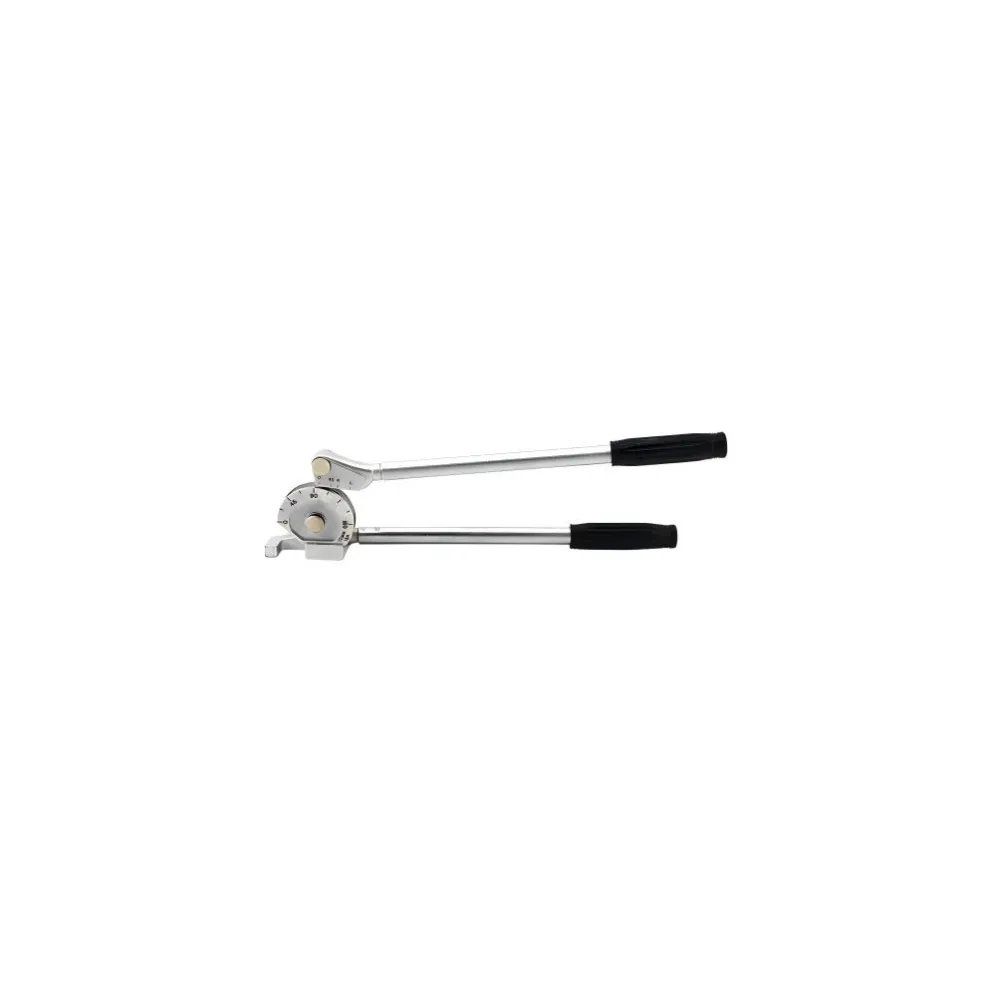
TB364 manual lever-type tube bender for 12 mm and 1/2 in tube, 180-degree bends in copper, aluminium and thin-wall steel. Single-size tool for installer vans.
There are two kinds of tube bender buyer. One stocks a set, because the counter has to cover whatever walks in. The other stocks one size, because the crew only ever bends 1/2 in and a set is money sitting in a case. The TB364 series is the second kind: a single-size lever bender for 12 mm and 1/2 in tube, built to be carried, replaced and re-ordered rather than admired.
At a glance
- Two models: 1/2 in (12.7 mm) and 12 mm metric tube
- Bends to 180 degrees in one continuous lever stroke
- Copper, aluminium, thin-wall stainless steel and mild steel
- Single-size shoe with a machined groove, no adjustment to get wrong
- Lever handle gives mechanical advantage on the tight final 30 degrees
Specification
Model | Tube outside diameter | Maximum bend angle | Suitable tube materials |
|---|---|---|---|
TB364-08A | 1/2 in (12.7 mm) | 180 degrees | Copper, aluminium, thin-wall stainless steel and steel |
TB364M-08 | 12 mm | 180 degrees | Copper, aluminium, thin-wall stainless steel and steel |
The two models are not interchangeable. A 12.7 mm shoe on 12 mm tube leaves 0.7 mm of clearance, which is enough to let the tube ride out of the groove and kink at the apex. This is the single most common ordering error in the tube-working category, and it is why we ask for the tube specification rather than the pipe size.
Why 1/2 in and 12 mm are two products, not one
To a buyer outside the trade, 12 mm and 1/2 in look like the same number rounded in two directions. On a jobsite they are two different tube standards, from two different supply chains, and a distributor selling into both the metric and the inch market has to stock both. The difference shows up in the fittings, not the bender: a 1/2 in flare nut will not seat on 12 mm tube, and the resulting leak is blamed on the flare rather than on the size mismatch.
We keep both models in the same series so that a distributor can cover the mixed market from one purchase order, one carton configuration and one spare-parts list. The pricing argument for the pair is simple — the second model adds a SKU, not a supplier relationship.
Where a lever bender beats a set
- Van stock. One tool, one size, no case to lose. A service crew bending 1/2 in all day does not need a 7/8 in shoe.
- Speed on the last 30 degrees. The lever multiplies hand force exactly where a hand bender stalls, which is what stops the tube from ovalising at the end of a 180-degree return bend.
- Replacement economics. When a bender is lost or damaged, the counter replaces one SKU instead of a set.
- Training. A single grooved shoe has no setup step, so an apprentice can be trusted with it on the first day.
Where the set wins is variety: if the same crew also runs 1/4 in gauge lines or 5/8 in suction lines, the TB365 four-size set covers the range for a modest unit-cost premium over two single tools.
What the tool will not do
It will not bend hard-temper copper. It will not bend heavy-wall stainless without a mandrel, and it will not produce a bend tighter than the shoe radius, whatever the installer does with the lever. Those three limits are physical, not commercial, and any supplier claiming otherwise is describing a different tool.
It also will not fix a badly cut tube end. If the end is out of square or burred, the tube will not seat fully in the groove and the bend will start off-axis. That is why the tube cutter and a reamer belong in the same conversation as the bender — the sequence is cut, deburr, then bend, and skipping the middle step is what produces the off-centre flare that shows up as a leak three months later.
OEM and packing
Body colour to a Pantone reference, laser-marked or etched logo on the handle, printed sleeve or moulded case, and instruction sheets in the destination language. Because the tool is compact, the carton is efficient and the per-unit freight cost is low — which is why single-size benders are popular as an entry item in a first container.
Mixed containers are the norm: the bender consolidates with flaring tools, cutters and reamers and with the flaring accessories line without any packing conflict.
Frequently asked questions
Can I buy one model and use it for both 12 mm and 1/2 in tube?
No. The shoes differ by 0.7 mm and that clearance will let the tube kink. Buy the model that matches the tube you actually run, or both models if you serve both markets.
Does it bend 180 degrees in a single stroke?
Yes, up to 180 degrees, with the lever providing the advantage through the last part of the arc. Deep return bends on small radius are the case where the advantage matters most.
What tube wall thickness can it handle?
It depends on material and temper, not on a single number. Annealed copper in normal refrigeration wall bends cleanly; thin-wall stainless needs care; hard temper should not be attempted. Send us the tube spec.
Is a spare shoe available separately?
Yes, as a spare part against an order. Quote the model number and the component you need.
What is the minimum order quantity?
Lower for the standard finish than for a Pantone body with logo marking. Give us the finish and quantity and we will quote both options.
Can the tool be branded for our own catalogue?
Yes. Laser marking, body colour, sleeve print, carton print and instruction language are all set per order. Artwork approval happens before production, not after.
Continue reading
Request a quotation
Send the model, the tube specification you run, quantity, finish and destination port. We confirm tool suitability and quote price, MOQ and lead time in one reply.