63 mm Ratchet PVC Pipe Cutter with Replaceable Blade
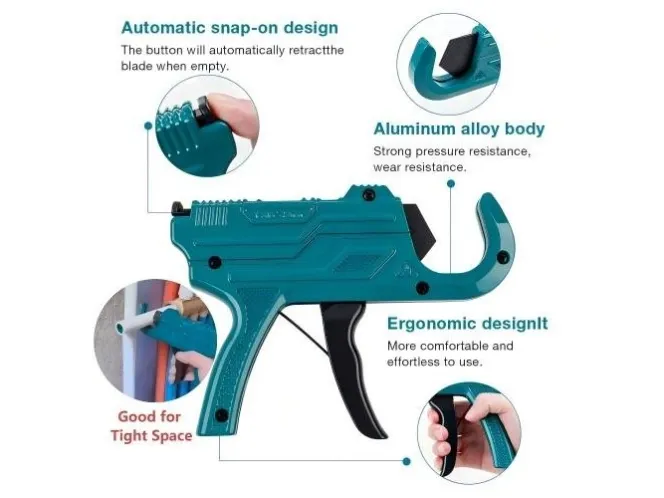
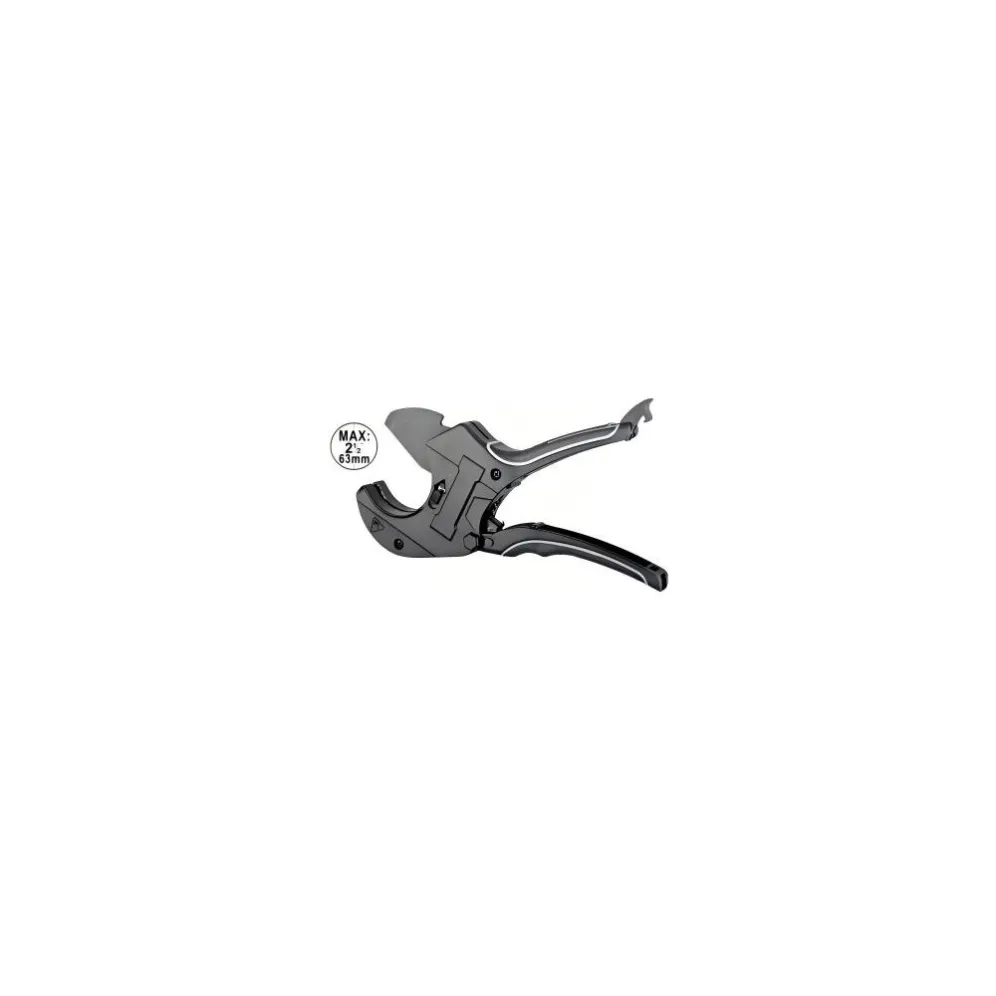
63 mm ratchet PVC pipe cutter with aluminium alloy and TPR handle, Teflon-coated high carbon blade and quick blade change. 42 mm and 36 mm sizes for plumbing.
A PVC pipe cutter is judged on one thing at the counter: whether it still cuts square after a season of use. The blade dulls, the ratchet slips, the handle cracks at the pivot — and the customer comes back with the tool rather than the complaint. This page covers the 63 mm ratchet cutter we supply for plumbing and irrigation ranges, the 42 mm and 36 mm sizes that sit under it, and the two specifications that decide how long the tool lasts.
At a glance
- 63 mm cutting capacity for PVC, PPR, PE and vinyl pipe
- Aluminium alloy body with TPR overmould, so it survives a drop onto concrete
- High carbon steel blade with Teflon coating for low-friction cutting
- Ratchet action multiplies hand force, so 63 mm pipe cuts without a second hand
- Blade replacement in the field, with spare blades supplied per order
Specification
Property | 63 mm ratchet cutter |
|---|---|
Cutting capacity | up to 63 mm outside diameter |
Handle material | Aluminium alloy with TPR grip |
Blade material | Stainless iron or high carbon steel |
Blade surface treatment | Teflon coating on high carbon steel |
Action | Automatic ratchet, single-hand operation |
Blade change | Replaceable blade, quick release |
Body colour | Customisable to a Pantone reference |
Packing | Single blister, double blister, or zip tie and colour card |
The rest of the size family
Size | Type | Where it sells |
|---|---|---|
32 mm | Portable, compact body | Retail and light domestic plumbing |
36 mm | Standard and labour-saving lever versions | Domestic plumbing, PPR and PVC |
42 mm (1-5/8 in) | Automatic ratchet, approx. 210 g | The volume size in most markets |
63 mm | Ratchet, heavy duty | Drainage, irrigation mains, site work |
Most distributors carry 36 mm and 42 mm as the volume lines and 63 mm as the top of the range. The 63 mm is not a big seller by unit count, but it is the size that gets specified on drainage work, and a range that stops at 42 mm loses that enquiry to a competitor.
The blade decides the cut, the body decides the life
Two cutters at the same price can behave completely differently after fifty cuts. The difference is blade geometry and heat treatment, not the colour of the handle. A blade that is too hard chips at the edge when it meets a filled PVC compound; a blade that is too soft rolls over and starts to wander off the cut line, which is when the customer says the tool "cuts crooked".
For high carbon steel we specify a Teflon coating. The coating is not there to look good: PVC contains plasticisers that grab a bare steel blade, and the drag is what produces the white stress mark on the cut face that plumbers read as a cheap tool. Teflon reduces that friction, and the cut face comes out cleaner for longer.
The body matters for a different reason. A cast aluminium body with a TPR overmould survives being dropped and keeps the pivot aligned; a stamped steel body bends at the pivot and the ratchet starts to skip. Skipping is fatal — once the pawl slips, the tool will not hold pressure on a 63 mm cut, and no amount of blade sharpening fixes it.
Ratchet versus lever: which one to stock
A ratchet cutter engages in steps, so the user can reposition their grip mid-cut. That is what makes single-hand cutting of 63 mm pipe possible. A plain lever cutter is faster on small diameters and cheaper, which is why 32 mm and 36 mm versions are usually sold as lever tools while 42 mm and 63 mm are ratchet.
If a customer is cutting PPR for fusion welding, the requirement is a square, burr-free face — the weld only holds if the pipe ends meet flat. That is a blade and ratchet question, not a body question, and it is why the cutter conversation belongs next to the PVC and PPR tool range rather than on its own.
OEM, packing and the retail decision
Colour, logo placement, blister card artwork and barcode are all set per order. The three packing options exist for three different channels: single blister for retail pegboard, double blister for markets where the tool is sold in pairs, and zip tie with colour card for the budget channel where the card is the only branding.
Blade spares are the commercial detail worth planning at the same time as the tool. A cutter with no spare blade available is a one-off sale; a cutter with a blade on the same order is a repeat line. We quote spare blades with the tool so both live on the same purchase order.
Frequently asked questions
Will the 63 mm cutter cut PPR as well as PVC?
Yes. PPR is softer than filled PVC and cuts easily. For fusion welding the important point is a square face, so keep the blade sharp and cut with a steady stroke rather than a snap.
How often does the blade need replacing?
It depends on pipe compound and wall thickness rather than on a fixed number of cuts. Filled PVC and glass-filled compounds wear a blade far faster than plain pipe. Spare blades are supplied per order.
Is the blade replaceable by the end user?
Yes, the blade releases without special tools. We recommend shipping an instruction sheet in the destination language with the first order.
What is the minimum order quantity?
It differs between the standard colour and a custom Pantone body with printed card. Send the quantity and packing choice and we quote both.
Can the cutter be packed under our own brand?
Yes. Card artwork, logo, barcode and body colour are all private-label items. Artwork is approved before production.
Do you supply a set with several sizes in one carton?
Yes, a mixed carton across 32, 36, 42 and 63 mm is normal for a distributor opening a range. State the split by size and we quote per SKU.
Continue reading
Request a quotation
Send the sizes, quantities, packing choice and destination port. We reply with price, MOQ, lead time and blade spare cost in one message.