Drain Cleaners & Augers
JQ-015 Drain Cleaning Brush 5 mm 0.8 m / 3 m
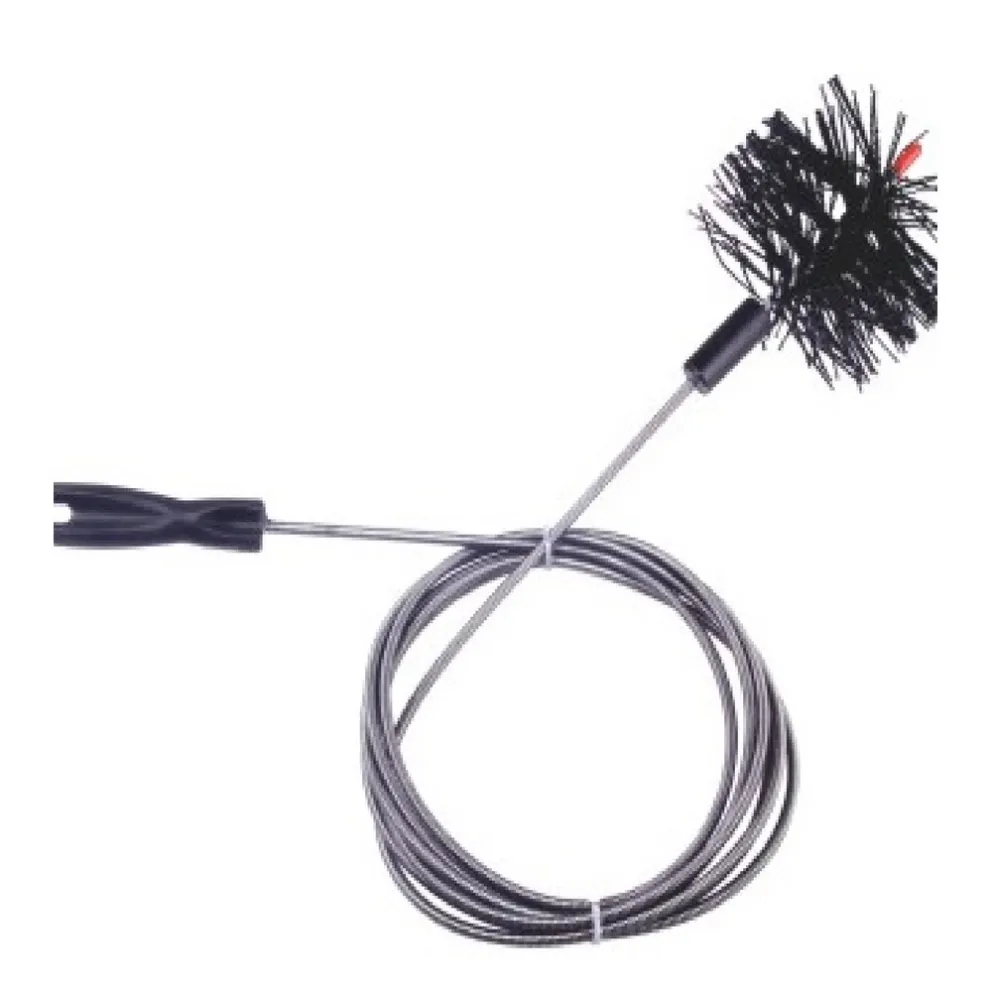
JQ-015 drain cleaning brush on a 5 mm flexible spring: 0.8 m or 3 m, 1.2 mm line, stiff round bristle head. Clears film that causes repeat blockages.
Specifications
- Models
- JQ-015-1 and JQ-015-2
- Cable diameter
- 5 mm on both items
- Working length
- 0.8 m (JQ-015-1) / 3 m (JQ-015-2)
- Wire diameter
- 1.2 mm
- Weight
- 0.15 kg / 0.45 kg
- Head
- Round stiff-bristle brush, supplied as one assembly with the spring
- Grip
- Moulded handle, marking surface for private label
- Application
- Cleaning the bore of small wastes: hair, soap and shaving scum, food residue, mud
- Not for
- A standing blockage, WC trapways, set grease or scale, runs beyond 3 m
- Packing
- Carton data quoted per item; grip marking and header card available to order
The JQ-015 is a drain cleaning brush on a flexible spring, not an unblocking auger. The difference matters commercially: a cable grips a blockage and pulls it out, while a brush scours the wall of the pipe and takes the film off it. One answers a call-out, the other prevents the next one.
Two items cover the range. JQ-015-1 runs 0.8 m of 5 mm cable with a 1.2 mm line at 0.15 kg. JQ-015-2 runs 3 m at 0.45 kg. Both carry the same round stiff-bristle head and the same moulded grip, so the only decision a buyer makes is reach.
The range
Product No. | Cable diameter | Length | Wire diameter | Weight |
|---|---|---|---|---|
JQ-015-1 | 5 mm | 0.8 m | 1.2 mm | 0.15 kg |
JQ-015-2 | 5 mm | 3 m | 1.2 mm | 0.45 kg |
Why 5 mm and not 6 mm
Because this tool goes where the small wastes are. A 5 mm spring follows a basin trap and a urinal outlet without loading the fitting, and the 1.2 mm line keeps it flexible enough to turn a tight bend by hand. A heavier cable would scrub harder and would not get round the bend in the first place.
What the two lengths are for
0.8 m is a hand tool for a basin, a bidet or a urinal — the whole working distance is inside the fixture and sometimes inside the trap. 3 m reaches from the fixture into the branch, which is where the film that causes repeat blockages actually sits.
Cleaning is a different job from clearing
Tool | What it does to the pipe | Right moment to use it |
|---|---|---|
Pump plunger | Reverses flow inside the trap | Fixture holding water, soft blockage |
Drain brush (JQ-015) | Scours the wall, removes film and scale | Drain runs but smells, or blocks twice a year |
Hand auger | Grips and retrieves a mass | Blockage will not move under pressure |
Drum machine | Drives a cutter down a branch | Blockage past the trap, longer run |
Jet washer | Blasts the full bore | Grease and heavy deposit, outside work |
The film that causes repeat calls
A drain that blocks, clears, and blocks again in the same place is not being cleared — it is being reopened. Every pass of a cable pushes a channel through the middle and leaves the deposit on the wall. The channel narrows again, and the next blockage arrives sooner. A brush is the only hand tool in this range that addresses the wall rather than the channel.
Smell without a blockage
A drain that runs freely and still smells is holding organic film on the wall of the trap or the branch. There is nothing to auger and nothing to plunge. Brushing the bore is the correct response, and it is a service a plumber can charge for rather than a part to sell once.
How the brush is used
Remove the fitting first
A basin trap and a urinal outlet both need to come off before the brush goes in, or the brush simply cleans the fitting and never reaches the pipe. On a urinal, the spreader has to come off; on a basin, the bottle trap.
Feed, then work the bristles
Push the head into the bore and turn the handle as it goes, so the bristles scuff the full circumference rather than one side. Once the head is at the far end, withdraw it slowly while still turning. The dirt comes back on the bristles, so have a bucket under the opening.
What comes out
Hair, soap and shaving scum, food residue, the black biofilm that grows in a warm waste. The catalogue lists hair, vegetable dregs, food particles and mud among what the tool removes — all of it soft material that a brush lifts and a cable pushes aside.
Where it earns its place in a range
Facility maintenance
A hotel, an office block or a school with a bank of urinals has a recurring problem that is not a blockage. Scheduled brushing keeps the film down and removes the weekly call-out. That is a repeat purchase pattern, not a one-off sale.
Sinks in food service
A kitchen sink strainer catches the solids and passes the grease. The bore below it coats. Brushing that bore is what a preventive-maintenance contract actually consists of, and this tool is the cheapest item that does it.
Retail and janitorial
Sold next to the drain chemicals, a 3 m drain brush replaces them for most domestic users. It is the one product in the range that a non-trade buyer understands immediately, which makes it a useful line for a distributor selling into hardware retail.
When the JQ-015 is the wrong choice
A drain that is blocked, not dirty
If water is standing in the fixture, a brush will not clear it. The bristles fold against a solid mass and the spring has no way to grip. Start with a plunger, then move to a cable — the JQ-027 pump plunger and the JQ-002 hand drum auger cover that sequence.
Toilets
The trapway of a WC pan is not a surface a 5 mm brush can clean usefully, and the head cannot be pushed round the bend under load. A blocked pan needs the JQ-006 toilet auger, and a pan that blocks repeatedly needs a camera, not a brush.
Grease, scale and roots
Bristles do not cut. Set grease, mineral scale on old cast iron and any root intrusion are outside what this tool touches. Saying so at the point of sale is what keeps the range credible — a distributor who sells a brush as a universal drain solution loses the customer at the first failure.
Long branches
3 m is the working length of the long item. Beyond that the spring cannot be turned from the handle with any control, and the head wanders. For longer runs the JQ-009 range reaches 10 m, or the 9 m drain rod set covers outside gullies and inspection chambers.
Building the range
What it pairs with
This is the preventive item in a drain assortment, and it belongs next to the reactive ones. A trade counter that stocks the brush and the plunger and the auger sells a sequence rather than a product. The drain augers and cleaners range page shows how the line fits together, and the spare cables and heads page covers the consumables.
Where the numbers come from
Every figure on this page is taken from our own drain cleaner catalogue. The brush head and the spring are supplied as one assembly; there is no separate head item for this model.
Private label
The grip is the visible branding surface on this tool, with the carton print and the header card as the other two. Because the head and spring are fixed by function, the handle is where a customer's own marking goes. Artwork approval happens at sample stage.
Ordering
Both item numbers are usually ordered together: the short one for fixture work, the long one for branches. Send the quantities and the destination port and we will return a quotation with carton data. Contact [email protected], [email protected] or [email protected], or WhatsApp +86 158 6745 7689.
Practical notes on where each tool sits in a maintenance routine are in the plumbing and drain maintenance tools guide, and the cable and pipe sizing question is covered in the cable size chart. The wider range, including the rod sets and drum machines, is on our drain auger manufacturer page.
Buyer questions
Is a drain brush the same as a drain auger?
No. An auger grips a blockage and pulls it out; a brush scours the wall of the pipe. An auger is used when the drain is blocked, a brush when the drain runs but keeps blocking or smells. The two are complementary, not alternatives.
Why are there only two lengths?
Because the tool has two jobs. 0.8 m covers work inside a fixture and its trap, and 3 m covers the branch behind it. A longer brush cannot be turned from the handle with any control, so adding lengths beyond 3 m would not produce a usable tool.
Can the brush head be replaced?
The head and spring are supplied as one assembly, so there is no separate head item for the JQ-015. That is different from the auger range, where heads are matched to cables and sold as spares.
Will it scratch plastic pipe?
The bristles are stiff but not abrasive, and the tool is intended for the film that lines a waste pipe. It is not a cutter: it will not score PVC or PPR the way a damaged cable end can.
How often should a drain be brushed?
In commercial use, on the maintenance interval that suits the fixture — a bank of urinals and a kitchen sink bore both benefit from routine brushing rather than reactive clearing. In domestic use, when a drain starts to smell or block more often than it used to.
Can it be used with a drill?
No. It is a hand tool, turned by the grip. A drill would spin the spring faster than the bristles can follow and would whip the head in the bore.