Drain Cleaners & Augers
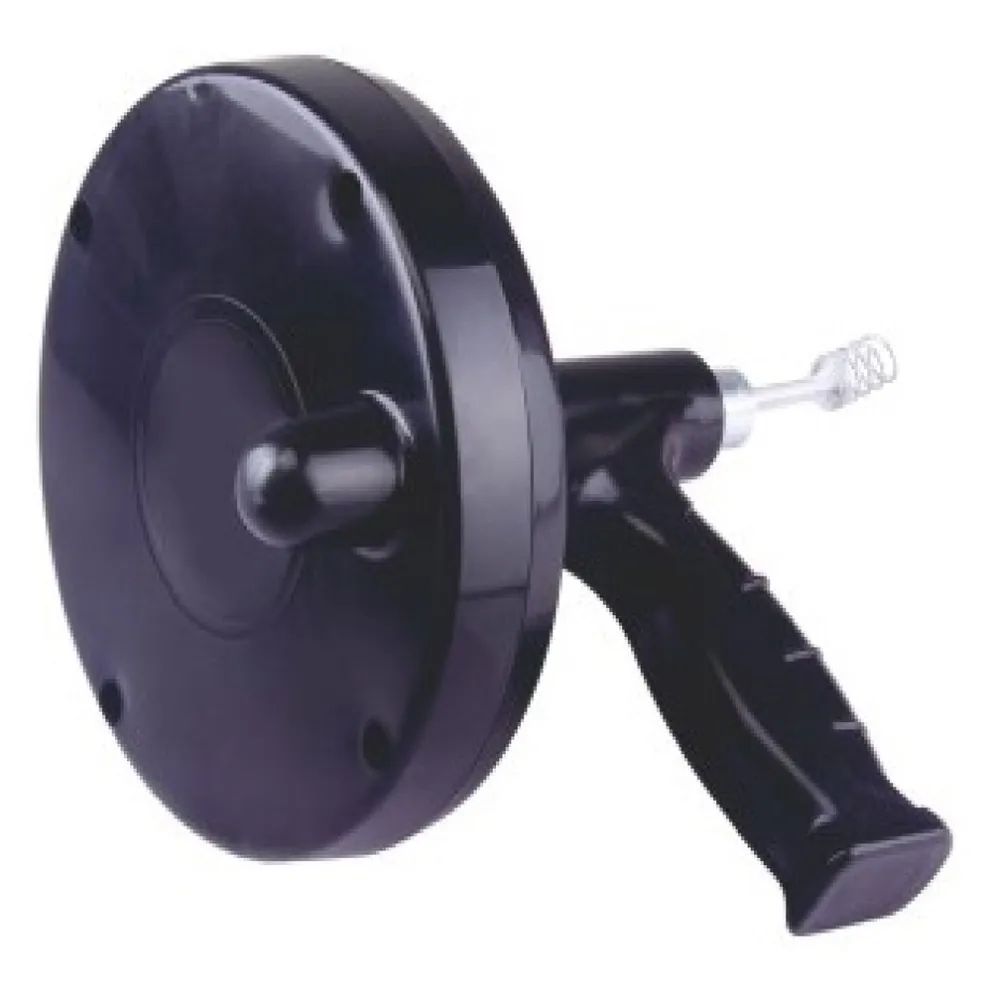
JQ-002A JQ-002B Hand Drum Auger 6 mm 4-7.6 m
JQ-002A and JQ-002B hand drum augers: 6 mm cable in 4, 4.5, 6, 7 and 7.6 m, corkscrew head, plastic drum. Ten item numbers, black or blue case.
Specifications
- Models
- JQ-002A (black case), JQ-002B (blue case)
- Cable diameter
- 6 mm on every item
- Working lengths
- 4 m, 4.5 m, 6 m, 7 m, 7.6 m
- Wire diameter
- 1.2 mm or 1.3 mm, per item build
- Weight
- 0.7/0.75 kg (4 m) to 1.15/1.2 kg (7.6 m)
- Head
- Corkscrew spiral
- Drum
- High-impact heavy-duty plastic case
- Items
- Five per model, -1 to -5; ten item numbers in total
- Packing
- Carton data quoted per item; drum colour, carton print and handle marking available to order
The JQ-002 is a hand drum auger for the blockages a plumber meets most often: a basin that drains slowly, a bath waste that holds water, a kitchen sink that gurgles. Six millimetres of cable in a moulded plastic drum, five lengths from 4 m to 7.6 m, and a corkscrew head on the end that threads into the obstruction instead of hammering at it.
Two versions are made. JQ-002A is moulded in black, JQ-002B in blue. The specification of the two is identical, item for item — the difference is the case colour, which makes the pair useful for private label and for separating two customers' stock in the same warehouse. Ten item numbers in total.
What the JQ-002 range covers
Product No. | Cable | Length | Wire diameter | Weight |
|---|---|---|---|---|
JQ-002A-1 / JQ-002B-1 | 6 mm | 4 m | 1.2 / 1.3 mm | 0.7 / 0.75 kg |
JQ-002A-2 / JQ-002B-2 | 6 mm | 4.5 m | 1.2 / 1.3 mm | 0.75 / 0.8 kg |
JQ-002A-3 / JQ-002B-3 | 6 mm | 6 m | 1.2 / 1.3 mm | 0.9 / 0.95 kg |
JQ-002A-4 / JQ-002B-4 | 6 mm | 7 m | 1.2 / 1.3 mm | 1.05 / 1.1 kg |
JQ-002A-5 / JQ-002B-5 | 6 mm | 7.6 m | 1.2 / 1.3 mm | 1.15 / 1.2 kg |
Why five lengths and not one
Because the distance from the trap to the blockage is not a constant. A basin trap sits within half a metre of the waste; a bath trap is set back further and the run to the stack can be two or three metres; a kitchen sink on a long branch can need seven. Stocking one length means the plumber either runs out of cable or pays for cable he does not need on every job.
Why the wire diameter is listed as two numbers
Each item carries a 1.2 mm or a 1.3 mm line to the same cable diameter, and the weight figure follows the line that was fitted. The heavier line is the one to specify where the cable will be driven hard or where the drum will be turned against a stubborn plug. Confirm which line a given order is built with — the two weights on the sheet are not two products, they are the two build options.
The corkscrew head, and why it matters
Threading rather than pushing
A corkscrew head works its way into hair, paper and textile and takes hold. Once it has hold, the obstruction comes back with the cable. A plain bulb or a flat head does the opposite: it pushes the mass down the pipe and buys the plumber a week before the same call comes back.
What it will not do
It will not cut roots, and it will not open a line that is closed by hardened grease. Those need a cutting head or a pressure jetter. The corkscrew is a retrieval tool, and selling it as a universal drain solution is how a distributor ends up with a return.
Where the head is at its best
Bath wastes and basin traps are the classic case. Hair binds with soap residue into a felt-like plug that sits on the trap arm, and it comes out in one piece on a corkscrew. The same head works on a urinal outlet and on the short branch behind a washing machine standpipe.
Matching the length to the job
Blockage | Working length needed | Item |
|---|---|---|
Basin or bidet trap arm | Under 1 m | Any length; 4 m is the economical stock item |
Bath waste and trap | 1–2 m | 4 m or 4.5 m |
Kitchen sink on a short branch | 2–4 m | 4.5 m or 6 m |
Kitchen sink on a long branch | 4–6 m | 6 m or 7 m |
Branch to the stack, reachable from a rodding eye | 6–7.6 m | 7 m or 7.6 m |
WC pan trapway | — | Not this tool — use a toilet auger |
When 4 m is enough and when it is not
For a service plumber on domestic work, the 4 m item covers most basin and bath calls and is the cheapest thing in the van to replace. For a maintenance company working commercial kitchens, the 7.6 m item is the one that gets used, because the runs are longer and the traps are further from the blockage.
Reaching the stack
Once the cable has passed the trap and is still feeding, the operator is no longer working in the fixture — they are working in the branch. That is the point at which a hand drum stops being the right tool, and the heavier manual drum auger or a powered machine takes over.
Construction and what it means in service
The plastic case
The drum is a high-impact plastic moulding. That is a deliberate trade against a steel drum: it does not dent, it does not rust in a wet van, and it costs less to ship. The trade-off is that it will not take the punishment of a machine-driven drum, which is why the powered tools in the range use a different housing.
The handle and grip
A pistol-style grip with the cable exiting through a guide at the front. The guide is what stops the cable kinking at the drum mouth — the failure point on cheap hand augers, where the cable bends sharply as it leaves the case and work-hardens until it snaps.
What wears out first
The cable, then the head, then the guide. The drum itself rarely fails. That is worth knowing when a distributor sets up a service-parts line: spare cables and heads sell alongside the tool to the same customer, and they are what brings a trade buyer back between machine purchases.
When the JQ-002 is the wrong choice
A toilet that will not clear
A 6 mm cable fed into a WC pan will kink in the bowl and cannot negotiate the trapway properly. The right tool there is the JQ-006 toilet auger, which is short by design and sleeved so it does not mark the glaze.
Main drains and stacks
Hand drums are not main-line tools. If the complaint is a backing-up floor drain, a gully or a stack serving several flats, the cable volume and the torque required are outside what a plastic drum can deliver. Quote a drum machine, not a hand tool.
Roots and heavy scale
Neither the corkscrew head nor the 6 mm cable is built for cutting. Roots will deflect the head and heavy scale will stop it. Saying this at the quotation stage is cheaper than a returned order.
Repeated calls at the same address
If a customer is clearing the same line every few months, the tool is not the problem. That pattern points to a defect in the pipe or a usage issue, and the honest answer is a camera survey rather than a bigger auger.
JQ-002 against the rest of the range
Against JQ-003
The JQ-003 runs the same 6 mm cable but is built for drill driving, and at 6 m it weighs 1.25 kg against 0.9/0.95 kg for the JQ-002 at the same length. The extra weight is structure, not cable. A customer who turns the drum by hand wants the JQ-002; one who clamps a drill on wants the JQ-003.
Against JQ-004
The JQ-004 hand-turn auger covers 4.5 m and 6 m at a lower weight again, and is the entry price point in the range. Where the JQ-002 earns its place is the top of the length range: 7 m and 7.6 m are not available on the JQ-004.
Against the JQ-009 professional range
Above 7.6 m and above 6 mm, the JQ-009A, B and C take over: 7 mm to 10 mm cable in 3 m to 10 m, 39 item numbers. That range is aimed at contractors and at distributors serving them; the JQ-002 is aimed at the general trade and at retail.
Where the two case colours help
Two identical tools in two colours is a small thing that solves a real problem for a distributor: it lets one stock line serve two customer brands without a second tooling cost, and it makes picking errors visible on a shelf. No other product in the range offers that.
Selling the JQ-002
The natural assortment
Four items cover most of the demand: the 4 m for basins and baths, the 6 m for kitchens, the 7.6 m for maintenance companies, and one toilet auger for the pans that come up on the same calls. The drain augers and cleaners range page shows how the whole line fits together.
Reference material for a trade counter
Two pages answer the questions a counter assistant gets asked. The cable size chart maps cable diameter to pipe size, and the guide to the twelve auger heads explains which head suits which blockage. The drum auger versus drain snake comparison settles the naming confusion that costs sales.
Packaging and marking
The tool ships in a carton with the item number and the drum colour on the label. Private label covers the carton print, the drum moulding colour and the handle marking; minimum quantities and artwork requirements are confirmed at quotation, because they change with the moulding. Retail-ready blister packing is a separate discussion — see the guide to choosing an auger range for wholesale for how buyers usually split the two channels.
Sampling
Ask for the 4 m and the 7.6 m together. The pair shows the extremes of the range in the hand, and the difference in cable stiffness between them is the thing a buyer is actually judging. Specification sheets do not convey it.
Ordering
Send the item numbers, the quantity and the destination port, and we will return a quotation with carton data. The export team is at [email protected], [email protected] and [email protected], and on WhatsApp at +86 158 6745 7689.
Every figure on this page is taken from our own drain cleaner catalogue. The long-form notes on the wider range, including the rod sets and the drum machines, are on our drain auger manufacturer page, and the practical side of clearing a blocked line is covered in the plumbing and drain maintenance tools guide.
Buyer questions
Is a hand drum auger enough for a blocked kitchen sink?
Usually yes, if the blockage is hair and food debris in the trap or the short branch. If the line is closed by set grease, the corkscrew head will pass through the channel that already exists and come back clean; that job needs a cutter or a jetter, not a longer cable.
What is the difference between JQ-002A and JQ-002B?
Case colour only. JQ-002A is black and JQ-002B is blue, and the five lengths and their specifications are identical between the two. It exists so one tool can serve two customer brands from a single production line.
Why does one item show two weights?
Because the cable can be built with a 1.2 mm or a 1.3 mm wire, and the weight follows the wire. Confirm which build the order requires; the pair of figures is a build option, not two separate products.
Can the JQ-002 be used in a toilet?
It can be fed in, but it is not the right tool. A 6 mm cable kinks in the bowl and does not follow the trapway, and bare steel can mark the glaze. Use a toilet auger with a sleeve for any WC pan.
Do you supply spare cables and heads?
Yes. Cable and head are the wear items on this tool and both are available separately, which matters in markets where a plumber services a tool rather than replacing it. Ask for the spare list with the tool quotation.
Which lengths should a first order include?
Four, in most markets: 4 m, 6 m, 7.6 m and one toilet auger. That covers basin and bath work, kitchen branches, maintenance-company demand and the WC pans that arrive on the same calls. The middle lengths sell more slowly than the extremes.
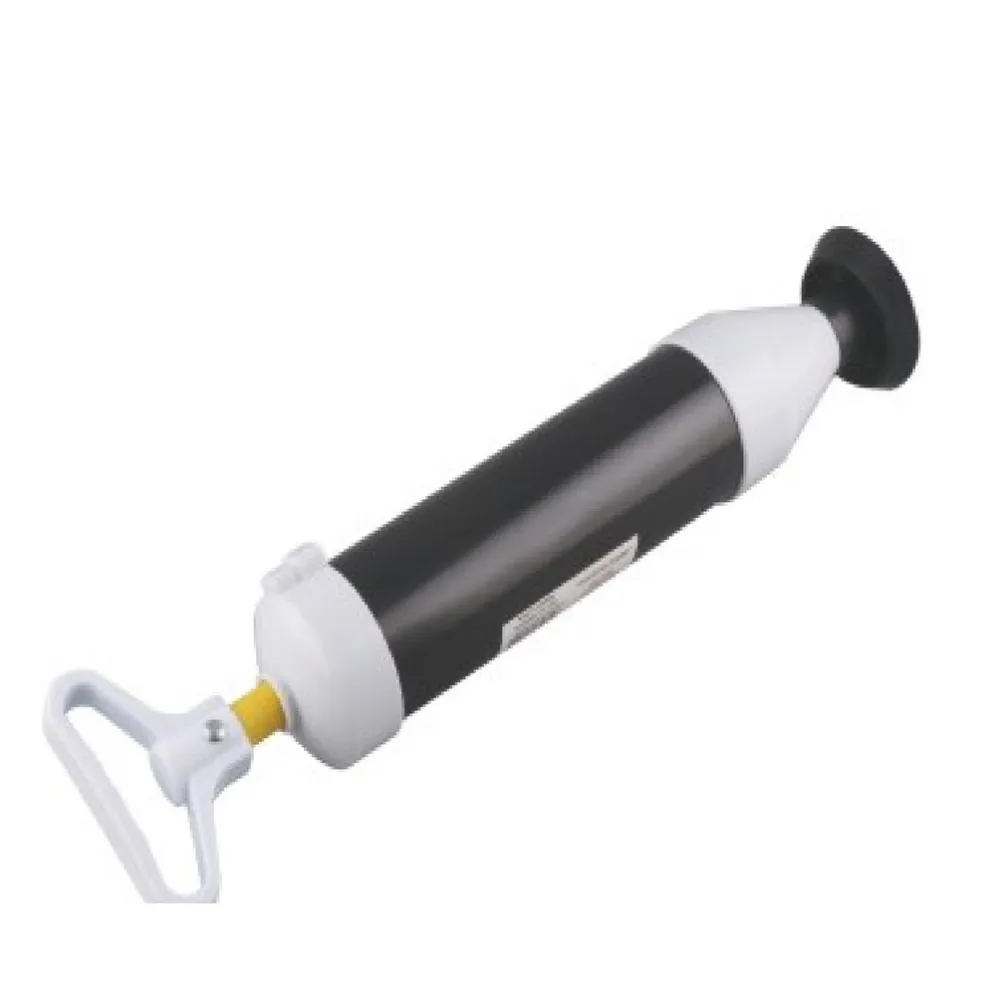
Most domestic fixture blockages clear without steel. The JQ-027A and JQ-027B pump plungers are the first thing to try: a piston body with a suction handle and two rubber heads, large for a WC pan and small for a sink waste. Pulling the handle up reverses the flow inside the trap, which is what breaks a bonded plug of hair and soap rather than just shoving it along the pipe.