Drain Cleaners & Augers
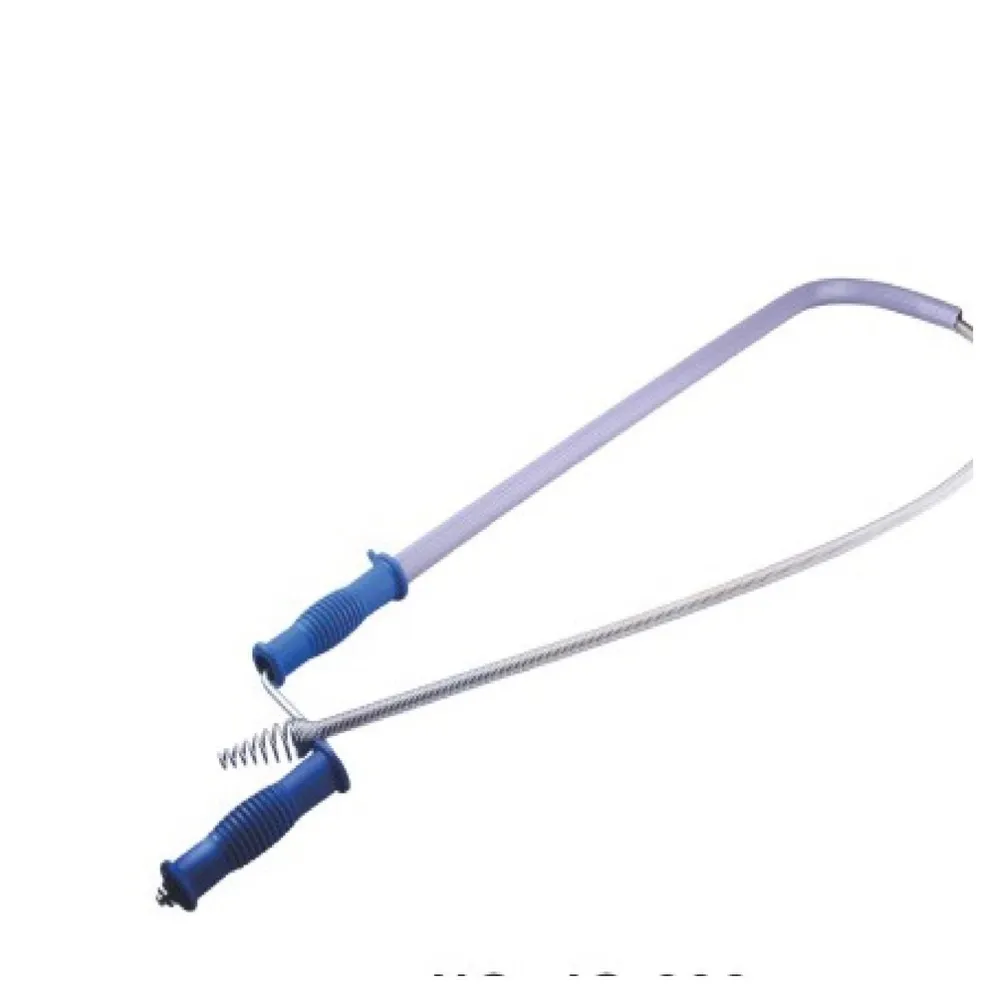
JQ-006 Toilet Auger with Vinyl Guard 9-10 mm
JQ-006 toilet auger, 1 m cable in 9 mm or 10 mm with a 2 mm line and vinyl bowl guard. Two item numbers, 0.55 to 0.58 kg, OEM marking from Ningbo.
Specifications
- Models
- JQ-006-1 and JQ-006-2
- Cable diameter
- 9 mm (JQ-006-1) / 10 mm (JQ-006-2)
- Working length
- 1 m
- Line diameter
- 2 mm
- Weight
- 0.55 kg / 0.58 kg
- Head
- Open spring spiral with hooked lead
- Bowl protection
- Vinyl sleeve over the cable at the bowl contact point
- Application
- WC pan trapway blockages; hair, paper and textile
- Packing
- Carton data quoted per item; sleeve print and handle marking available
The JQ-006 is a toilet auger built around one specific problem: a blockage that sits inside the trapway of a WC pan, where a drum machine cannot reach and a plunger cannot shift. It is 1 m long, carries a 2 mm spring-steel line, and the part of the tool that touches the pan is sleeved in vinyl rather than bare steel.
Two item numbers cover the range. JQ-006-1 runs a 9 mm cable at 0.55 kg. JQ-006-2 runs a 10 mm cable at 0.58 kg. Length and line diameter are identical. That is the whole range, and it is deliberately short — this is a tool for one job, not a substitute for a drain machine.
What the JQ-006 is, in three parts
The spring head
The business end is a short open spiral with a hooked lead. It grips hair, paper and textile rather than boring through them. On a toilet this matters more than on any other drain, because the obstruction is usually a physical mass that has to come back out with the tool. A boring head would push it deeper into the trap.
The 2 mm line
Both items use a 2 mm line. That is heavier than the 1.4 mm line on a 7 mm hand auger, and the reason is torque. To get round a trapway the cable has to be pushed hard while it is bent through roughly 180 degrees. A thin line buckles and coils in the bowl instead of turning the head. 2 mm holds its shape under that load.
The vinyl guard
The sleeved section is not cosmetic. Vitreous china scratches, and a scratched bowl traps residue and stains permanently — a defect the installer owns. The guard also keeps the cable from marking the rim on the way in and out, and gives the operator something to hold that is not a wet steel coil. In the catalogue this is listed simply as protection against damage to the toilet, which is accurate and worth repeating to any customer who asks why the tool costs more than a bare spring.
JQ-006-1 or JQ-006-2: 9 mm against 10 mm
Product No. | Cable diameter | Length | Line diameter | Weight |
|---|---|---|---|---|
JQ-006-1 | 9 mm | 1 m | 2 mm | 0.55 kg |
JQ-006-2 | 10 mm | 1 m | 2 mm | 0.58 kg |
What the extra millimetre changes
A 10 mm cable carries a wider head, so it holds a bigger mass of paper on the way out and clears a pan that has been blocked for a few days more reliably. It is also stiffer, which helps when the blockage sits right at the back of the trap. Against that, it is a tighter fit in narrow trapways and in older close-coupled pans with a shallow outlet.
How distributors usually split the two
The pattern that holds in most markets is not one or the other. Trade counters keep both sizes on the shelf and let the plumber choose on site, because the correct choice depends on the pan in front of them, not on the warehouse. A range that only stocks the 10 mm sends the plumber back to the van when the trap is tight.
Weight and shipping
At 0.55 kg and 0.58 kg the two items sit in the same freight band. There is no carton-efficiency argument for stocking one over the other, which is another reason to carry both. Carton quantities are quoted per item on the price sheet — they are not the same for the two sizes, so confirm before you build an order.
Where a toilet actually blocks
The obstruction sits inside the trapway
Below the bowl there is a water seal formed by a bent passage. Waste has to travel up and over that bend before it drops into the branch. Anything dense enough to sink — a child's toy, a wad of wipes, a sanitary item — settles at the low point of the bend and stays there. Water passes, solids do not, and the pan drains slowly or not at all.
Why a plunger sometimes fails
A plunger works by moving water. If the mass is wedged hard against the wall of the trap, the water moves past it and the pressure never reaches it. That is the point at which a mechanical tool is needed, and it is the point of sale for the JQ-006.
What the guard protects on the way in
The tool is fed into the outlet at the bottom of the bowl. Without a sleeve, the steel coil rubs directly on the glazed surface at the angle where the bowl turns into the trap — the highest-wear point in the whole pan. The vinyl takes that contact instead.
How the tool is used
Before anything goes in
Drop the water level first. A pan that is full to the rim will overflow the moment the cable displaces volume. Removing a bucketful with a bailer or a cup makes the rest of the job clean, and it also lets the operator see whether the mass is visible at the outlet.
Feeding round the trap
Insert the head into the outlet and push with a light, steady hand while turning the handle clockwise. The cable should follow the bend rather than be forced through it. If it stops, back off a quarter turn and push again — forcing it is how the head jams at the back of the trap and how the bowl gets chipped.
Retrieving without scratching
Pull back slowly and let the head drag the mass out with it. Do not spin the handle while withdrawing; a spinning head flicks water and can scratch the glaze on the way past. Have a bucket and a rag ready — whatever comes out has been sitting in the trap for a while.
Which tool for which blockage
Situation | Right tool | Why |
|---|---|---|
WC pan holding water, other fixtures fine | JQ-006 toilet auger | Blockage is inside the trapway, reachable within 1 m |
WC pan, mass visible at the outlet | Plunger first, then JQ-006 | No point feeding a cable at something within reach |
Branch line serving a basin and a WC | Hand or drill-driven auger, 3–10 m | The blockage is past the trap, beyond the reach of a 1 m tool |
Main stack or long horizontal run | Manual drum auger | Needs cable volume and a frame to carry torque |
Kitchen line with set grease | Cable plus a cutting head | Grease has to be opened up, not hooked |
Cast iron with heavy scale | Sectional machine, not a hand tool | Hand cable will not carry the load |
Plunger or auger first
Try the plunger first on any pan that is fully blocked with clean water standing in it. If the level does not move at all after a few strokes, the mass is wedged and no amount of water pressure will shift it — go straight to the auger. Repeating the plunger only risks a mess.
When the job needs a drum
If the pan clears but the branch behind it is still slow, the obstruction was never in the pan. That is the signal to change tools rather than to feed more cable into the toilet. Our manual drum auger covers that next step, and the drum auger versus drain snake comparison sets out where each one stops being useful.
When the JQ-006 is the wrong choice
Main line and stack blockages
One metre is the working length. Anything past the trap is out of reach, and a short tool pushed hard at a distant blockage will coil in the pipe. If the complaint is a slow branch or a backing-up floor drain, this is the wrong product to quote — say so and quote a drum auger instead.
Roots, grease and scale
The head is designed to grip and retrieve. It does not cut roots, and it will not open a grease-choked kitchen line; it will slide through the channel that already exists and come back clean while the pipe stays blocked. Those jobs need a cutter head on a longer cable.
Long horizontal runs
A toilet auger has no frame and no guide. On a straight run of 10 m it cannot keep the head turning at the far end, and the operator has no mechanical advantage. For that work, look at the JQ-003 drill-powered auger or the JQ-009 range up to 10 m.
Repeated blockages at the same pan
If the same toilet blocks twice in a season, the trapway is probably scaled or the pan is a poor design for the usage. Clearing it a third time is a service call, not a tool sale. The useful next step is a camera survey, and no hand tool substitutes for that.
Building a range around it
What it pairs with
The JQ-006 sits between two other products in a plumbing assortment. Below it, the small hand augers for basins and urinals — the JQ-010A and JQ-010B cover 5 mm and 6 mm cable for narrow wastes. Above it, the drill-driven and drum tools. A distributor who stocks only the toilet auger loses the two most common adjacent sales.
Two reference pieces help a buyer explain the range to their own customers. The twelve auger head types page covers which head does which job, and the cable size chart maps cable diameter to pipe size across the whole line. Both are written to be read by a trade counter, not just by a buyer.
Bare cable and spares
The cable is a wear item. Where a market services its tools rather than replacing them, spare cables belong on the same order as the tool itself. It is a small line item that keeps a trade customer coming back.
Private label and carton marking
The tool is straightforward to private-label: handle colour, sleeve print and carton artwork are all open to specification, and the item numbers can be renumbered to a customer's own scheme. Buyers who resell under their own brand usually want the catalogue photo re-shot with their marking on the handle — confirm that at sample stage, not after the production run.
Where the specification comes from
Every figure on this page is taken from our own drain cleaner catalogue. Nothing here is estimated. If a customer needs a diameter, length or line weight that is not in the two item numbers above, the answer is a development enquiry, not an off-catalogue promise.
Ordering and samples
Sampling
We send physical samples before a first order, because the two things a buyer needs to judge — stiffness of the line and the fit of the sleeve — cannot be assessed from a photograph. Ask for both item numbers so the choice is made on the tool rather than on the data sheet.
How to reach us
Send the quantity, the destination port and any marking requirement, and we will come back with a quotation and carton data. Reach the export team at [email protected], [email protected] or [email protected], or send a message on WhatsApp to +86 158 6745 7689.
More drain cleaner specifications are indexed on the drain augers and cleaners range page, and the long-form buying notes live on our drain auger manufacturer page.
Questions buyers ask
Is a toilet auger the same as a closet auger?
Yes. Closet is the American trade word for a WC pan, so a closet auger and a toilet auger are the same tool. Both names describe a short cable with a sleeve, designed to work through the trapway rather than down a branch line.
Why is the JQ-006 only one metre long?
Because the trapway of a WC pan is short. A metre of cable is enough to pass through the bend, turn, and come back with the obstruction. A longer cable adds nothing inside a toilet and makes the tool awkward to handle in a small bathroom.
Will the vinyl guard fit every toilet?
It fits any pan with a standard bottom outlet, which is the overwhelming majority. Very narrow or unusually shaped trapways can be a tight fit, and in those cases the 9 mm item is the better starting point because the cable is more flexible.
Can the JQ-006 be driven with a drill?
No. It is a hand tool. The handle is designed for controlled turning, and the cable is short enough that there is no benefit in powering it. Drill driving belongs to the longer augers, where the cable has room to absorb the torque.
Which item number should a first order include?
Both. The two sizes cost about the same to ship, and the choice between them depends on the pan in front of the plumber. Ranges that stock only one size generate returns and special orders for the other.
Do you supply the JQ-006 under a private label?
Yes. Handle marking, sleeve print and carton artwork can all carry a customer brand, and item numbers can follow the buyer's own scheme. Sample approval is the point at which the marking is fixed, so raise it before the production run rather than after.
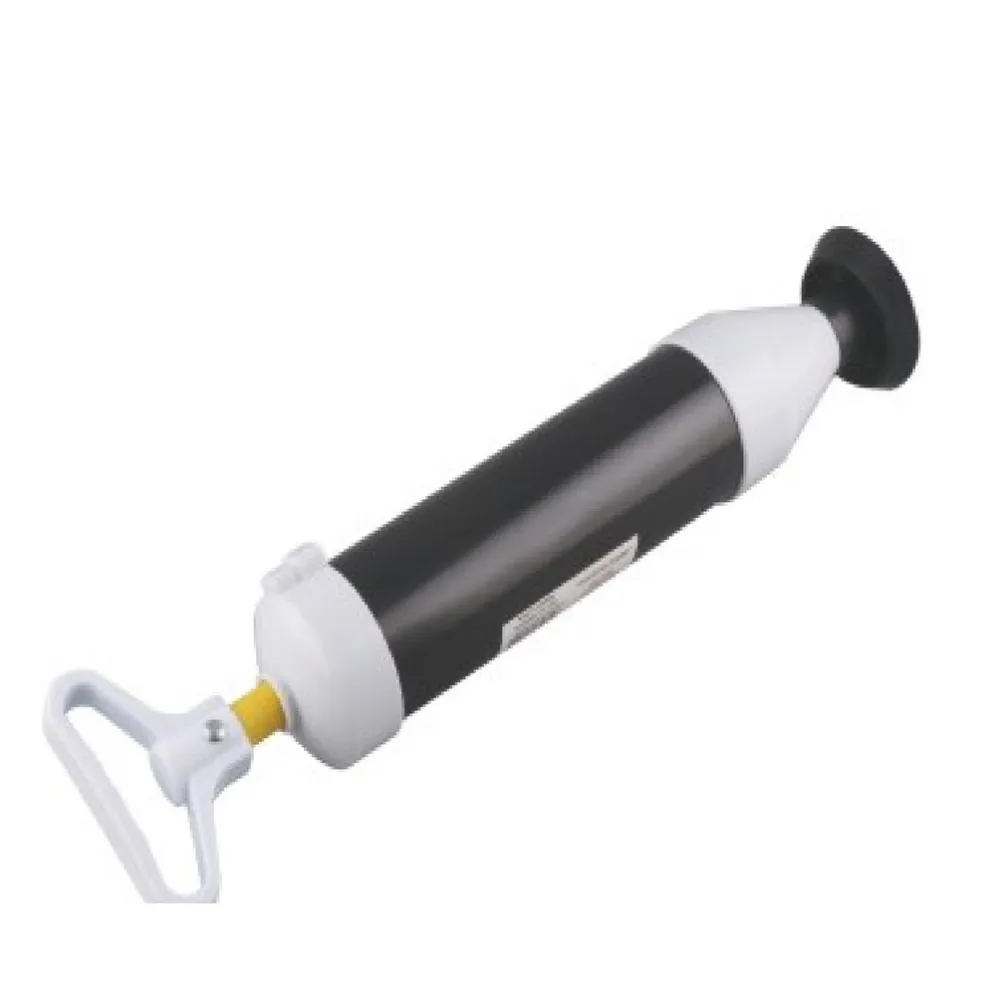
Most domestic fixture blockages clear without steel. The JQ-027A and JQ-027B pump plungers are the first thing to try: a piston body with a suction handle and two rubber heads, large for a WC pan and small for a sink waste. Pulling the handle up reverses the flow inside the trap, which is what breaks a bonded plug of hair and soap rather than just shoving it along the pipe.