Oct 26, 2026Buying Guides
Drain Auger Cable Size Chart by Pipe Size
Drain auger cable sizes mapped to pipe: 5, 6, 9 and 12 mm cable against 32, 50, 75 and 100 mm drains, plus wire gauge, length and sample checks.
Why cable diameter decides the job
Buyers comparing drain augers usually start with the housing, the price or the brand. The specification that actually decides whether a tool clears a blockage is the cable, and within the cable it is the diameter.
The cable has to fit the pipe, not the blockage
A cable that is too thick will not follow a small trap. A cable that is too thin buckles before it reaches a packed obstruction. Neither failure is visible in a product photo.
Diameter and wire gauge are two different numbers
The published diameter is the cable as a whole, including its coating. The wire diameter underneath is what carries the torque. A thick coating can hide a thin wire, which is why both numbers belong on a quotation.
Why this matters to a distributor
Returns on drain tools cluster around two complaints: it will not reach, and it kinks. Both are usually a specification mismatch rather than a defect, and both are avoidable at the ordering stage.
The size chart: cable diameter against pipe size
The ranges below are working limits rather than exact thresholds. They describe the pipe a cable is designed to travel and turn in.
Cable diameter | Pipe size it suits | Common applications |
5 mm | Up to about 32 mm (1-1/4 in) | Basins, bidets, small traps, HVAC condensate lines |
6 mm | About 32–50 mm (1-1/4 to 2 in) | Kitchen sinks, baths, domestic branches |
9 mm | About 50–75 mm (2 to 3 in) | Floor drains, short mains, heavier blockages |
12 mm | About 75–100 mm (3 to 4 in) | Main stacks, larger floor drains, root-prone runs |
The 5 mm cable is for narrow lines, not light duty
A condensate drain on an air handler is often 16 to 25 mm. Nothing thicker will follow it. This is the diameter that makes an HVAC maintenance kit worth carrying.
6 mm is the volume specification
Most household blockages sit in pipe between 32 and 50 mm, which is why 6 mm is the diameter distributors reorder most often. It is the safe stock item and the one to quote first.
9 mm is where the drum starts
Cable above 6 mm needs a drum with the capacity to hold it and a feed strong enough to drive it. A pistol-grip housing will not carry 9 mm cable usefully.
12 mm is main-line territory
At this diameter the tool is a machine rather than a hand tool. If a customer asks for 12 mm cable, the conversation is about drum machines and cutting heads, not pistol grips.
Wire gauge: the number that decides kinking
Two cables can both be sold as 6 mm and behave differently. The difference is the wire under the coating.
Wire diameter | Behaviour | Best suited to |
1.2 mm | Takes a tighter radius before setting | Badly offset traps, sharp elbows, tight bends |
1.3 mm | Transmits more push before buckling | Packed blockages, longer runs, heavier use |
Why a thicker wire is not simply better
The thicker wire resists buckling, but it also resists bending. On a sharp trap the thinner cable follows the pipe while the thicker one stalls at the bend.
What this means for a range
Carrying both gauges lets a counter recommend on the customer's description of the blockage rather than on price. A single-gauge range forces the wrong recommendation half the time.
The test that reveals the wire
Bend a sample through a tight radius and release it. Spring steel returns to straight. Mild steel or under-treated wire holds a curve, and that curve becomes a kink in service.
Choosing the cable length
Length is decided by where the operator can feed the cable in, not by how far the blockage feels.
4 to 4.5 m for basins and traps
A basin or shower trap is reachable well inside 4.5 m. A longer cable on this job is extra weight in the bag and more cable to dry afterwards.
6 m as the general-purpose length
Six metres covers most domestic branches plus the run into the stack. It is the length that suits a maintenance van serving mixed small jobs.
7.6 m for floor drains and set-back access
Where the access point is not next to the blockage, the longer cable is what reaches it. Confirm the entry point before recommending it.
Longer cable does not fix a trap
Feeding 7.6 m through a basin trap achieves nothing, because the limit is the trap geometry rather than the length. Ask where the operator will feed from.
What the coating contributes
Drain cable is almost always coated, and the coating has three jobs that each show up in service.
It protects plastic pipe
Bare steel cable can score the inside of a plastic waste pipe. The coating is what makes the tool safe to use in a domestic system.
It slows corrosion
A coated cable resists rust far longer than a bare one, particularly when it goes back into the drum damp. This is the difference between a two-season tool and a five-season one.
It carries the colour
Custom coating colours are a colour-matching exercise, and a custom colour carries a setup cost. That setup is why a bespoke colour usually carries a higher minimum order.
When the chart says the tool is wrong
A size chart is as useful for ruling tools out as for choosing one.
Toilets
A toilet has a built-in trap and a ceramic bowl. A closet auger is the correct tool, and a standard cable can mark the bowl while failing to negotiate the trap.
Root intrusion
Spring cable does not cut roots. A cutting head on a sectional machine is the answer, and no cable diameter changes that.
Silt and grease coating
Silt reduces flow without plugging it. A cable makes a channel that closes again within days, and the customer concludes the tool is faulty.
Pipe that is already failing
Old or patched pipework can give way under a cable as readily as under pressure. If the property is suspect, the honest recommendation is an inspection before a tool.
What to check on a sample before ordering
Four checks cover what a catalogue cannot show.
Measure the wire, not just the coating
Ask for the wire diameter as well as the overall diameter, then confirm it on the sample. A nominal 6 mm cable with a thick coating can be a 5 mm wire.
Bend and release, more than once
Repeat the bend on the same section several times. A single pass can succeed on a cable that has not been treated consistently through its length.
Check the coating at the cut ends
The coating fails where the cable is cut. A clean sealed end resists water ingress; a ragged end is where rust starts.
Fit it to the housing it will be used in
Confirm the end fitting matches the drum or pistol grip the cable will serve. A cable with the wrong fitting is unusable however good the steel is.
Frequently asked questions
What cable diameter do I need for a 50 mm drain?
Six millimetre cable covers the 32 to 50 mm range and is the standard domestic diameter. Move to 9 mm once the pipe goes above 50 mm or the blockage is packed hard.
Is a thicker cable always stronger?
It resists buckling better but bends less. On a sharp trap a thinner cable follows the pipe while a thicker one stalls, so thicker is not automatically the better choice.
What does the wire diameter mean on a quotation?
The diameter of the steel under the coating, which is what carries torque. A 1.2 mm wire turns tighter bends and a 1.3 mm wire pushes through heavier blockages.
How long should the cable be?
Decided by the access point. 4.5 m for basins, 6 m as a general domestic length, 7.6 m where the entry point is set back from the blockage.
Will a 6 mm cable clear a main drain?
No. Main lines and root work need 9 to 12 mm cable and a machine with a cutting head. A 6 mm cable on a main line is a specification mismatch.
Can we order mixed diameters and lengths?
Yes, mixed orders are the usual way to build a range without over-committing to one size. Confirm the allocation in writing with the quotation.
Request a cable specification quotation
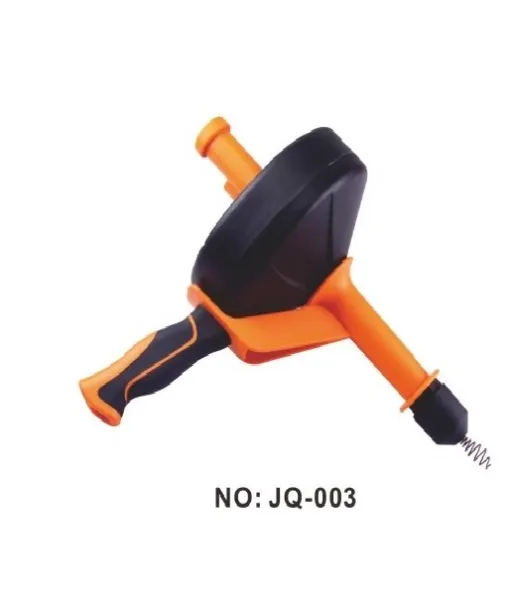
Send the pipe sizes to be covered, the cable diameters and gauges required, lengths, quantities and destination, and we will return a specification sheet, packing data and a quotation. Email [email protected], [email protected] or [email protected], or message us on WhatsApp at +86 158 6745 7689. Product Manager Alisa Xu handles this range. The 6 mm pistol-grip models are on the JQ-003 page and the JQ-004 page, the drum machines on the manual drum auger page, the rod set on the JQ-025 page, replacement cable on the spare cables page, and the category on drain augers. Tool selection is covered in the drum auger versus drain snake guide and the manual versus drill auger guide, the wider range in the drain maintenance guide, and OEM cable terms on the OEM cable page.Small-diameter augers for basin and long thin runs
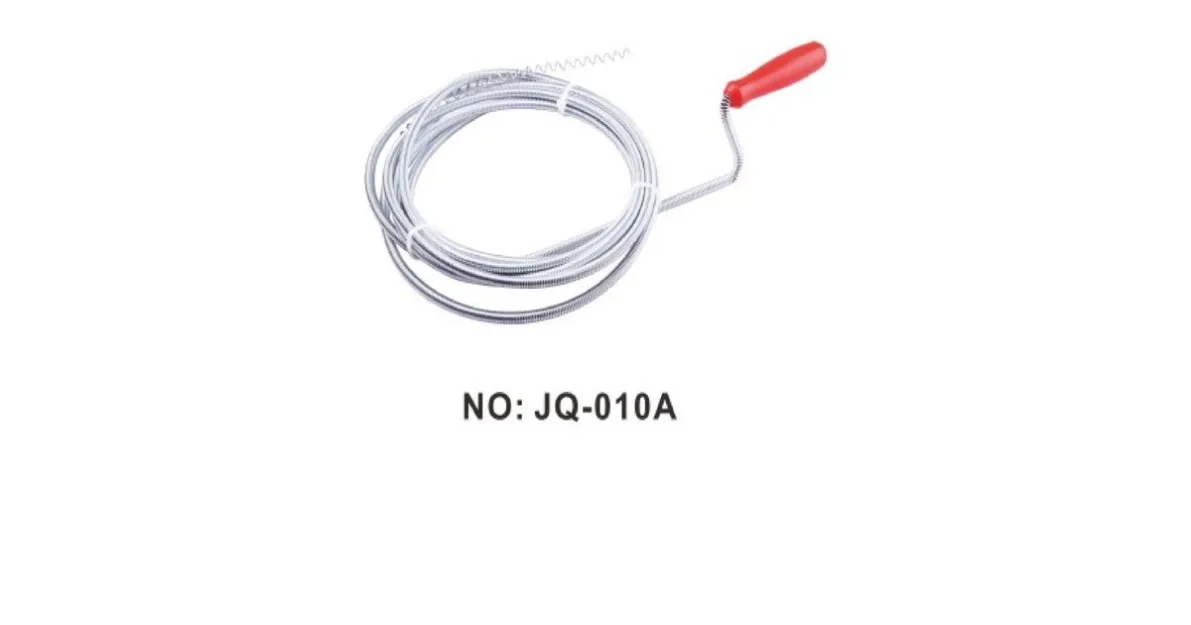
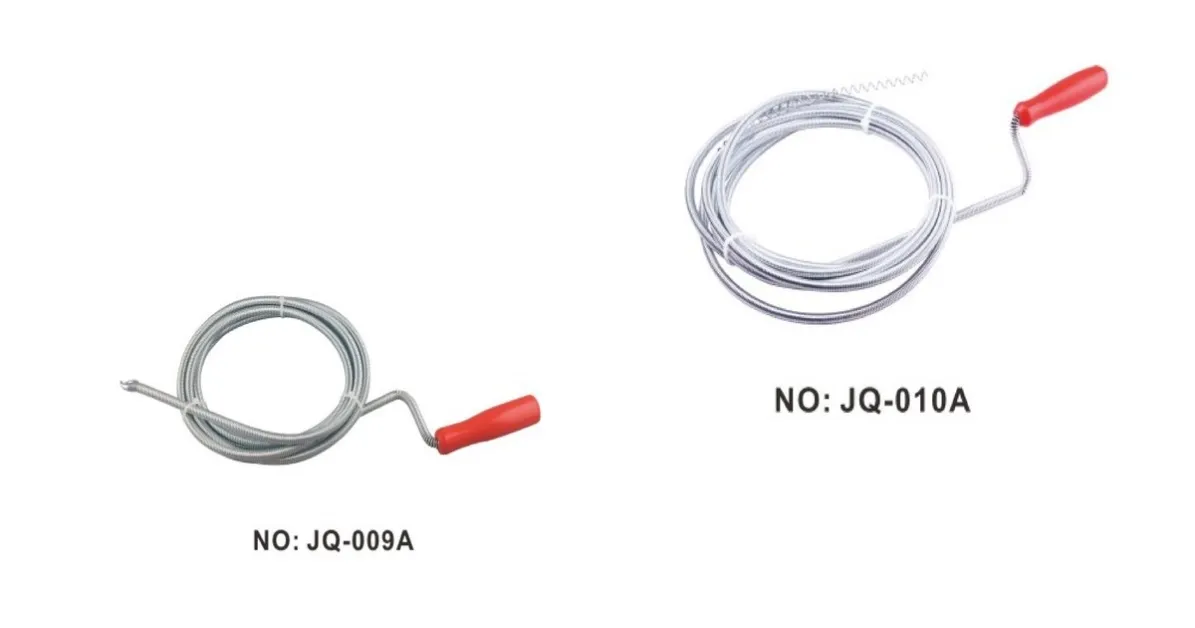
Where the cable has to be small and the run is long, the JQ-010A and JQ-010B hand drain auger covers 5 mm and 6 mm cable from 1.5 m to 10 m, with the 10 m 6 mm item weighing 1.25 kg. It is the tool for basin wastes, urinal outlets and condensate runs that a drum machine cannot enter, and both handle colours share one specification.The 7 mm to 10 mm professional range
Where the job needs a heavier cable or a longer reach than a 5 mm auger can give, the JQ-009A, JQ-009B and JQ-009C drain augers run 7 mm to 10 mm cable in 3 m, 5 m, 7 m and 10 m, with 13 item numbers per version and a weight span of 0.45 kg to 3.1 kg. The three versions share one specification table, so the choice between them is a packaging and channel decision rather than a performance one.