Wire Stripper Supplier Evaluation and RFQ Checklist for Distributors
A practical checklist for importers evaluating wire stripper and crimping plier suppliers: what to confirm on specifications, samples, carton marking and documentation before a bulk order.
Evaluating a wire stripper supplier without guessing
For a distributor, supplier risk in this category is rarely about the tool itself. It is about specification drift between catalogue, sample, purchase order and carton. A stripping range that is printed one way in a catalogue and quoted another way in an email becomes a returns problem three months later. This checklist is built around the documents and confirmations that prevent that.
It describes what a buyer should ask for. It makes no claim about our own audit status, certificates or production capacity, and it does not replace your own supplier approval process.
1. Fix the specification in writing
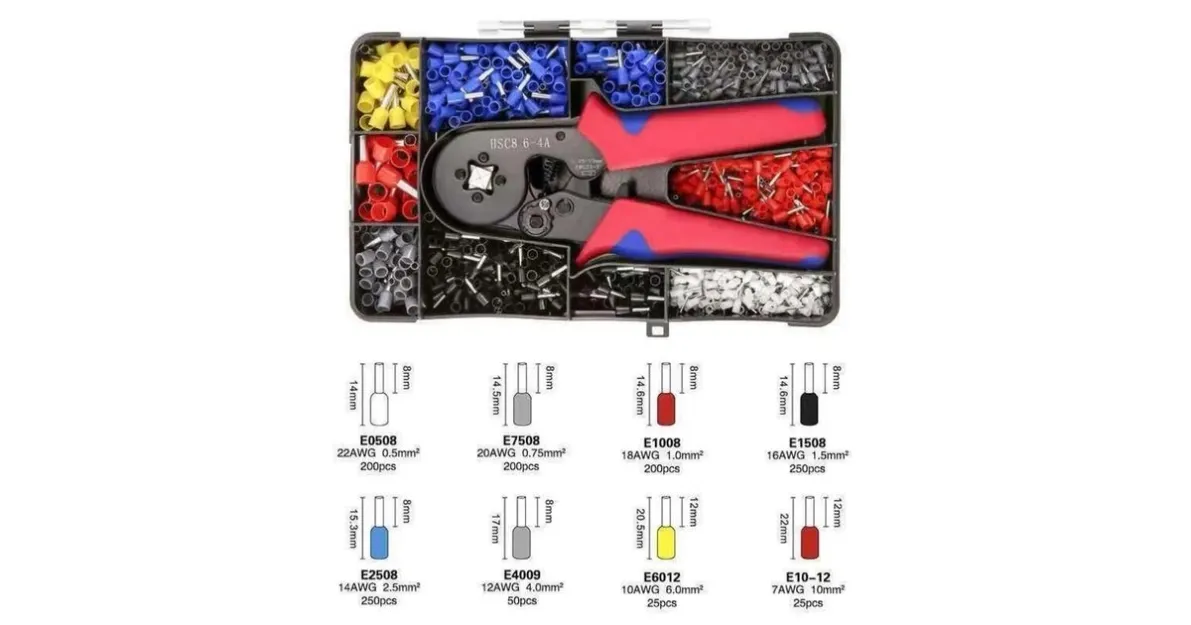
Start with the item number, the exact stripping or crimping capacity, the tool length, the mechanism, the blade and body materials and the handle construction. For crimping pliers, also fix the crimp profile: a quadrilateral and a hexagonal crimp are different outcomes even when the stated capacity is identical. The quadrilateral versus hexagonal comparison sets out the three CJ tools involved.
Ask the supplier to restate the specification in the quotation rather than attaching a catalogue image. Where a catalogue has an internal inconsistency, resolve it explicitly. Three examples from our own printed range: one item code is printed both with and without a hyphen; one lists an additional cutting capacity whose scale does not match its stated stripping band; and one crimping plier has a different item code in its heading than in the carton table beneath it. Two of them can be named: CJ-WS-0833 is printed with a hyphen while other CJ-WS codes on the same page are not, and the CJ-CP00866B heading is followed by a carton table whose item-number cell reads TD-CP00866B. We exclude the unverified cutting value printed for CJ-WS0829 rather than repeating it. We publish these discrepancies rather than smoothing them over, because the purchase order and the carton marking must refer to the same SKU. The published capacity bands are in the wire stripper size chart and on the wire strippers range.
2. Map capacity to your market, not to the supplier's range
List the cable sizes, insulation types and terminal series your customers actually use, then map them to the published capacity bands. If your market orders in AWG, obtain an explicit written mapping to the millimetre-squared figures. The two systems are approximately related, not interchangeable, and insulation thickness varies by cable construction.
Ask for a paid sample on your own cable. A strip should remove insulation without nicking the conductor. For crimping tools, approve a sample crimp against your terminal supplier's dimensional and pull-test requirements; do not accept a tool-side claim in place of a terminal-side check.
3. Confirm the carton, not just the piece
Request carton quantity, carton dimensions in centimetres and gross/net weight for every SKU. These three values drive freight, warehouse planning and landed cost. They also let you reproduce the supplier's container calculation yourself. Our carton and container loading data publishes all twelve items and the calculation method.
Two SKUs with the same piece count can differ materially in cubic metres per carton, and two SKUs with identical carton dimensions can carry different gross weights. Check both totals in a mixed order. Treat any container figure as a planning upper bound, not a loading commitment - palletisation and stacking efficiency change the realised result.
4. Put the commercial variables in the RFQ
Include target quantities per SKU, whether the order is a mixed carton or single-SKU cartons, packaging and artwork requirements, carton marking text, the destination port and your required inspection points. State the crimp profile where relevant. If trial quantities or a phased order matter to you, raise them at RFQ stage; minimum order quantities and trial-order arrangements are confirmed per order.
Avoid asking a supplier to confirm a fixed price or lead time before the specification is frozen. Both depend on the final mix, packaging and order structure.
Field | What the buyer should state | Risk if omitted |
|---|---|---|
Item number | Exact CJ code as printed, including any hyphen | Carton marking and invoice refer to different SKUs |
Capacity band | Required mm2 range and cable construction | Sample approved on the wrong conductor size |
Crimp profile | Quadrilateral or hexagonal, with terminal series reference | Termination fails the terminal maker's check |
Quantity and carton structure | Quantities per SKU; mixed or single-SKU cartons | Freight and consolidation cannot be planned |
Packaging and marking | Artwork, carton marking text, handle colour | Private-label goods received with the wrong finish |
Destination port | Named port for the quotation | Landed cost cannot be compared |
Inspection points | Checks to apply on receipt | No agreed written reference for a claim |
5. Agree the receiving check
Your incoming inspection should verify the item number and carton marking against the purchase order, the blade edges and stripping notches against the agreed capacity band, the spring and pivot action across sampled pieces, and the crimp profile on sample terminations. Record the result against the written specification from step one.
Where the supplier has published a data-quality note about a catalogue discrepancy, copy that note into the purchase order. It is the cheapest way to prevent a warehouse receiving a SKU that nobody can match to an invoice.
6. Keep the entity details consistent
Confirm that the legal name, the invoicing entity, the beneficiary name on the payment instruction and the shipper name on the export documents all refer to the same company. More than one English rendering may appear across older site content, catalogues and draft documents; agree a single written form with your supplier before the first proforma invoice rather than discovering a mismatch at the bank.
Where to go next
Our B2B sourcing FAQ covers the wider sourcing process and the OEM/ODM services page covers private-label steps. Published carton dimensions and loading calculations are in the container loading article; tool-side specification tables are on the wire strippers and crimping pliers range. Send your RFQ through the contact page.