Quadrilateral vs Hexagonal Crimp: Specifying the Right Terminal Profile
Three 0.25-6 mm2 CJ crimping pliers share capacity, carton size and weight but produce different finished crimp shapes. What a buyer should confirm before a bulk order.
Why crimp profile belongs in the purchasing decision
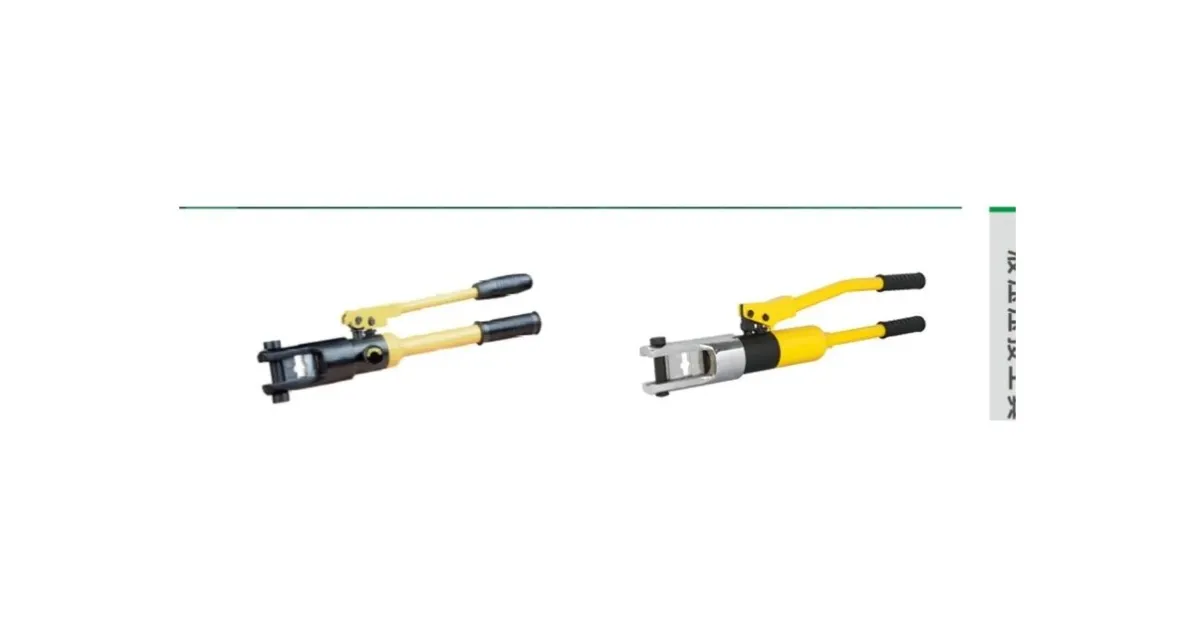
A crimping plier is usually specified by its capacity band. In the TORCHMARK CJ range, three tools are listed at 0.25-6 mm2, and on a specification sheet they look nearly identical: same capacity, same carton dimensions, same piece count, same gross and net weight. Yet two of them produce a quadrilateral crimp and one produces a hexagonal crimp. For a buyer supplying a cable assembly workshop, an electrical panel builder or a control cabinet manufacturer, that difference is the whole order.
Crimp shape is normally specified by the terminal or connector manufacturer, not by the tool supplier alone. A tool that matches the conductor range but produces the wrong finished geometry can still leave a termination outside the terminal maker's requirements. This page sets out what differs between the two profiles, how to write the requirement into an RFQ, and what a buyer can reasonably check before and after a bulk order. It does not state compliance with any external crimping standard, and it is not a performance guarantee.
The three 0.25-6 mm2 tools in the CJ range
Item no. | Finished crimp | Capacity | Carton (cm) | CBM/carton | Pcs/ctn | G.W./N.W. (kg) |
|---|---|---|---|---|---|---|
CJ-CP00864 | Quadrilateral | 0.25-6 mm2 | 51x32x27 | 0.04406 | 40 | 18/16 |
CJ-CP00864A | Quadrilateral | 0.25-6 mm2 | 51x32x27 | 0.04406 | 40 | 18/16 |
CJ-CP00866B | Hexagonal | 0.25-6 mm2 | 51x32x27 | 0.04406 | 40 | 18/16 |
All figures are catalogue values from printed pages 33 and 34; CBM per carton is a volume calculation shown in our carton and container loading data. Because the three items share identical carton data, choosing between them changes neither freight nor warehouse planning. It changes only the finished termination. That is why the decision belongs in the specification, not in the shipping plan.
One catalogue detail needs a written confirmation before ordering: the CJ-CP00866B heading is followed by a carton table whose item-number cell reads TD-CP00866B. The supplier evaluation checklist explains how to carry this kind of discrepancy into the purchase order.
What actually differs between a quadrilateral and a hexagonal crimp
The difference is the geometry of the die and the shape of the finished crimp on the conductor and terminal barrel. A self-adjusting or fixed-die tool closes to a defined outline; that outline must match the terminal series the buyer has already qualified. Two crimp profiles can be equally sound in their own applications and still be non-interchangeable for a given terminal.
We do not prescribe which profile your market needs. The terminal or connector manufacturer specifies the required profile, die geometry and conductor range, and that specification takes precedence over anything printed in a tool catalogue. Before selecting CJ-CP00864, CJ-CP00864A or CJ-CP00866B, obtain the terminal supplier's specification sheet and confirm three things in writing: the finished crimp shape, the conductor range including insulation dimensions, and the die geometry used for the approved sample. Where a buyer works in AWG, request an explicit written mapping to the millimetre-squared figures; the two designation systems are approximately related, not interchangeable.
For broader selection context across the category, see the crimping tools range, the crimping tools complete guide and the hydraulic crimping tool sizing guide.
How to write the profile into an RFQ
State the required finished crimp shape as a line item, not as an afterthought. A workable RFQ for these tools carries the exact item number, the target quantity per SKU, the conductor range and cable construction, the terminal series and manufacturer, the required crimp profile, packaging and artwork requirements, carton marking text, the destination port and the inspection points the buyer will apply on receipt.
Ask the supplier to restate the profile in the quotation rather than attaching a catalogue image. If the order mixes quadrilateral and hexagonal tools, keep them as separate line items with separate carton markings; a warehouse cannot distinguish them by carton dimensions, because the cartons are identical. Where the order is consolidated with wire strippers, the wire strippers range shows the twelve published items and their capacity bands.
Avoid asking for a fixed price or lead time before the specification is frozen. Trial-order arrangements, minimum order quantities, lead times and pricing are confirmed per order rather than published as fixed figures.
Sample approval before the bulk order
Approve a sample crimp on the buyer's own cable and the buyer's own terminal series before committing to a bulk order. Paid samples are part of the standard process for professional buyers. The approval should record the tool item number, the die or profile observed, the conductor size and insulation type, the terminal reference, and the dimensional and pull-test requirements supplied by the terminal manufacturer.
Do not accept a tool-side claim in place of a terminal-side check. A sample that strips and crimps cleanly in isolation is not evidence that the finished termination matches the terminal maker's requirements. Keep the approved sample, the written specification and the quotation together so the receiving check has a single reference.
Incoming inspection points a buyer can require
The following are inspection points a buyer may reasonably include in its own receiving procedure. They describe what to check, not a performance guarantee from the supplier.
- Item number and carton marking match the purchase order, including the CJ-CP00866B / TD-CP00866B discrepancy.
- The finished crimp shape on sample terminations matches the profile fixed in the RFQ.
- Sample crimps are checked against the terminal supplier's dimensional and pull-test requirements.
- Die condition, pivot action and spring return operate consistently across sampled pieces.
- Carton quantity, carton dimensions and gross/net weight are verified against the published table before consolidation.
Catalogue discrepancies to resolve in writing
Three points in the printed CJ range should be confirmed before the purchase order is issued. One item code is printed both with and without a hyphen; one lists an additional cutting capacity whose scale does not match its stated stripping band, and we exclude that value as unverified; and one crimping plier heading does not match the item number in the carton table beneath it. We publish these rather than smoothing them over, because the purchase order, carton marking and invoice must all refer to the same SKU. Copy the note into the purchase order.
Where to go next
Send the terminal series, required crimp profile and target quantities through the contact page. If the profile is still open, state the cable sizes and terminals you work with and we will check them against the published range before sampling. For the sourcing process in general, see the B2B sourcing FAQ and the hand tools by application guide.
Buyer questions
Are CJ-CP00864 and CJ-CP00866B interchangeable?
They share the same 0.25-6 mm2 capacity and identical carton data, but the first produces a quadrilateral crimp and the second a hexagonal crimp. Selection depends on the profile required by your terminal supplier. Approve a sample crimp before committing to a bulk order.
Can the tool supplier tell me which profile to buy?
The terminal or connector manufacturer specifies the required profile, die geometry and conductor range. We can confirm which CJ tool produces which finished shape; the compatibility decision sits with your terminal supplier's specification sheet.
Does a shared carton size mean the tools can be mixed in one carton?
Mixed-range orders are a normal part of this business and can be planned from the published carton table. Keep different crimp profiles as separate line items with separate carton markings, because the cartons are physically identical. The carton and container loading data shows the planning method.Small trial orders for crimping ranges
Building a crimping range does not require a full-container first order. A small trial quantity covering the die sets and head styles you need is enough to validate the range, with the minimum confirmed for each item per order.
Send the cable cross-section (mm² or AWG), the head type and your first-order quantity, and we will confirm the matching crimper, die range and terms per order.