First Hand Tool Import: Landed Cost & Documents
Seven cost lines sit between a supplier quote and your warehouse. Here is who pays each under EXW, FOB or CIF, which document proves it, and the mismatches that hold a mixed container at customs.
A unit price on a supplier quotation is not a number you can compare until you put both quotations on the same Incoterm, the same destination port and the same packing unit. That is the first rule of landed cost for a first hand tool import from China, and it is the one most often skipped when a buyer is assembling a first consolidated order. Seven cost lines sit between the ex-works price and your warehouse, and each one is paid by a different party depending on whether the quotation is EXW, FOB or CIF. Each also leaves a document behind. In a mixed container the failure is rarely arithmetic: it is a carton count on the packing list that disagrees with the commercial invoice, or a single HS code written across several tool families. This page gives the seven lines, the document that evidences each, the mismatch that holds a load, and the four steps that turn two differently written quotations into comparable per-SKU landed costs.
The seven landed cost lines, who pays, and the document behind each
Read the table as a reconciliation sheet, not as a definition of Incoterms. The middle column says who carries the cost under each of the three terms buyers most often receive from a Chinese hand tool supplier; the third names the document that should exist if that cost was actually incurred; the last two name the mixed-container failure and what to write into the RFQ so the line cannot be quietly omitted. We have not seen a supplier-side guide that ties all four together, which is why the table is here rather than another list of three-letter codes.
Cost line | Who pays (EXW / FOB / CIF) | Document that evidences it | Mixed-container failure mode | What to fix in the RFQ |
|---|---|---|---|---|
1. Ex-works unit price | Buyer under all three | Commercial invoice, one line per SKU | A headline price that covers only one model in a mixed assortment | Per-SKU prices tied to a named packing unit and quantity |
2. Inland freight to the port | Buyer under EXW; seller under FOB and CIF | Trucking or forwarder receipt, export booking | Quoted as one lump sum, so adding a second tool family changes it | Ask for inland freight as a separate line, not inside the unit price |
3. Export clearance and terminal handling | Buyer under EXW; seller under FOB and CIF | Export declaration and terminal receipt | No named party for export filing, so the first consolidation stalls at origin | Name who files and who pays origin charges in the quotation |
4. Ocean freight and bill of lading | Buyer under EXW and FOB; seller under CIF | Bill of lading with consignee and carton count | One bill of lading issued for part of a consolidated load | State that a single bill of lading must cover the whole container |
5. Marine insurance | Buyer under EXW and FOB; seller under CIF at minimum cover | Insurance certificate naming the shipment | CIF cover is minimal and the buyer assumes it is full cover | Ask what the CIF policy covers and price the top-up separately |
6. Duty, taxes and HS classification | Buyer under all three | Customs entry with item-level HS codes | Several tool families collapsed into one HS code on a mixed entry | Require item-level HS codes per SKU before the invoice is issued |
7. Destination charges and last mile | Buyer under all three | Arrival notice, delivery order, port and broker invoices | Quoted per container, then divided by the wrong carton count | Fix carton counts and gross weight before allocating destination costs |
Two things follow from the table. First, a CIF quotation is not automatically more expensive than an EXW one; it simply moves lines 2 to 5 into the seller price, where they are harder to see and harder to compare. Second, lines 6 and 7 remain with the buyer under every one of the three terms. A buyer who compares only the invoice total is therefore comparing two different scopes of responsibility, which is why the lowest headline price so often turns out to be the one that left the most work for the importer.
Why a headline unit price is not a comparable number
Three preconditions have to hold before two quotations describe the same order: the same specification, the same packing unit, and the same delivery point. If one supplier prices a flaring kit including dies, cutter and case while another prices the bare tool, the cheaper line is describing a different kit. If one prices per piece and the other per carton, the totals are not comparable until the carton quantity is fixed. And if one is EXW Ningbo while the other is CIF to your port, the difference between them is mostly freight and insurance rather than manufacturing cost.
Specification is the first of those three, and it belongs in writing before any price is discussed. Our flaring tool RFQ specification checklist gives a paste-ready block that itemises kit contents, fitting standards, finish, packaging and quantity per SKU. Although it uses a flaring kit as the worked example, the field order transfers directly to drain augers, crimping tools and rivet nut guns. Keep the same block for every supplier, then add the Incoterm and destination port as two mandatory fields; a quotation that omits either cannot be normalised at all.
There is a practical test for whether a comparison is valid: can you put both quotations side by side with seven identical row labels and a number in every cell? If a row is blank on one side, the cost has not disappeared, it has simply moved to the buyer. Blank rows are the reason a first order that looked cheaper on paper arrives with unbudgeted destination charges.
Normalise two quotations in four steps
The four steps below convert differently written quotations into one per-SKU landed unit cost. Work them in order, because each step produces an input for the next. Do not start with a calculator: a calculator will happily divide a total by a carton count that was never agreed, and produce a precise number for the wrong order.
Step one is to restate every quotation on a single Incoterm, normally the one the buyer can actually control. Convert CIF into an EXW-equivalent by removing the freight, insurance and origin charges the seller bundled, and convert EXW into a delivered equivalent by adding the lines the buyer must arrange. Ask the supplier to state the components rather than inventing them; a forwarder can quote the missing legs against the same packing data.
Step two is to fill the seven rows for each supplier. Where a figure is unavailable, mark it as an estimate and name its source, so the final comparison shows which numbers are quoted and which are assumed. This is also where the allocation sheet from the MOQ discussion reappears: the quantity per SKU is what turns a container-level freight figure into a per-unit figure.
Step three is to allocate shared costs by the packing data rather than by value. Freight, terminal handling and destination charges follow volume, weight and carton count, not invoice value. Allocating them as a flat percentage of price overstates the cost of expensive small tools and understates bulky ones, which quietly distorts the margin on the exact items a distributor expects to be most profitable.
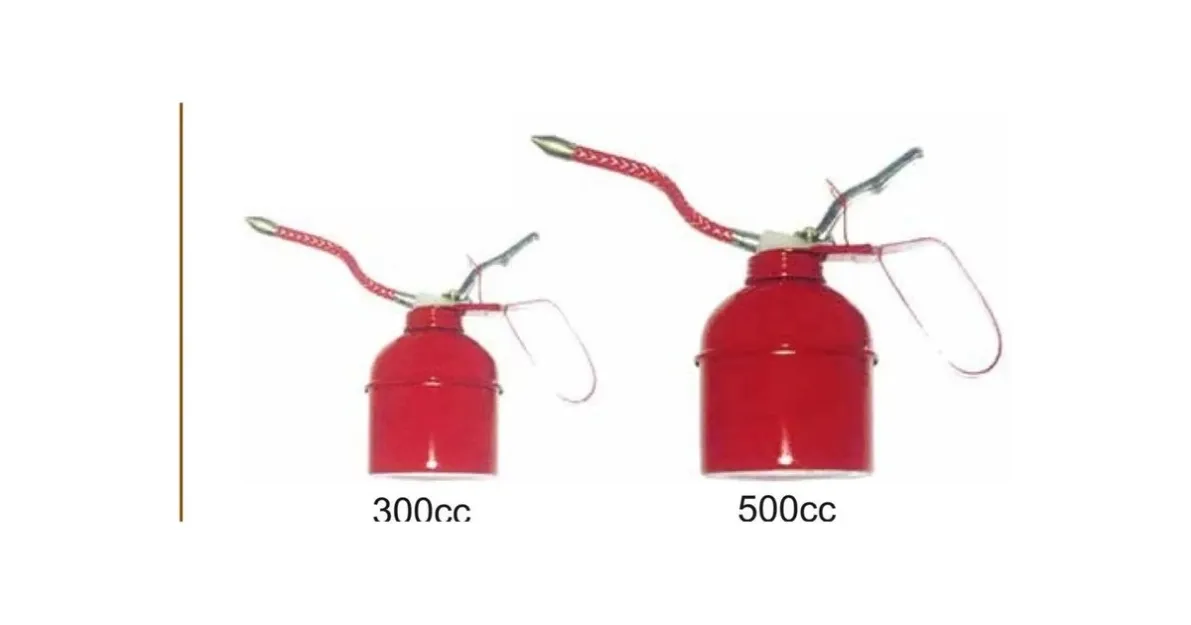
The packing data you need for that allocation is the same data a buyer should read before ordering. Our carton and shipping data guide for oil cans explains pieces per carton, carton dimensions, gross and net weight, and what those columns mean for pallets and freight. It is written for one product family, but the four columns are the inputs to step three for any tool family in a mixed load. If a supplier cannot state them, the freight allocation is a guess.
Step four is to write the result as a per-SKU landed unit cost with the assumptions attached: Incoterm, destination port, carton count, HS code per SKU and the date of the freight estimate. That single line is the number to compare, and it is also the number to re-check when the assortment changes. A second tool family added at step one changes the carton count at step three, so the whole calculation has to be re-run rather than adjusted by a percentage.
The document set a mixed container must carry
A mixed first order puts several SKUs and several HS codes into one customs entry. The documents have to agree with each other on three groups of numbers: carton counts and gross weight, SKU descriptions and item-level HS codes, and the consignee and destination details. A mismatch in any one group can hold the whole container, even when every individual tool is exactly as ordered. The point of listing the documents here is not customs theory; it is to show which of them are produced by the supplier, which by the forwarder, and which by the buyer, so nobody assumes someone else issued them.
At minimum the set is a commercial invoice with one line per SKU, a packing list with carton counts and weights that match the invoice, a bill of lading covering the whole container, a carton marking schedule, and any inspection records or certificates your market requires. Where private label applies, the approved artwork proof belongs in the same file, because the carton marks and barcode placement on the physical cartons must match the approved version. Confirm who issues each document before the container is booked, not after it sails.
Carton marks and artwork are the part most often left until production is already running. Our private label packaging guide for hand tools walks through the five packaging decisions, the proofing sequence and the timeline from artwork to a loaded container. The decision order is the same for flaring kits and drain auger sets: approve the proof before mass packaging, and make the carton marking schedule part of the specification rather than a note for the forwarder.
Inspection records belong in the same set. Our quality control process describes the four inspection gates a buyer should specify and the traceability fields worth requiring on the records that travel with the goods. If those records are named in the RFQ, they are produced as part of the order; if they are requested after loading, they are reconstructed. Agreeing them early is what makes a later claim factual rather than adversarial.
A useful closing check is to read the invoice, packing list and bill of lading side by side and ask one question: does the same container appear on all three, with the same carton count? In a consolidated load with several tool families, a supplement issued for one SKU is the most common reason the answer is no.
How MOQ and carton counts change the arithmetic
Minimum order quantity is a per-model and per-packaging question, so it reaches into the cost calculation twice. It sets the quantity per SKU that the allocation sheet divides freight by, and it sets the carton count that destination charges are allocated over. A supplier who answers with one headline minimum is usually quoting the easiest model to produce; a buyer who accepts it will discover at step three that the first container is dominated by one fast-moving line and short of the others.
Ask for the allocation in writing alongside the Incoterm and destination port, and keep the commercial questions in the same thread. Our hand tool sourcing FAQ on catalogues, samples, payment terms and importing collects the questions buyers raise at exactly this point, including how to obtain a catalogue, whether a factory visit is possible and which payment methods are used. Bringing those answers into the same written thread as the allocation sheet is what lets the commercial terms and the assortment be approved together.
One boundary worth stating plainly: certificates, production capacity, minimum order quantities, lead times and reference projects are available on request and confirmed against your specific assortment and destination. We do not publish generic figures, because a number that is not tied to a model, a packing format and a port is not a number you can build a landed cost on. The same applies to duty rates and tax treatment: those depend on the HS code and the destination market, and should be confirmed with your broker rather than taken from a supplier blog.
Where this cost model does not apply
The seven-line model assumes a first consolidated order of hand tools for resale, shipped as one mixed container. If you are buying a single model for internal use, lines 2 to 5 often collapse into a parcel or air freight charge and the allocation step is unnecessary. If a supplier quotes DDP, the scope changes again and the duty and destination lines move into the seller price; the comparison still works, but the rows have to be relabelled before you use it.
If your market requires a particular certification or test report, confirm it in writing before the RFQ is fixed, because it may constrain materials or markings that are otherwise settled by then. Where our own range is the wrong supply for a tool family, we would rather say so at the assortment stage than quote it into a specification that cannot be met.
For programmes where the order is the start of a longer relationship rather than a single shipment, our OEM, ODM and private label services page sets out what can be customised and what information an OEM enquiry should contain. The same document discipline applies: the more of the specification that is fixed before a quotation is requested, the fewer rows of the cost model remain blank.
Frequently asked questions about landed cost on a first order
What is the difference between a unit price and a landed unit cost?
A unit price is what the supplier charges for one item at a named delivery point; a landed unit cost adds the seven lines between that point and your warehouse, allocated across the actual quantity and carton count. Only the second number can be compared across suppliers quoting different Incoterms. The gap between them is commonly the freight, insurance, duty and destination charges a first-time importer did not put in the budget.
Which Incoterm should I ask a Chinese hand tool supplier to quote?
Ask for the term you can control, and require the same term from every supplier. EXW gives the clearest visibility of each cost line but leaves the buyer arranging inland freight and export clearance; FOB transfers origin handling to the seller; CIF bundles freight and minimum insurance into the price. None is universally cheaper. What matters is that the quotation states the term, the destination port and the components, so the seven rows can be filled.
Can one bill of lading cover a mixed container with several tool families?
Yes, and for a single consolidated first order it should. Problems arise when one SKU is shipped under a separate document or a supplement is issued later, because the carton count on the bill of lading then disagrees with the packing list and commercial invoice. State in the RFQ that one bill of lading must cover the whole container and check the carton count across all three documents before sailing.
Do I need an item-level HS code for every SKU in a mixed load?
For a mixed container, yes: collapsing several tool families into one HS code is one of the most common reasons a first entry is queried or held. Require item-level HS codes per SKU before the commercial invoice is issued, and confirm the classification with your customs broker for the destination market. A supplier can describe the product accurately, but the tariff treatment belongs to the importing country.
When should the packing list and carton marks be approved?
Before mass packaging begins, alongside the artwork proof where private label applies. The packing list, invoice and carton marking schedule must agree on carton counts, gross weight and SKU descriptions. Approving them after the container is packed turns a documentation check into a physical rework, and relabelling at destination is far more expensive than a proof reviewed at origin.
What should a written enquiry contain to get a comparable landed cost?
The assortment with quantity per SKU, the sizes or fitting standards, the packing unit you receive, the Incoterm you want quoted, the destination port, and the inspection records and documents you expect. With those fields a supplier can return a per-SKU quotation and an allocation sheet; without them, any total is conditional on assumptions that will change when the assortment changes. A written enquiry that already names the range is also much faster to answer than a general price request.
Request the cost and document checklist for your first order
Send us the assortment you are planning, the quantity per SKU, the Incoterm you want quoted and your destination port. We will return the per-SKU specification block, the allocation sheet and the document checklist for a first consolidated order. Use the contact form to request a written quotation with those details, or write to us directly with the model or category you are evaluating. Naming the range at the outset lets us confirm whether our supply fits your market before either side spends time on a cost model built for a different assortment.
This page is the cost and document leg of a wider route. Our six buyer decisions behind a first hand tool import sets out the order in which range, MOQ and mixed-container allocation, RFQ specifications, sample approval, QC evidence and shipping documents should be settled. The seven lines above belong to decisions 2 and 6; work through them after the range is fixed and before the container is booked.
If you are planning a continuing programme rather than one shipment, the distributor partnership and OEM onboarding checklist sets out what to establish before a distribution agreement, including mixed-model quantities and the information needed at each stage of approval.